
What is a suspended coaster?
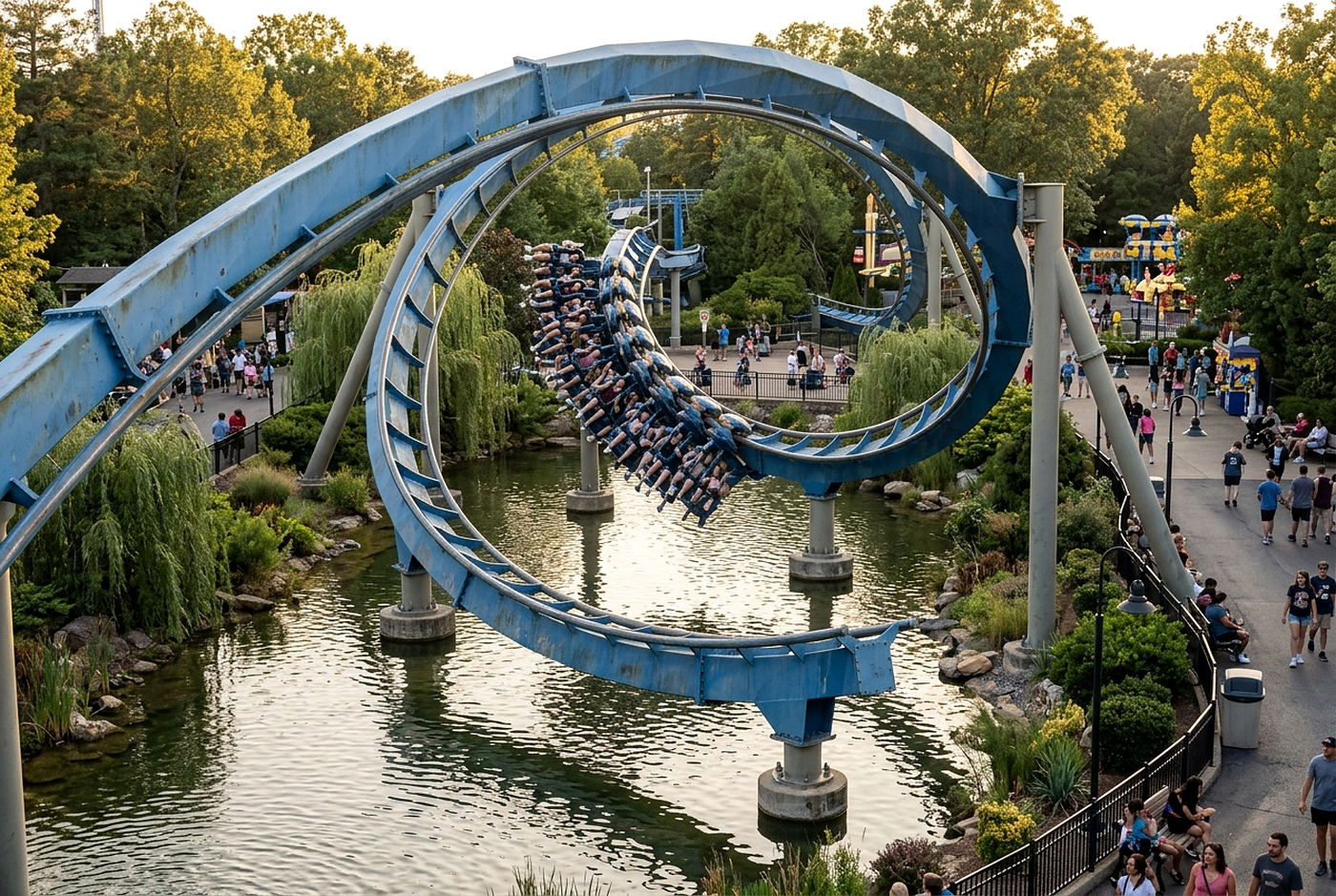
A suspended coaster is a roller coaster whose train hangs below the running track rather than sitting on top of it. The cars are carried on a chassis that rides the rails above, and each seat row is suspended from that chassis, so guests travel with their legs free and open air beneath them. Because the car is attached at a pivot rather than fixed rigidly to the track, the train can swing outward through curves, which is the defining motion of the type.
This article explains how the hanging train is built, what the swinging does to the guest experience, where a suspended coaster fits in a park, and where it does not. ZhipaoRides builds suspended coaster models among its range of roller coasters, Ferris wheels, drop towers, flying theatres and family rides, and manufactures at its plant in Xingtai, Hebei.
How the train hangs and moves
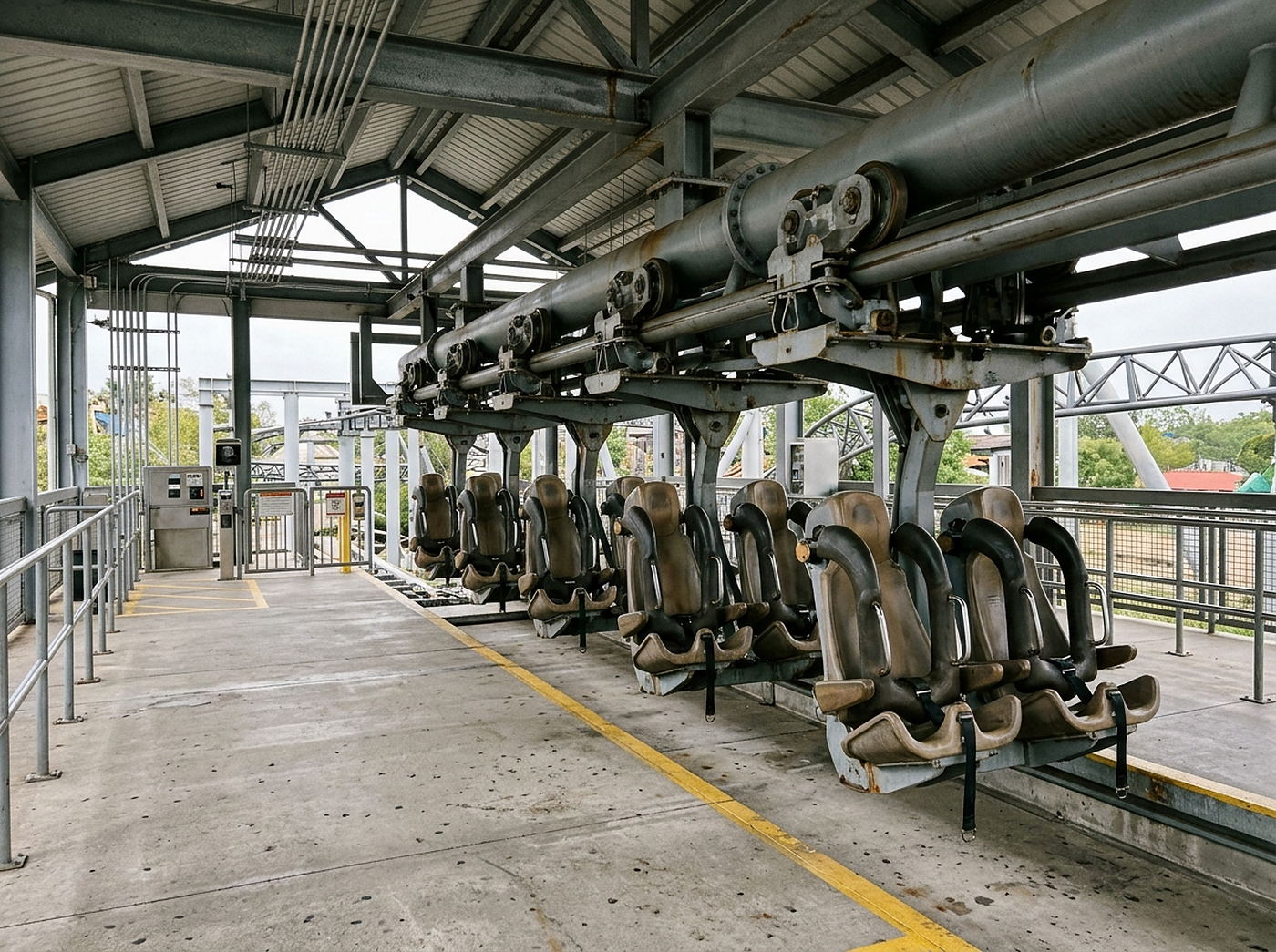
The mechanical arrangement is simple in principle and demanding in detail. A steel running track is supported on columns. Above or around that track sits a carrier chassis with road wheels and upstop wheels that hold it to the rail. Below the chassis is the pivot assembly, and below that hang the seat rows. The guest sits in a seat with a lap bar or over-the-shoulder restraint, feet unsupported, and the whole row is free to swing laterally about the pivot.
Three consequences follow from that layout:
- The centre of gravity is low. The mass of guests and seats hangs under the track, which makes the train stable on the rail and keeps the swinging motion predictable rather than violent.
- Turns produce outward swing. In a banked or unbanked curve, the suspended car leans out of the turn under centrifugal load. The track can therefore be built flatter than on a sit-down coaster, because the swing supplies part of the sensation the banking would otherwise provide.
- The track can go where a sit-down train cannot. With nothing above the guests' laps, the layout can pass close to scenery, water and walkways, and inversions are possible on models designed for them.
Loading works like most coasters: the train stops at a station platform, restraints are checked, and the train dispatches. Because the cars hang, the station platform sits at the level of the seat, and the track above the platform is at roughly head height for standing staff, which is a detail worth noting in station layout and clearance planning.
What the hanging position changes for guests
The ride experience differs from a conventional sit-down coaster in ways that are easy to describe and hard to fake:
- No floor, no visible car body in front of the legs. The guest sees track, sky and ground, not a fibreglass shell. This raises the perceived exposure of even a moderate layout.
- The swing is felt in the body, not just seen. On a sit-down coaster the guest is fixed to the train; on a suspended coaster the row moves relative to the track, so lateral forces arrive as a lean rather than a push.
- Height reads differently. A suspended coaster of modest track height feels taller than a sit-down coaster of the same height, because the guest's feet are the lowest point of the moving assembly and there is nothing between them and the ground.
- Restraint fit matters more. Guests are held by the upper body and lap, with legs free, so restraint sizing and checking discipline need to suit the park's audience.
For a park developer, the practical translation is that a suspended coaster delivers a strong perceived thrill at a lower track height and lower speed than a sit-down coaster of comparable intensity. That can reduce structural height, land take and visual impact on neighbouring areas.
Specification example
The table below uses the figures published for the ZhipaoRides suspended coaster model. Treat it as one data point, not a category average; layouts vary by model and by site.
| Parameter | Figure |
|---|---|
| Ride type | Suspended roller coaster, train hangs below track |
| Track length | Approximately 480 m |
| Maximum track height | Approximately 22 m |
| Maximum speed | Approximately 60 km/h |
| Seating | Rows suspended from a pivoting chassis |
| Restraint | Upper-body and lap restraint, legs free |
| Manufacturing base | Xingtai, Hebei |
Full dimensional drawings, foundation loads and clearance envelopes are issued per project. The suspended roller coaster for sale page lists the current model and enquiry route.
Where a suspended coaster fits
The type suits parks that want a headline coaster with a moderate footprint and a distinctive silhouette. Because the train hangs, the track structure is relatively open and reads well from a distance, which helps with wayfinding and with placing the ride as a visual anchor at the end of a path or across water. It also suits parks with height restrictions: a 22 m track delivers an experience guests associate with taller rides.
It fits family-thrill positioning well. The exposure comes from the hanging position rather than from extreme speed, so the ride can sit between a family coaster and a full-scale thrill coaster in the park's line-up.
Where it does not fit
A suspended coaster is not the right choice in every case:
- Very small sites. The layout needs a closed circuit with adequate clearance beneath the swinging cars, and the swing envelope must be kept clear of fences, planting and paths. A site that cannot give up that envelope should look at a compact family coaster instead.
- Parks wanting an extreme speed record. The hanging configuration is used here for a moderate-speed, high-exposure ride. Parks targeting very high speed and force levels are usually better served by a sit-down or inverted layout engineered for that load case.
- Operations with limited restraint-checking capacity. Legs-free seating puts weight on the restraint check at dispatch. Parks with very high throughput targets should model station staffing against the cycle.
- Guest audiences uncomfortable with open seating. Some guests will not ride without a floor beneath them. Plan the queue and exit so non-riders can wait comfortably, and provide a child-swap arrangement.
Planning notes for developers
Three items decide most suspended coaster projects. First, the swing envelope: agree with the manufacturer the lateral clearance the cars need at each curve and keep it free of hard and soft landscaping. Second, the station: platform height, gate positions and the track above the platform all follow from the hanging layout, so station design should start from the manufacturer's drawing, not from a sit-down coaster template. Third, wind and guest comfort: the open seating means guests are exposed to weather for the whole cycle, which affects queue design and operating policy in exposed sites.
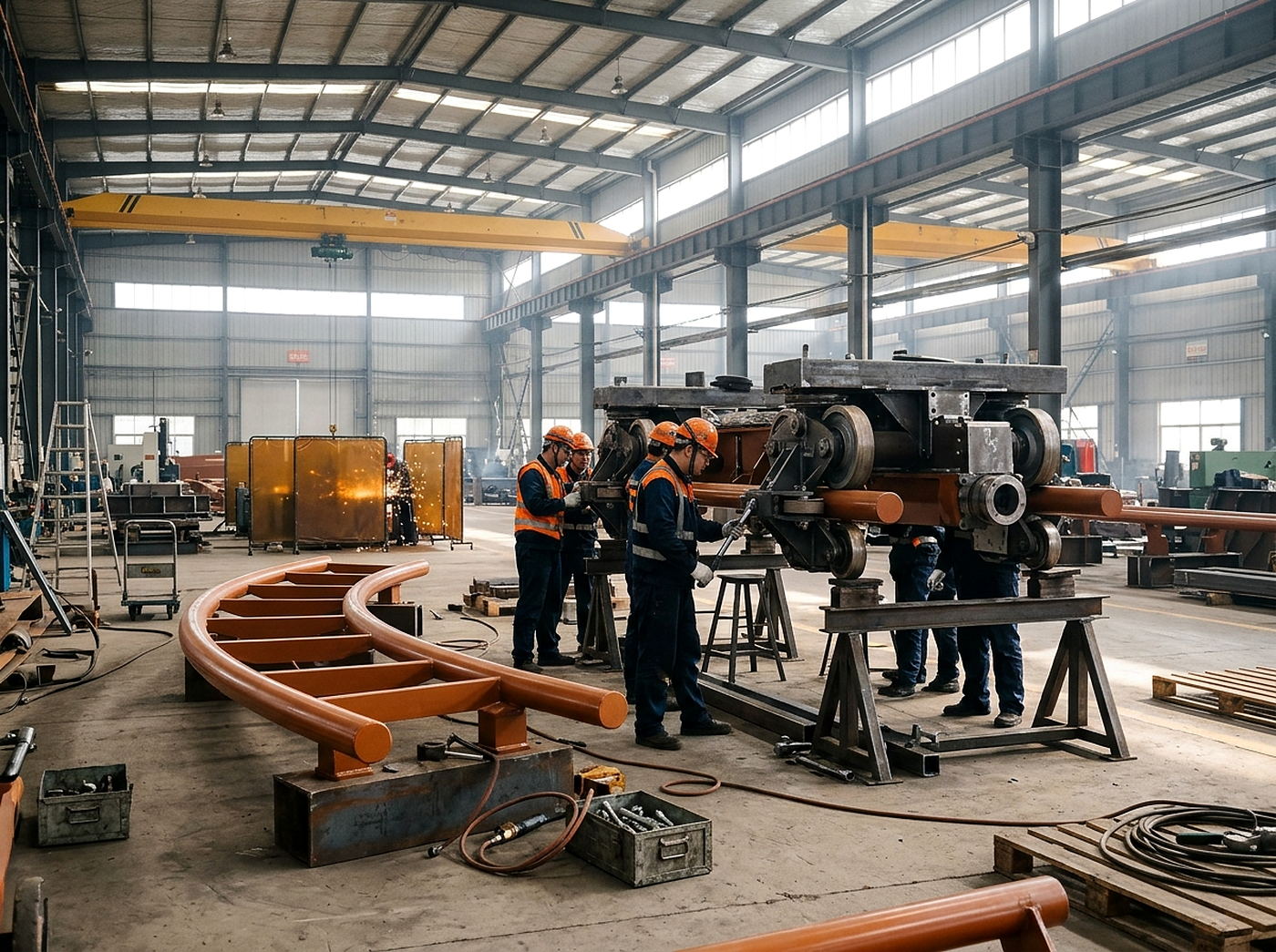
ZhipaoRides has manufactured amusement equipment since 2013 at its 120,000 m2 plant in Xingtai, Hebei, with about 500 staff and roughly 54 ride models, and exports to Russia, Southeast Asia, the Middle East, South America and Africa. For parks comparing layouts, the suspended coaster model page gives the current specification and the enquiry process.
Related rides
The same engineering team specifies suspended gondola rides, which use a similar hanging principle at walking pace, and indoor coasters, where ceiling height replaces the swing envelope.