
What Is an Observation Wheel?
An observation wheel is a large, slow-turning passenger wheel with enclosed cabins that stay upright as the wheel rotates, built for viewing the surrounding area from height. It differs from a Ferris wheel in that passengers ride inside closed capsules rather than open seats, and the wheel usually turns continuously rather than stopping at each boarding position. The ride type is part of the broader family of Ferris wheels and observation wheels for sale that parks specify by diameter, cabin count and drive system.
That definition matters for planning. An observation wheel is a fixed viewing structure with a long ride cycle, a high boarding point and a structural frame sized for wind and passenger load. A Ferris wheel is a simpler amusement ride with open gondolas and a stop-start cycle. The two are often confused in procurement documents, and the difference changes foundations, queue design and operating rules.
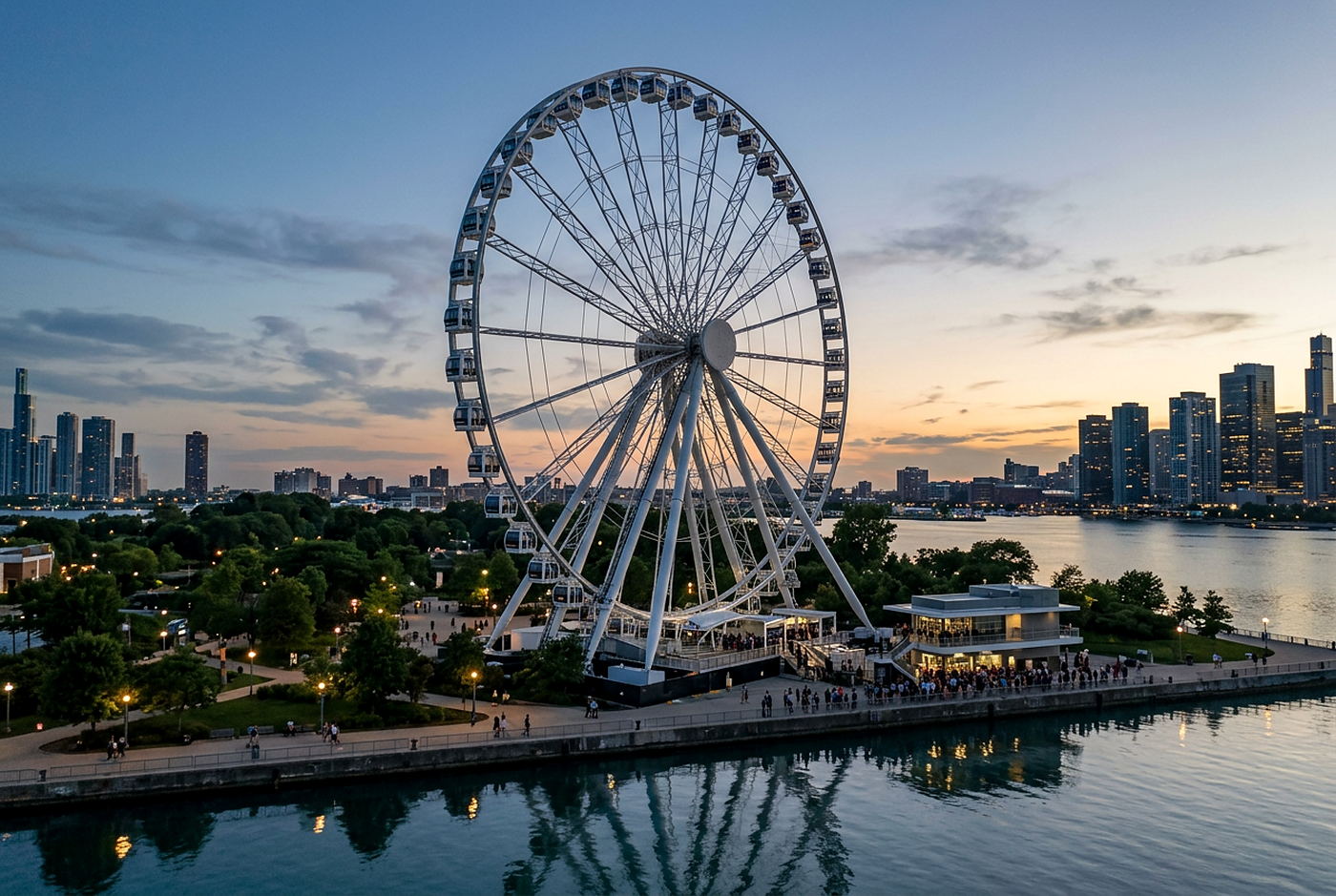
How an Observation Wheel Works
An observation wheel is a vertical wheel supported by a structural frame, with passenger cabins mounted on the rim. The wheel turns on a central hub and axle assembly, driven by electric motors through a gear or friction drive. Cabins are suspended on pivots so that they remain level as the rim rotates; passengers board at a platform near the bottom of the wheel and ride through one full revolution.
The main mechanical systems are:
- Drive system: electric motors, reducers and a braking arrangement that holds the wheel in position during boarding and emergency stops.
- Hub and axle: the central bearing assembly that carries the rim and cabin loads and transfers them to the support structure.
- Support structure: legs or a tower that hold the axle and resist wind and dynamic loads.
- Cabins: enclosed capsules with seats, glazing, ventilation and a door interlock tied to the drive control.
- Control and safety system: position sensors, overspeed detection and communication between the operator and the boarding platform.
Because the cabins are enclosed, the ride can run in weather that would close an open Ferris wheel, and boarding takes place through a platform rather than an open seat. The cycle is usually one or more full turns at low rim speed, so the wheel spends most of its time in steady rotation rather than accelerating and stopping.
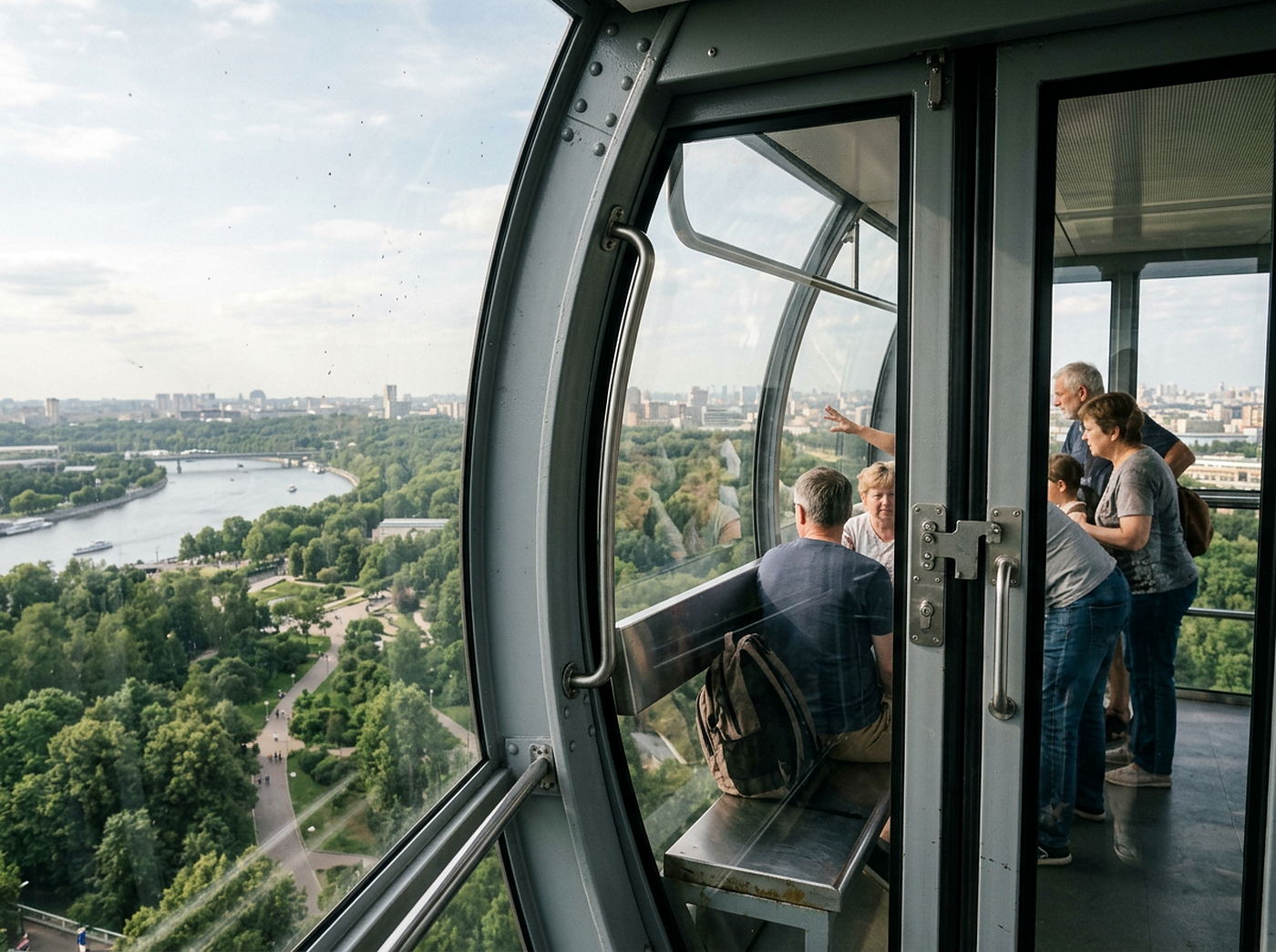
Observation Wheel vs Ferris Wheel: Structural Implications
An observation wheel is heavier per passenger than a Ferris wheel because each cabin is a closed structure with glazing, seating and its own frame. That weight sits on the rim, so the hub, axle and support legs are sized for a larger rotating mass. The cabins also present a larger wind area than open seats, which raises the wind load the structure must resist and affects the maximum operating wind speed set by the designer.
The boarding platform is another structural difference. An observation wheel usually needs a raised, level platform at the cabin door height, with a gap between platform and cabin that is controlled during boarding. A Ferris wheel with open gondolas can board at ground level with simpler station works. For a park, the observation wheel therefore carries more civil work: a foundation pad sized for the support legs, a platform structure and a queue area that keeps visitors clear of the rotating rim.
Drive and control requirements also differ. An observation wheel is normally driven continuously at low speed, with the drive holding position only for boarding, unloading and faults. A Ferris wheel stops at each gondola position. The continuous drive reduces stop-start loads on the gearbox but requires reliable braking and position sensing, because a cabin must align with the platform before the door interlock releases.
Specification Planning Table
The table below shows the planning parameters that a park developer should fix before requesting a quotation. ZhipaoRides manufactures in Xingtai, Hebei and builds observation wheels and Ferris wheels within its range of about 54 ride models. Exact figures are set per project by the manufacturer and the local authority; the values below are the categories to agree, not fixed numbers.
| Parameter | What to decide | Why it matters |
|---|---|---|
| Wheel diameter and overall height | Rim diameter, hub height, total height above ground | Sets the view, the foundation footprint and the height clearance to be checked with local aviation and planning authorities |
| Cabin count and capacity | Number of cabins, seats per cabin, wheelchair provision | Determines hourly throughput and the boarding platform length |
| Drive and speed | Motor arrangement, rim speed, number of turns per cycle | Sets ride duration, power supply and braking requirements |
| Wind and structural design | Design wind speed, operating wind limit, seismic and snow loads | Governs the support structure and the operating rules on windy days |
| Foundation and platform | Soil conditions, pad size, platform height, access and evacuation routes | Civil cost and the safety case for boarding and emergency evacuation |
| Power and controls | Supply voltage, backup power, control room position, communication | Keeps the wheel controllable during a power failure and supports evacuation |
Where an Observation Wheel Fits
An observation wheel fits sites where the view is the attraction: waterfronts, city parks, exhibition grounds and mixed-use developments that want a landmark visible from a distance. It also suits parks with enough space for a raised boarding platform, a queue building and a service area around the base. Because the ride is slow and enclosed, it works for a wide age range and for visitors who avoid high-speed rides.
It does not fit every site. A small indoor park, a site with restricted foundation space or a location where planning height limits are tight is usually better served by a smaller Ferris wheel or a family ride. A park that needs high hourly throughput from a compact footprint should compare the observation wheel with other ride types before committing, because the boarding platform and slow cycle limit capacity per hour.
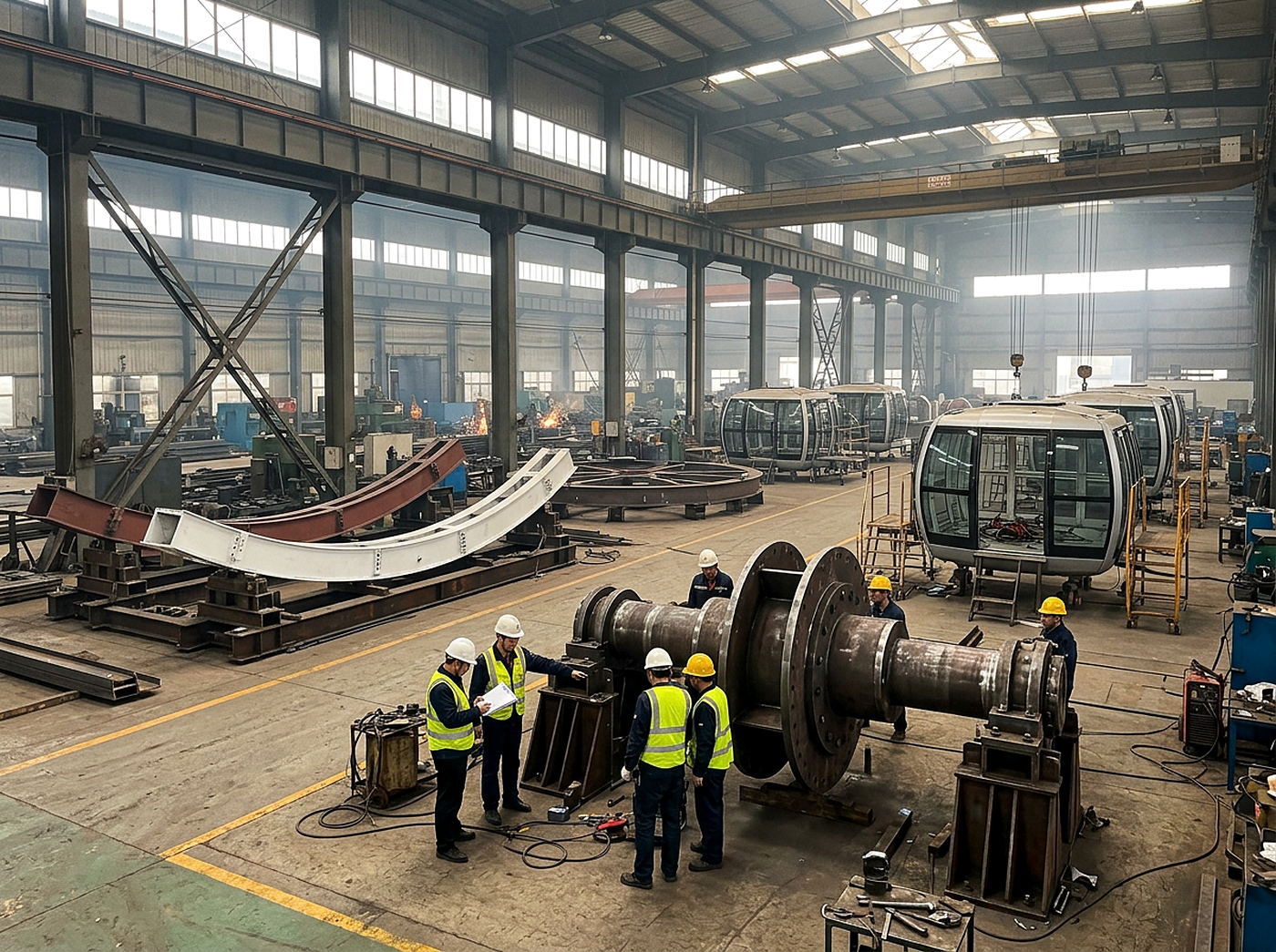
Working With a Manufacturer
An observation wheel project starts with site data: soil report, wind data, available footprint, power supply and the planning height limit. A manufacturer can then propose a wheel diameter, cabin count and support arrangement that fit. ZhipaoRides, founded in 2013 with a 120,000 m2 plant and about 500 staff in Xingtai, Hebei, exports rides to Russia, Southeast Asia, the Middle East, South America and Africa, and can review site conditions against its observation wheel and Ferris wheel models.
Ask for the structural design basis, the operating wind limit, the evacuation procedure and the maintenance schedule in writing. Those four documents decide whether the wheel can run on a busy summer day and how often it needs to come out of service.
FAQ
Is an observation wheel the same as a Ferris wheel?
No. An observation wheel has enclosed cabins that stay upright and usually turns continuously, while a Ferris wheel has open gondolas and stops at each boarding position. The observation wheel is heavier per passenger and needs a raised boarding platform.
How long does a ride on an observation wheel take?
It depends on rim speed and the number of turns per cycle, which are set per project. The ride is designed for a slow rotation so passengers have time to view the area; the exact cycle time is agreed with the manufacturer during specification.
Can an observation wheel run in wind?
Each wheel has an operating wind limit set by its designer. Above that limit the wheel stops and passengers are unloaded according to the operating procedure. The structural design wind speed is agreed at the planning stage using local wind data.
What site information is needed for a quotation?
Provide the soil report, local wind and seismic data, the available footprint, the power supply and any planning height limit. With those, a manufacturer can propose a wheel diameter, cabin count and foundation arrangement.