
What is a family coaster?
A family coaster is a roller coaster designed so that children and adults can ride together: it has a low height restriction, moderate speeds and a short, repeatable cycle. It is not a kiddie ride and not a thrill coaster — it sits between the two, which is why parks use it to serve mixed-age groups rather than a single demographic.
At ZhipaoRides, family coasters are one of several ride categories produced alongside roller coasters, Ferris wheels, drop towers and flying theatres. The company manufactures in Xingtai, Hebei, at a 120,000 m2 plant with about 500 staff and roughly 54 ride models.
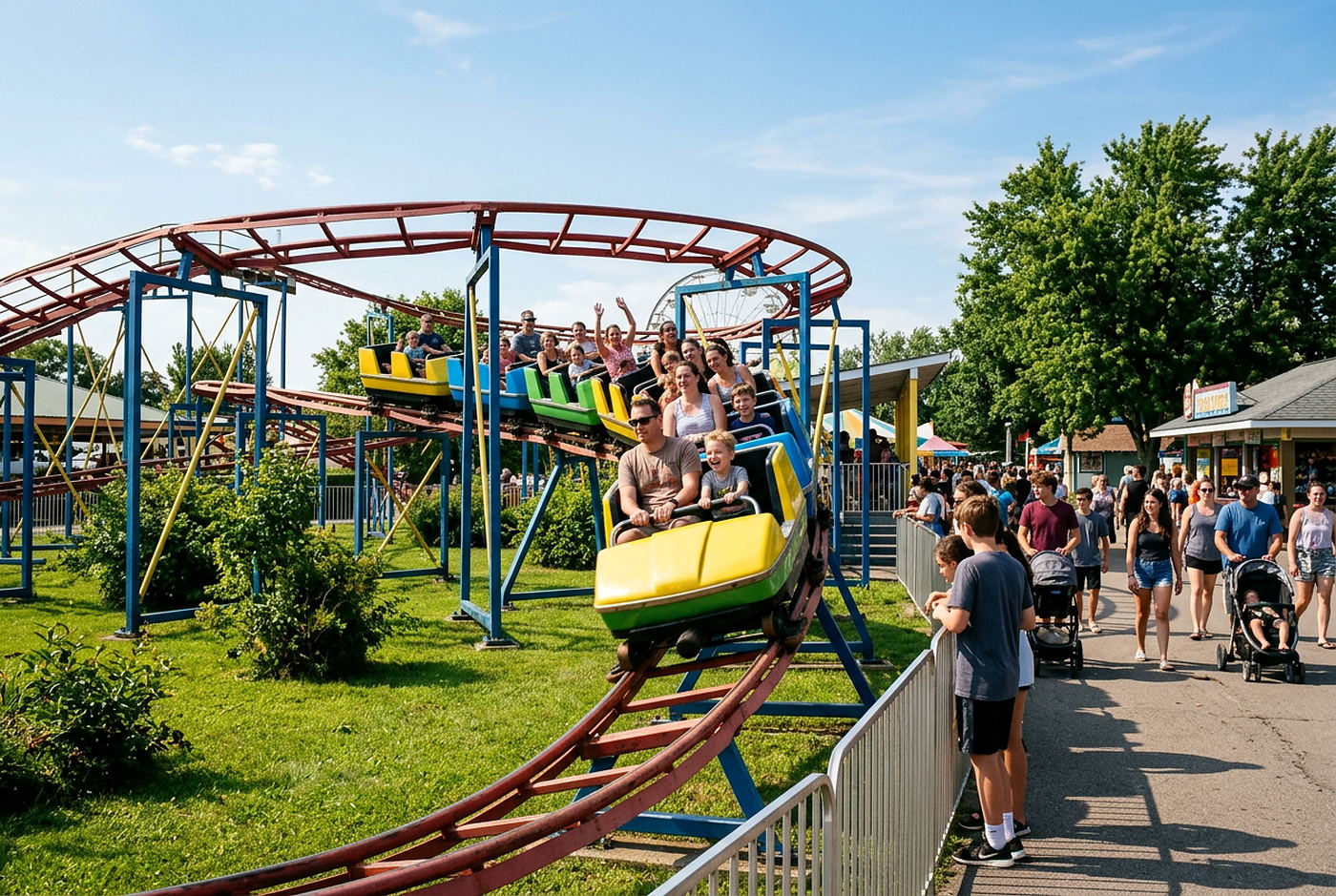
How a family coaster works
Mechanically, a family coaster follows the same principles as any roller coaster: a lift or launch brings the train to height, gravity carries it through the layout, and brakes bring it to a controlled stop at the station. What separates it from a thrill coaster is the design envelope.
- Lower speeds and forces. Layouts are shaped to keep positive and negative g-forces within a range that smaller bodies can tolerate. Turns are wider, drops are shorter and transitions are gentler.
- Restraint systems sized for children. Seats and restraints are dimensioned for smaller riders, often with a shared lap bar or individual restraint that an accompanying adult can check.
- Height-based admission rules. Parks set a minimum height to ride alone and a lower threshold to ride with an adult. The coaster's restraint geometry and seat depth determine what those thresholds can be.
- Short, repeatable cycles. A family coaster usually runs a cycle measured in roughly one to two minutes including load and unload, so queues move and the ride can run continuously through a operating day.
The practical result is a ride that a seven-year-old and a parent can board together, then re-ride without a long wait. That combination — shared experience plus throughput — is the commercial reason the category exists.
Specification snapshot
The table below shows the design parameters that matter when a park is comparing family coaster options. Exact figures vary by model and by the park's operating rules; the values here describe the category, not a single product.
| Parameter | Typical family coaster range | Why it matters |
|---|---|---|
| Rider height to ride with an adult | Set by park policy, commonly around 90–110 cm | Determines whether the ride serves younger siblings |
| Rider height to ride alone | Set by park policy, commonly around 120–130 cm | Controls how many children need an accompanying adult |
| Cycle time (dispatch to dispatch) | Roughly 60–120 seconds | Drives hourly capacity and queue length |
| Track length | Short to medium layouts, model-dependent | Fits constrained sites and indoor halls |
| Train configuration | Multiple cars, two to four riders per row | Balances family seating with throughput |
| Drive system | Chain lift or equivalent | Simple, proven maintenance profile |
Height thresholds are not fixed by the manufacturer alone. They are agreed with the park and, in most markets, reviewed against local safety regulation and the ride's operating manual. A park that wants to serve younger children should raise this with the manufacturer at layout stage, because seat and restraint design has to support the rule.

Where a family coaster fits
A family coaster is usually the first coaster a park buys, or the second after a kiddie ride. It fits in these situations:
- Mixed-age groups. Families with children of different ages need a ride everyone can board. A family coaster is the only coaster category that reliably delivers this.
- Parks with a gap between kiddie rides and thrill coasters. Many parks have small children's rides and one large coaster, with nothing in between. The family coaster fills that gap and gives children a progression path.
- Constrained sites. Shorter layouts and lower structures suit parks with limited land, indoor halls or rooftop locations.
- High-repeat visitors. A short cycle and low height restriction encourage re-riding, which supports season-pass value.
Where it does not fit
It is equally important to say where a family coaster is the wrong purchase:
- Parks competing on thrills. If the market position depends on tall, fast coasters, a family coaster will not carry that message. It supports a thrill lineup; it does not replace one.
- Sites with very high throughput targets. A family coaster's capacity is respectable but below a large multi-train thrill coaster. Parks expecting tens of thousands of riders per day from one attraction should model the numbers first.
- Parks without the maintenance base. Any coaster needs inspection routines, spare parts and trained staff. A park that cannot support that should start with simpler rides.
ZhipaoRides builds family coasters within a broader catalogue that includes roller coasters, Ferris wheels, drop towers, flying theatres and family rides, and exports to markets including Russia, Southeast Asia, the Middle East, South America and Africa. Parks comparing configurations can review the family roller coaster models available and match layout, train size and height rules to their site.
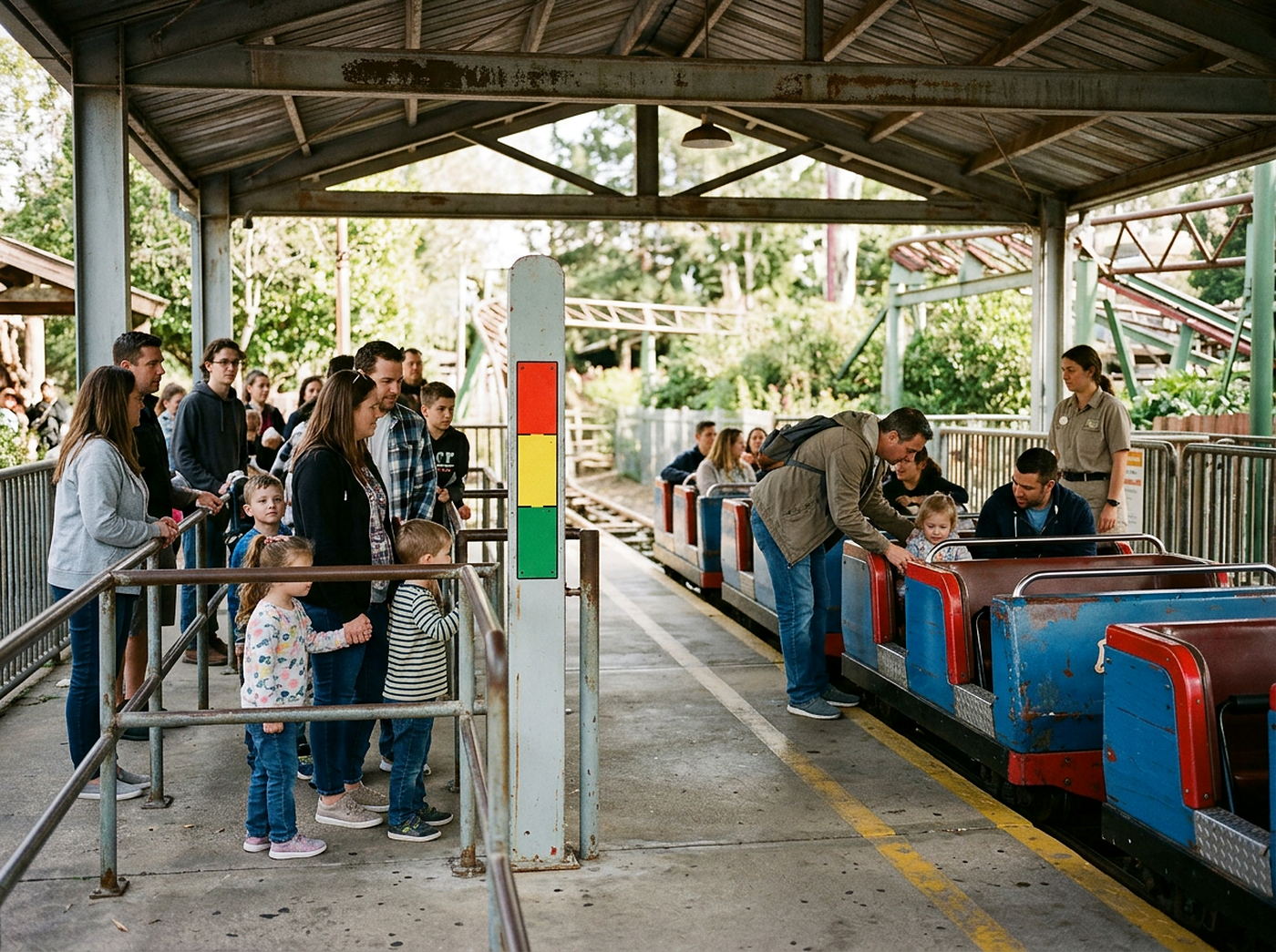
What to specify before you enquire
When approaching a manufacturer, bring four numbers and one policy decision:
- Available footprint in metres, including the station and queue area.
- Target hourly throughput, based on expected attendance and acceptable queue time.
- Minimum rider height you want to serve with an adult, and the age range of your core visitor.
- Power supply available at the site.
- Whether the ride will operate indoors, outdoors or seasonally, since that affects materials and enclosure.
With those inputs, a manufacturer can propose a layout and confirm whether the height rule you want is achievable with the restraint design. That conversation is more useful than comparing catalogue images, because the height rule and the cycle time are what determine whether the ride actually serves families.
FAQ
What age is a family coaster for?
Family coasters are built for children and adults riding together. The lower height threshold — often around 90–110 cm depending on park policy — lets younger children ride with an adult, while older children and adults can ride alone above the upper threshold.
How long is a family coaster ride cycle?
Typically about one to two minutes from dispatch to dispatch, including loading and unloading. The short cycle is deliberate: it keeps queues moving and allows continuous operation through the day.
Is a family coaster safe for small children?
Yes, within its stated height and supervision rules. The layout is shaped to keep forces within a range smaller riders can tolerate, and restraints are sized for children. Parks must enforce the height thresholds and accompanying-adult rules set out in the operating manual.
Can a family coaster be installed indoors?
Often, yes. Shorter layouts and lower structures suit indoor halls and constrained sites, but the building must provide the required clearance, ventilation and power supply. This should be confirmed at layout stage.