
What Is a Panoramic Drop Tower?
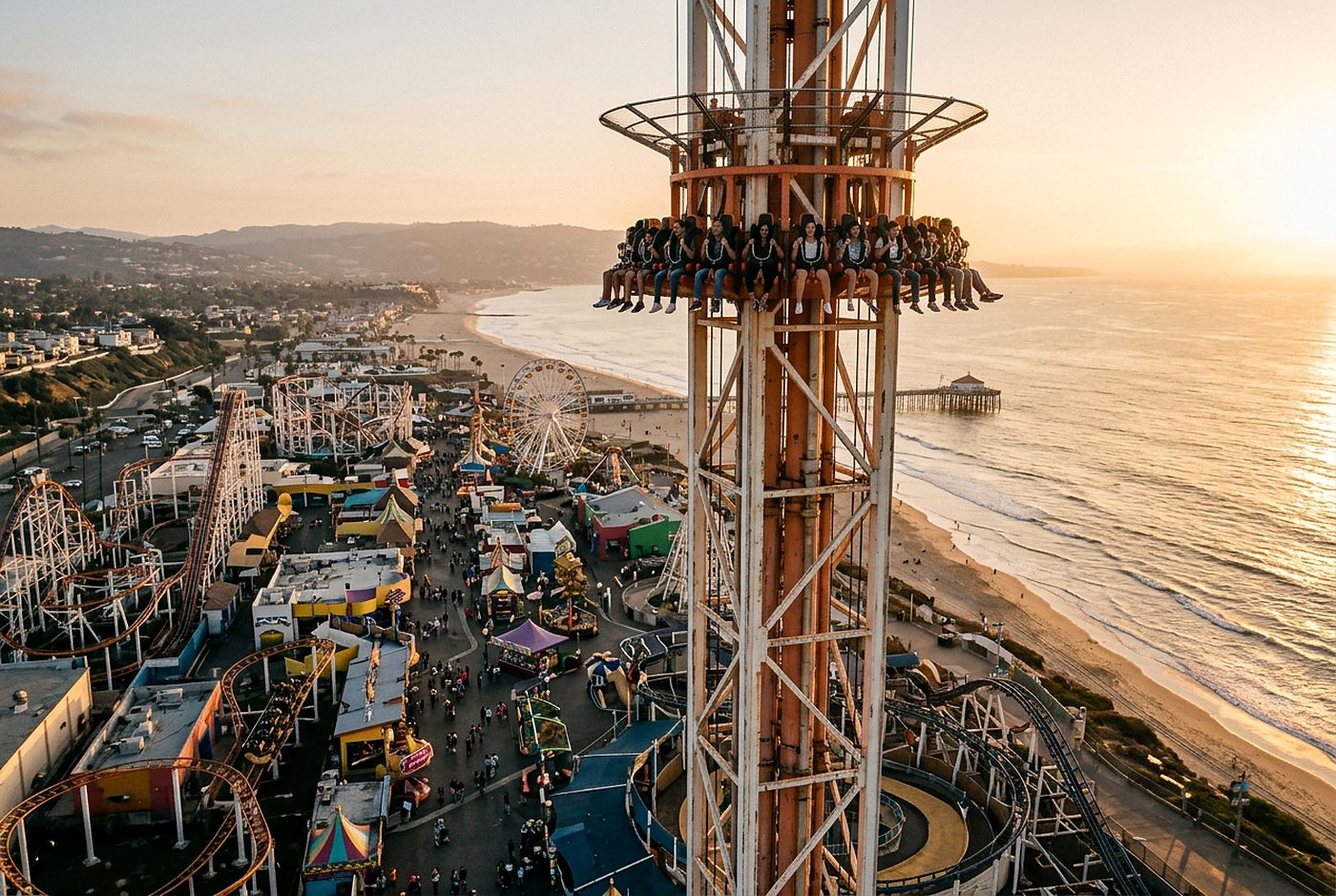
A panoramic drop tower is a drop tower ride whose gondola turns slowly at the top to give riders a full-circle view before releasing into a vertical free fall. The rotation happens during a short hold at the apex, so the ride combines an observation pause with a gravity drop. The format is aimed at parks that want a tall signature ride without a fully enclosed cabin.
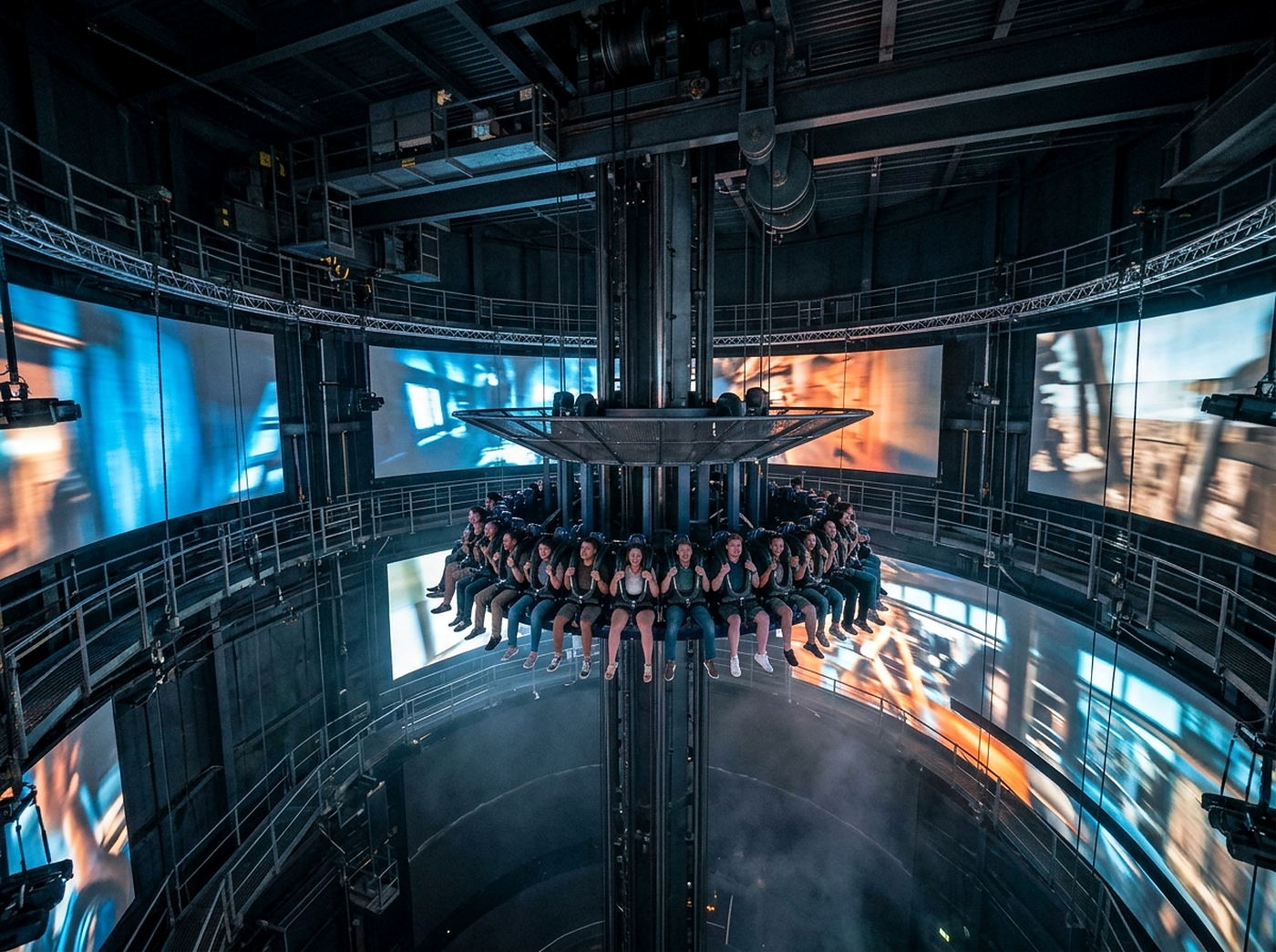
The term is used for two related layouts: an outdoor tower where the rotating gondola is open to the sky, and an indoor variant where the tower rises through a screen-lined shaft and the view is projected. Both follow the same sequence: ascent, rotate-and-hold, release, brake.
How the Ride Works
The cycle is built around the pause, not the fall. A typical sequence runs as follows:
- Ascent. The gondola climbs the tower at a controlled speed, giving riders time to look outward as the park drops away below them.
- Viewing pause. At the top, the gondola rotates through 360 degrees and holds. On the outdoor version, riders see the skyline, the park layout and the horizon; on the indoor version, the screens take over and the rotation is timed to the projected scene.
- Release. The gondola drops in free fall along the tower guide.
- Braking. The descent is arrested by the braking section and the gondola returns to the station.
The viewing pause is what separates a panoramic tower from a conventional drop tower. A conventional tower gives riders a fixed forward view on the way up and a short look before the drop. A panoramic tower makes the view the main event of the upper cycle, and the rotation means every rider on the gondola gets the same view rather than the front row getting the best of it.
Because the gondola rotates, the restraint and seat layout have to work in all directions. Riders face outward around the ring, and the rotation is slow enough that the pause reads as a viewing moment rather than a spin.
Specification Overview
The table below gives the general parameters park developers ask about first. Exact figures depend on the model and site; the values here describe the format rather than a single unit.
| Parameter | Outdoor panoramic tower | Indoor screen variant |
|---|---|---|
| Gondola | Rotating ring, open view | Rotating ring inside a screen-lined shaft |
| Upper cycle | 360-degree rotation with hold | Rotation timed to projected scene |
| View source | Park, skyline, horizon | Screens on the shaft walls |
| Footprint | Tower plus station and queue | Tower plus enclosed building |
| Weather exposure | Full; wind limits apply | Sheltered |
| Typical setting | Park skyline, waterfront, open plaza | Indoor park, dark ride hall, mixed-use building |
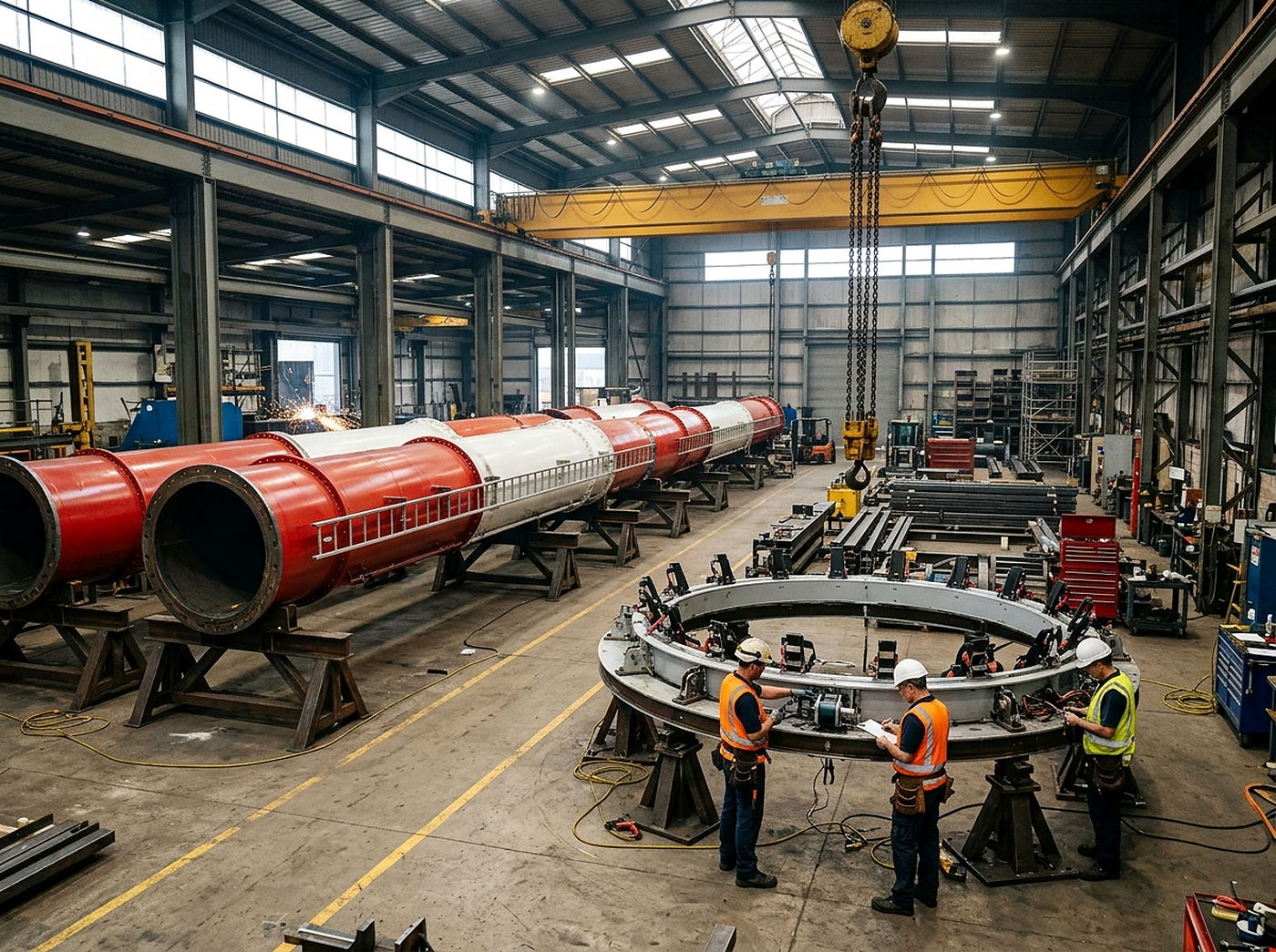
ZhipaoRides manufactures drop towers and other ride types at its plant in Xingtai, Hebei, and exports to markets including Russia, Southeast Asia, the Middle East, South America and Africa. The 360 panorama drop tower product page lists the model options and layout drawings for developers working on a site plan.
Where a Panoramic Tower Fits
The outdoor version works best where the view is worth the pause. That means sites with a skyline, a waterfront, a mountain backdrop or a park layout that reads well from height. A tower placed at the edge of a park, facing outward, gives riders something to look at during the hold; a tower in the middle of a flat site gives them the park itself. Either can work, but the view should be part of the design brief, not an afterthought.
The indoor screen variant fits where height is available but open air is not: indoor parks, dark ride halls, and mixed-use buildings that want a ride as an anchor tenant. The screens replace the skyline, so the site does not need a view. The trade-off is that the building has to accommodate the tower shaft and the screen structure, which changes the civil works and the ceiling height requirements.
Both versions suit parks that want a tall ride with a broad audience. The pause gives nervous riders a reason to board, and the drop gives thrill riders the payoff. That combination tends to widen the age range a single tower can serve.
Where It Does Not Fit
A panoramic tower is a poor fit in three situations. First, sites with tight height limits: the ride's value comes from altitude, and a truncated tower loses the view that justifies the format. Second, sites with persistent high winds: the open gondola is exposed, and wind limits will cut operating days. Third, parks that already have a drop tower with a strong view: a second tower competes with the first for the same riders rather than adding capacity.
The indoor variant has its own constraints. It needs a building with the clear height for the shaft and the screen walls, and the screen content has to be produced and maintained. A park without in-house media capability should plan for that cost before committing to the indoor format.
Planning Notes for Developers
- Decide the view first. Walk the site and pick the tower position by what riders will see at the top, then fit the station and queue around it.
- Check wind data. Ask for local wind records before fixing the tower height; the operating envelope matters more than the headline height.
- Plan the queue for the pause. The upper cycle is longer than a conventional drop tower's, so throughput per hour is lower. Size the queue and the station accordingly.
- For indoor versions, budget the media. Screen content, playback hardware and maintenance are part of the ride cost, not a separate marketing item.
ZhipaoRides works with park developers on layout, tower height and gondola configuration, and the company's export experience across Russia, Southeast Asia, the Middle East, South America and Africa covers a range of climate and site conditions. Early site drawings are the right time to raise the view, wind and queue questions.
FAQ
What is a panoramic drop tower?
A panoramic drop tower is a drop tower with a rotating gondola that pauses at the top to give riders a full-circle view before the free fall. It can be open-air or built inside a screen-lined shaft.
How long is the viewing pause?
The pause is timed to the rotation, which is slow by design. Exact timing depends on the model and the operator's cycle settings; ask for the cycle profile when comparing models.
Can a panoramic tower be installed indoors?
Yes. The indoor variant uses screens on the shaft walls in place of the outdoor view. It requires a building with clear height for the shaft and the screen structure.
Does the rotation affect capacity?
Yes. The upper cycle is longer than a conventional drop tower's, so hourly throughput is lower. Queue and station sizing should account for it.