
What is a sightseeing gondola ride?
A sightseeing gondola ride is an amusement ride in which passenger cabins are suspended from a fixed, elevated track and travel along that track to give riders views of the surrounding park or landscape. Unlike a cable car, which hangs from a moving rope and depends on towers and tension, a sightseeing gondola ride runs on a rigid steel rail with a defined path. The cabins are supported by a carriage that rolls on the track, and the ride is driven by a station-based system rather than by the rope itself.
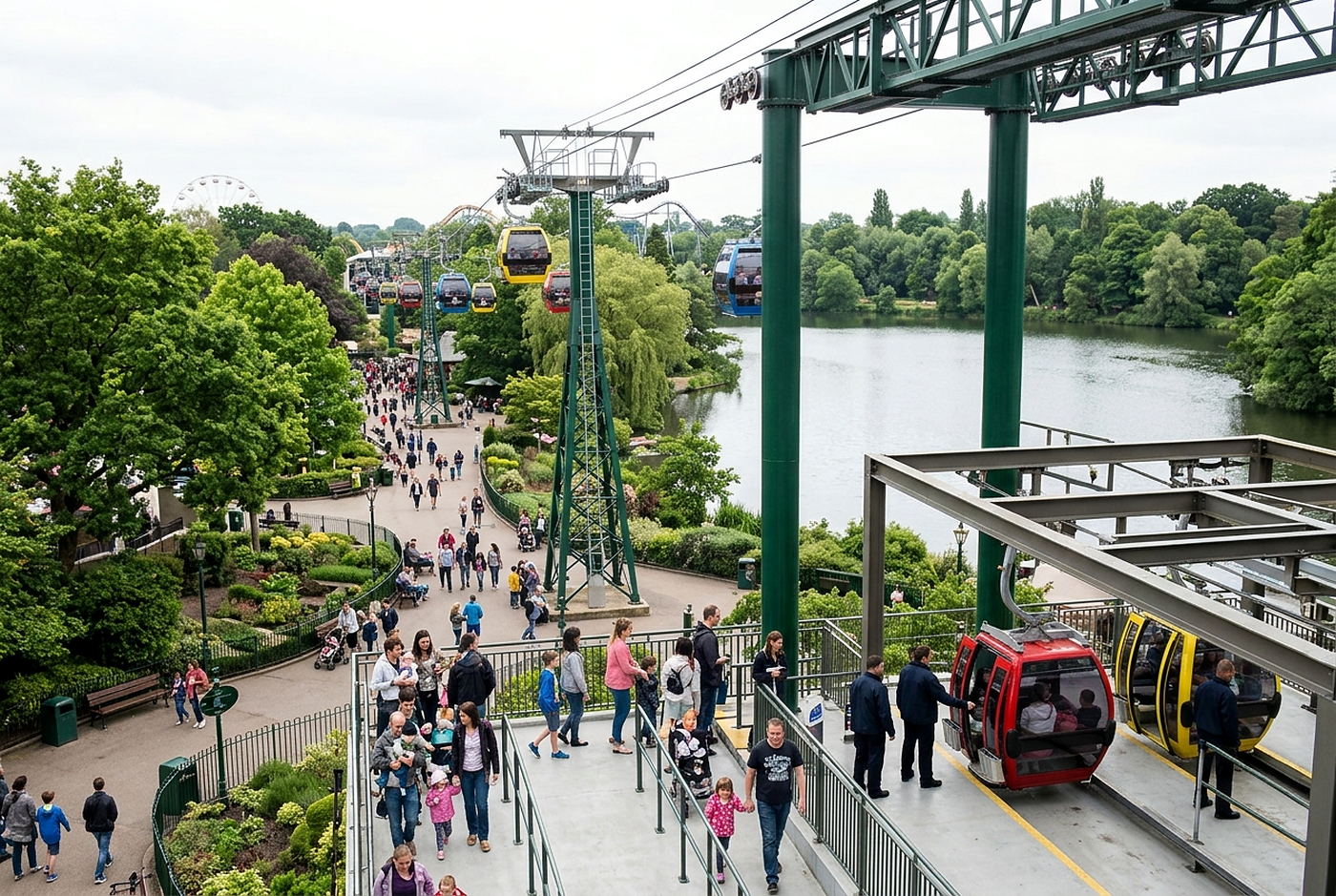
This definition matters for park developers because the two ride types are often confused. A cable car is a transport system; a sightseeing gondola ride is a ride. The fixed track gives the operator control over the route, the speed profile, and the station layout, and it removes the need for long spans between towers.
How a fixed-track gondola ride works
The mechanics are straightforward. A steel track, usually a closed loop, is supported by columns. Each cabin hangs from a carriage with wheels that run on the track. An electric drive in the station moves the cabins around the loop at a controlled speed. Because the track is fixed, the cabin remains level and the ride can stop and restart without swinging.
Key mechanical points:
- Track and support: The track is a fabricated steel structure, and the columns are spaced according to the load and the span. The route can include curves, gradients, and straight viewing sections.
- Carriage and suspension: The carriage carries the cabin on a hanger. The suspension is designed to keep the cabin stable when the ride stops.
- Drive and station: A station drive unit moves the cabins. Boarding and alighting happen at a controlled station platform, and the ride can be operated in a continuous loop or in a stop-and-go mode.
- Safety systems: Brakes, anti-rollback devices, and monitoring sensors are part of the ride control system. The exact configuration depends on the model and the site.
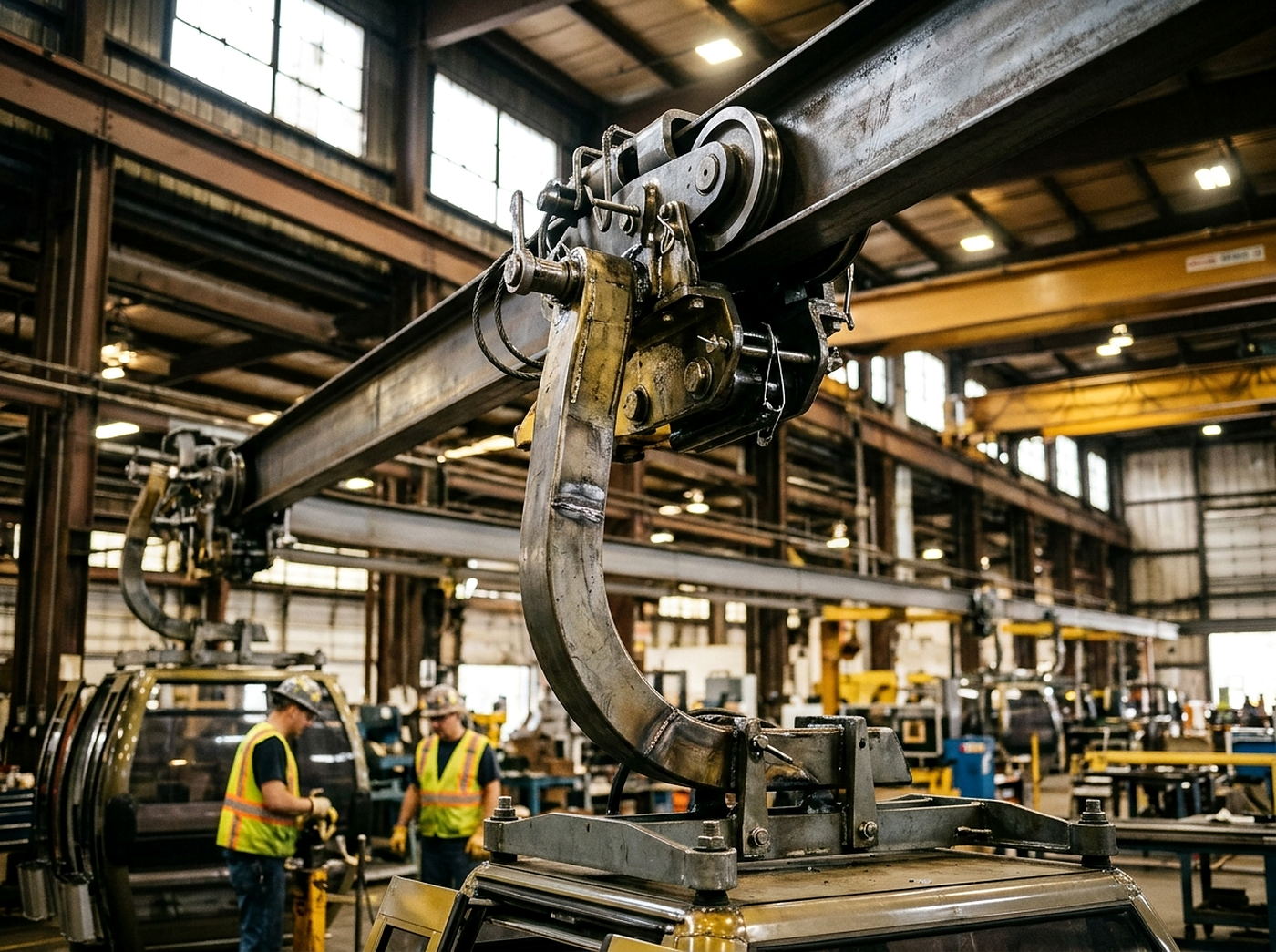
ZhipaoRides manufactures suspended sightseeing cars in Xingtai, Hebei, and the company's product range includes this ride type among its approximately 54 ride models. The fixed-track design is one of several suspended ride configurations the company produces.
Specification example
The table below gives a representative specification range for a fixed-track sightseeing gondola ride. Actual figures depend on the model and the site; the numbers here are for planning discussion, not a quotation.
| Parameter | Typical range | Notes |
|---|---|---|
| Track type | Fixed steel rail, closed loop | Route set by track geometry |
| Cabin capacity | 4–8 passengers | Varies by cabin size |
| Ride speed | Low, controlled | Set by drive and station |
| Drive | Electric, station-mounted | Continuous or stop-and-go |
| Support | Steel columns | Spacing depends on span |
| Boarding | Station platform | Level access at station |
For a closer look at the cabin and suspension arrangement, see the suspended sightseeing car product page.
Where a sightseeing gondola ride fits
A fixed-track gondola ride fits parks that want an elevated viewing experience without the infrastructure of a cable car. It suits:
- Parks with a defined route: The track can follow a perimeter, a lake edge, or a central axis, so the ride becomes part of the park layout.
- Sites with limited span requirements: Because the track is supported by columns, the ride does not need long rope spans between towers.
- Family-oriented areas: The low speed and stable cabins make it accessible to a wide range of visitors.
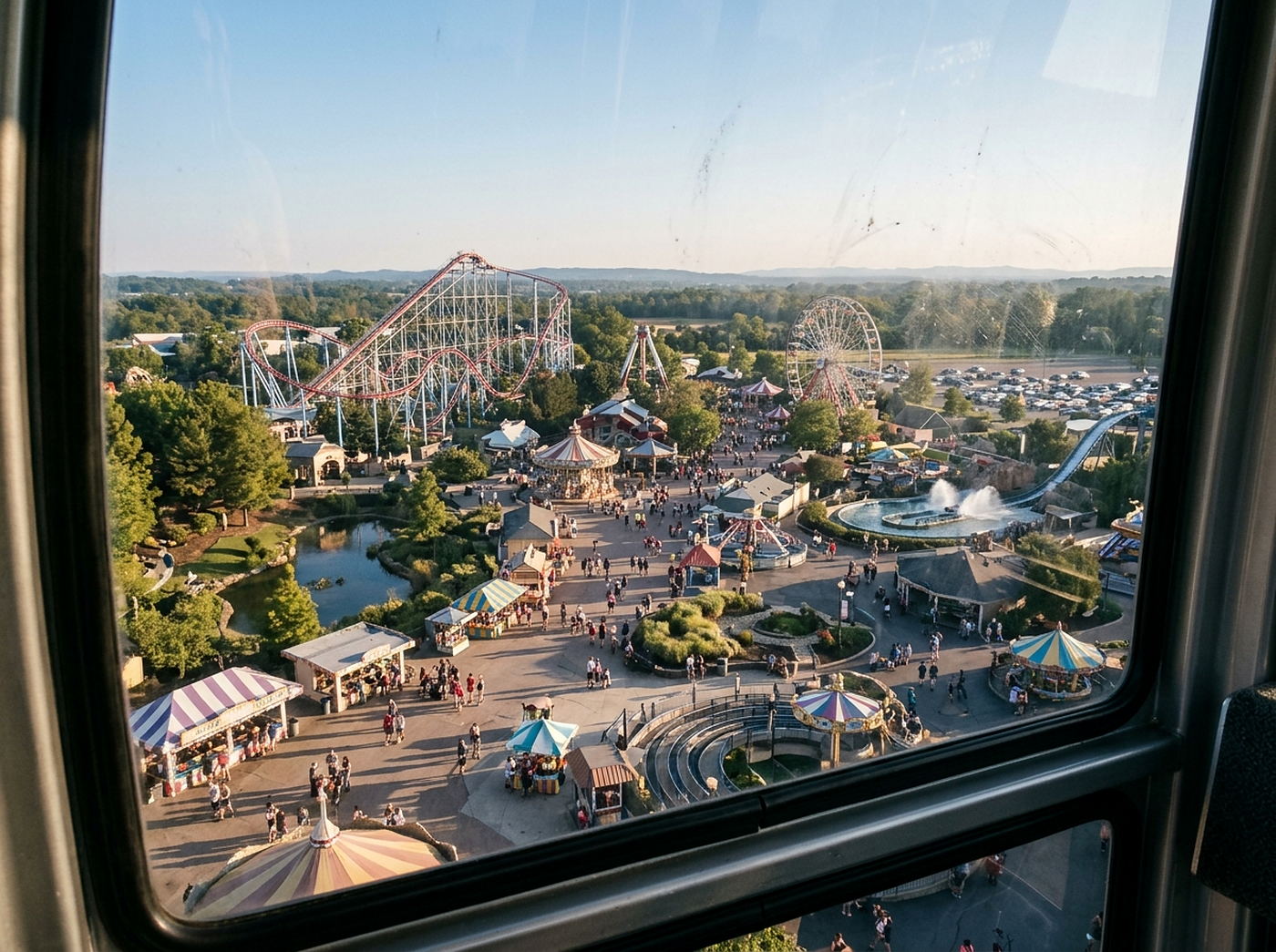
- Parks that want a landmark view: The elevated position gives riders a view over the park, and the ride can be routed past key features.
Where it does not fit
A sightseeing gondola ride is not the right choice for every site. It is a poor fit when:
- The site needs point-to-point transport: A cable car is designed to move people between two distant points; a fixed-track gondola ride is a loop or a defined route within a park.
- The terrain cannot support columns: The track needs foundations and column positions, so steep or constrained sites may not work.
- The park wants high throughput with minimal station footprint: Boarding is at a station platform, and the station layout needs space for queues and access.
- The route must cross long spans without intermediate support: That is a cable car application, not a fixed-track one.
ZhipaoRides exports rides to Russia, Southeast Asia, the Middle East, South America, and Africa, and the company's manufacturing base in Xingtai, Hebei, covers a 120,000 m² plant with about 500 staff. For park developers comparing ride types, the choice between a fixed-track gondola and a cable car comes down to route, support, and station design.
FAQ
Is a sightseeing gondola ride the same as a cable car?
No. A sightseeing gondola ride runs on a fixed steel track with suspended cabins. A cable car hangs from a moving rope and is supported by towers. The two have different support systems, different station designs, and different route constraints.
How many passengers can a gondola cabin carry?
Cabin capacity depends on the model. A typical range is 4 to 8 passengers per cabin. The exact figure should be confirmed with the manufacturer for the specific model.
Can a fixed-track gondola ride be stopped?
Yes. The station drive and brake system allow the ride to stop and restart. The cabin suspension is designed to keep the cabin stable during stops.
What site information is needed to plan a gondola ride?
Park developers should provide the route length, the available space for columns and station, the expected rider profile, and the viewing objectives. These determine the track geometry, cabin size, and station layout.