
What a double-deck carousel is
A double-deck carousel is a carousel with two passenger decks, one above the other, both rotating around a shared central column. Riders board on the lower deck or climb an internal stair to the upper deck; each deck turns as a separate rotating platform. A double-deck carousel is therefore one ride structure with two ride experiences stacked vertically, rather than two separate carousels placed side by side.
This definition matters for park planning because the ride's footprint, power demand and maintenance schedule are all built around a single central machine room, while its passenger throughput comes from two decks. ZhipaoRides manufactures double-deck carousels at its plant in Xingtai, Hebei, alongside single-deck carousels and other family rides.
How the two decks rotate
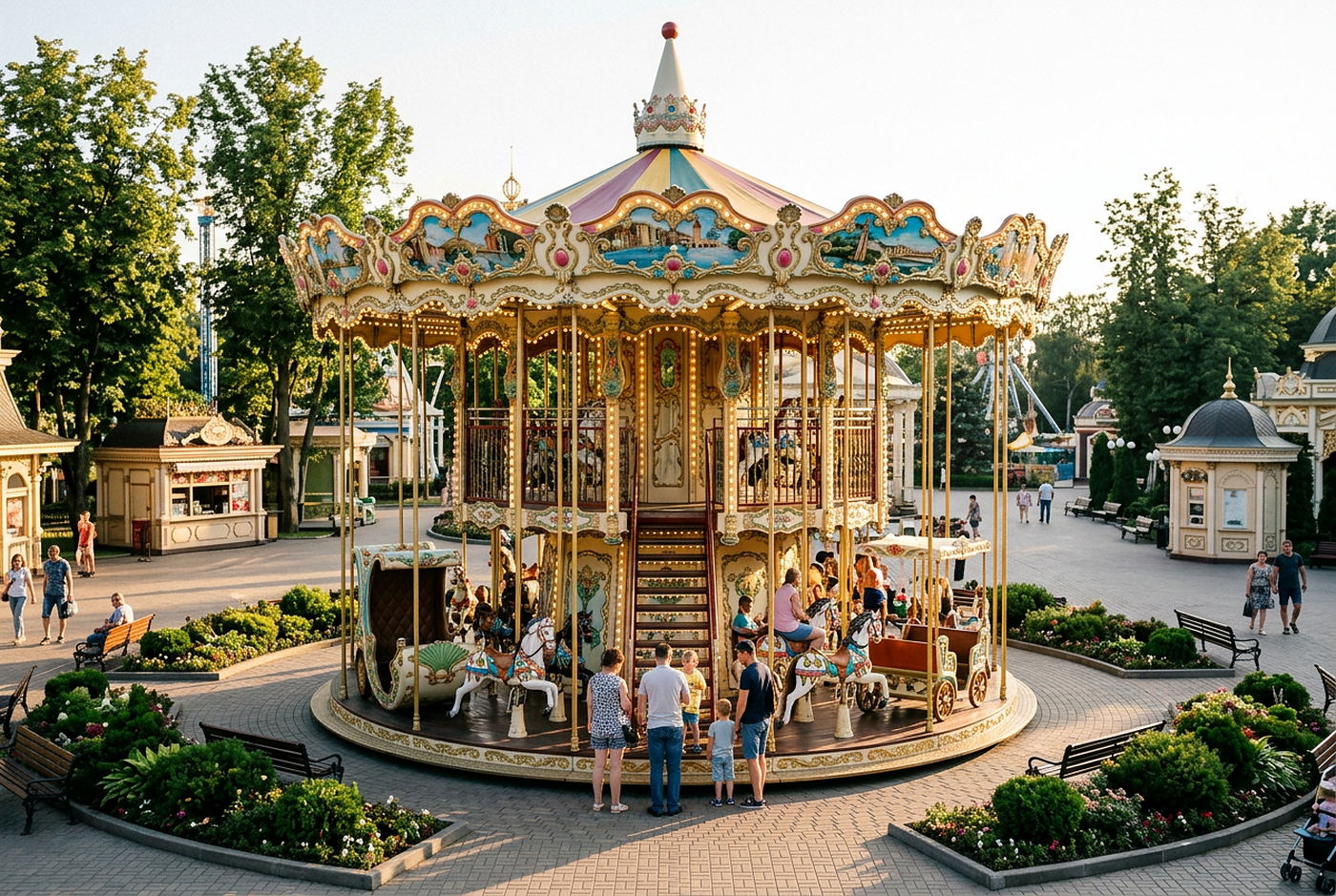
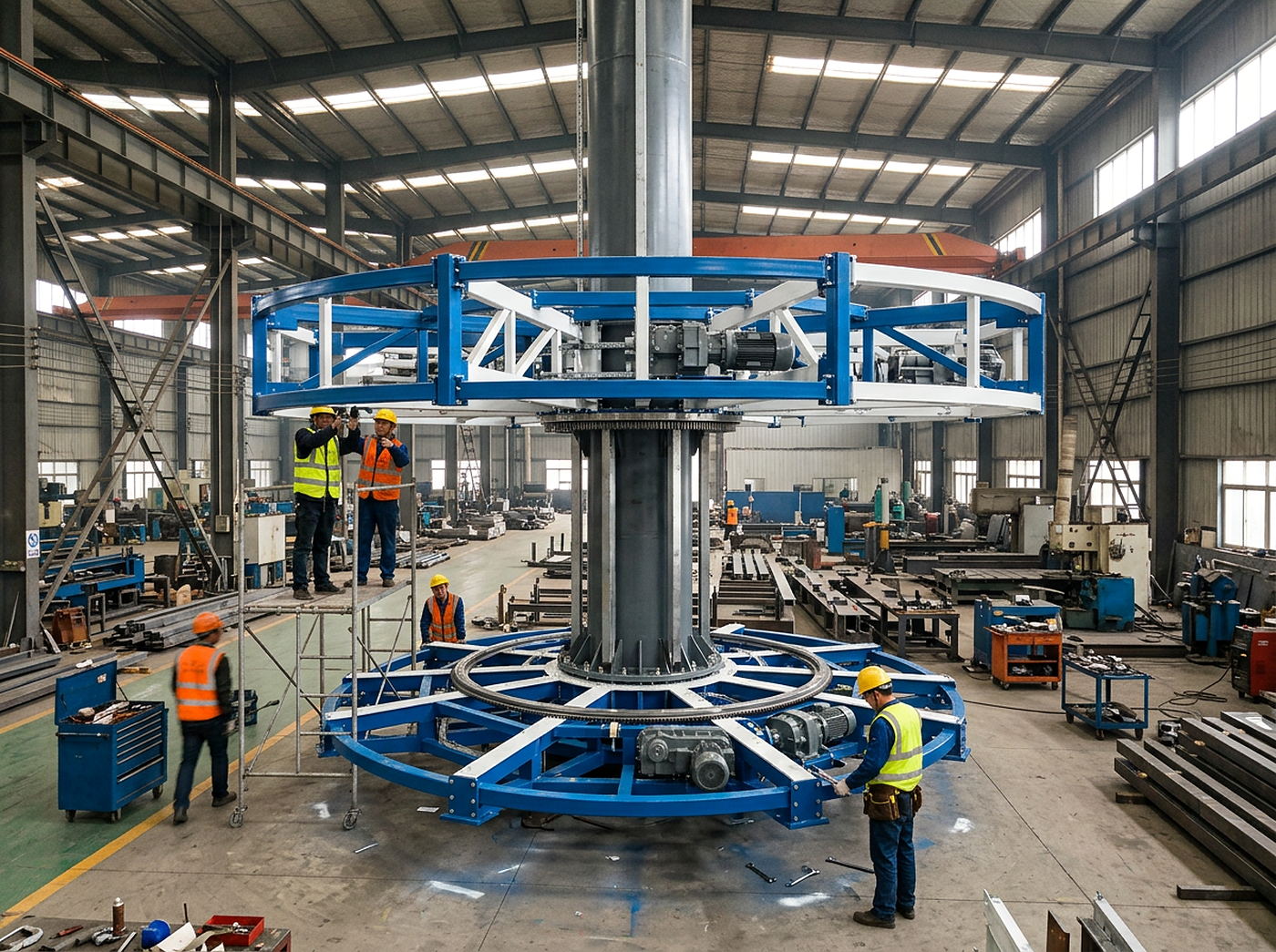
In a conventional single-deck carousel, one drive system turns one platform. In a double-deck carousel, the two decks are driven separately. The lower deck usually carries the main drive and the central bearing assembly; the upper deck has its own drive and bearing set mounted on the central column above it. This allows the decks to run at the same speed or at different speeds, and it allows one deck to be stopped for loading while the other continues to turn.
Structurally, the central column is the load path for both decks. The upper deck's weight and the dynamic loads from its rotation are transferred down the column to the base foundation, so the foundation and column sizing are the main engineering differences from a single-deck machine. The stair or ramp between decks is part of the passenger circulation and is enclosed by the ride's fencing and gates.
Operation follows a simple cycle: riders board, gates close, both decks accelerate, run for a set time, decelerate, and gates open. Because there are two decks, the ride can be loaded in two stages, which shortens the interval between cycles compared with a single platform of the same diameter.
Capacity and structural differences
The table below summarises the practical differences between a double-deck carousel and a single-deck carousel of similar ground footprint. Figures are typical design targets, not a quotation for a specific model.
| Item | Double-deck carousel | Single-deck carousel |
|---|---|---|
| Passenger decks | Two, stacked | One |
| Drive systems | Two, one per deck | One |
| Central column | Carries both decks; heavier section | Carries one deck |
| Foundation | Sized for combined upper and lower deck loads | Sized for one deck |
| Boarding | Lower deck at grade; upper deck via internal stair | Single boarding level |
| Riders per cycle | Higher, because two decks load at once | Lower for the same footprint |
| Maintenance access | Two drive and bearing sets to service | One set |
The capacity advantage is the main reason developers ask for a double-deck carousel: it increases riders per cycle without increasing the ground area the ride occupies. The trade-off is that the structure is taller, the column and foundation are heavier, and there are two drive systems to maintain instead of one.
Where a double-deck carousel fits
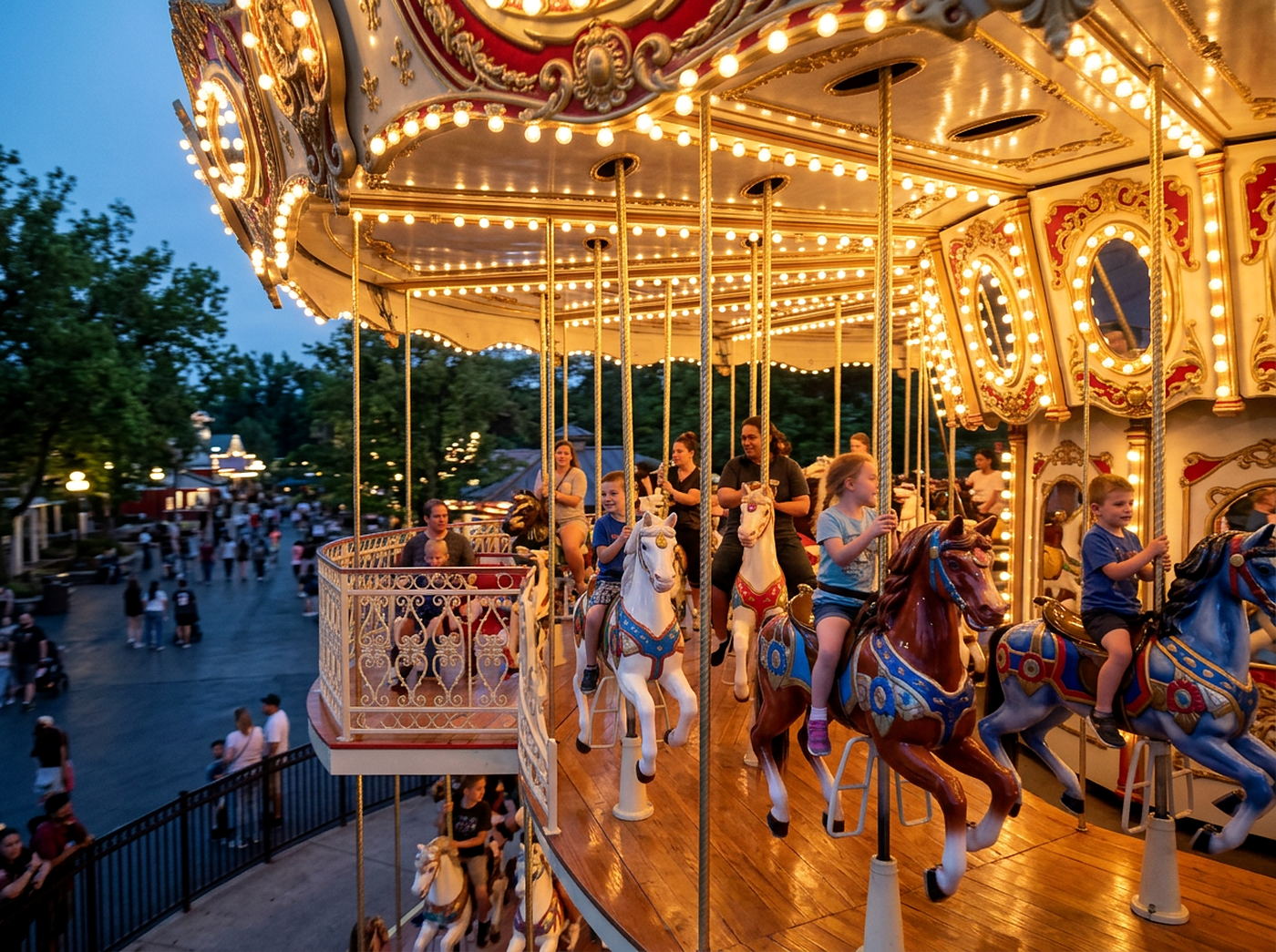
A double-deck carousel suits parks with high footfall and a central plaza or main-street location where a tall, visible family ride acts as a landmark. It also suits indoor or covered parks where floor space is limited but ceiling height allows a second deck. Because the ride is a family attraction rather than a thrill ride, it works as the anchor of a family zone and as a meeting point.
Typical settings include regional amusement parks, large family entertainment centres, and mixed-use developments that include a rides area. The ride can be themed to match a park's identity; ZhipaoRides builds carousels in its Xingtai, Hebei plant and exports them to markets including Russia, Southeast Asia, the Middle East, South America and Africa.
Where it does not fit
A double-deck carousel is not the right choice for every site. It is a poor fit where ceiling height is restricted, such as low-clearance indoor venues, because the second deck adds height. It is also a poor fit for small parks with modest footfall, where a single-deck carousel meets demand at lower cost and with simpler maintenance. Sites with weak or variable ground conditions need a foundation design checked for the combined deck loads before the ride is specified.
Finally, a double-deck carousel should not be treated as two independent rides for evacuation planning. The internal stair and upper deck need a clear evacuation route, and operating procedures must account for riders on both levels.
Specifying a double-deck carousel
When briefing a manufacturer, give the site footprint, available height, expected hourly footfall, and the foundation conditions. Ask for the rider capacity per cycle for each deck, the drive configuration, and the maintenance access plan for both bearing sets. For model options, see the double-deck carousel product page. If your site cannot take the height, compare the single-deck option before committing.