What amusement ride lead time actually measures
Amusement ride lead time is the period from a signed order to the day the ride can carry passengers. It is not the same as fabrication time. Fabrication is one block inside a longer chain that starts with design review and mould production and ends with installation, testing and inspection. When a park developer asks why a ride takes months, the honest answer is usually that steel welding is quick and the steps around it are not.
For most models in the ZhipaoRides range — roller coasters, Ferris wheels, drop towers, flying theatres and family rides — plan on 6 to 14 months from order to handover. The exact figure depends on model complexity, whether tooling already exists, site conditions and the inspection regime your local authority applies. This article explains where that time goes and which decisions you control.
Why welding is not the bottleneck
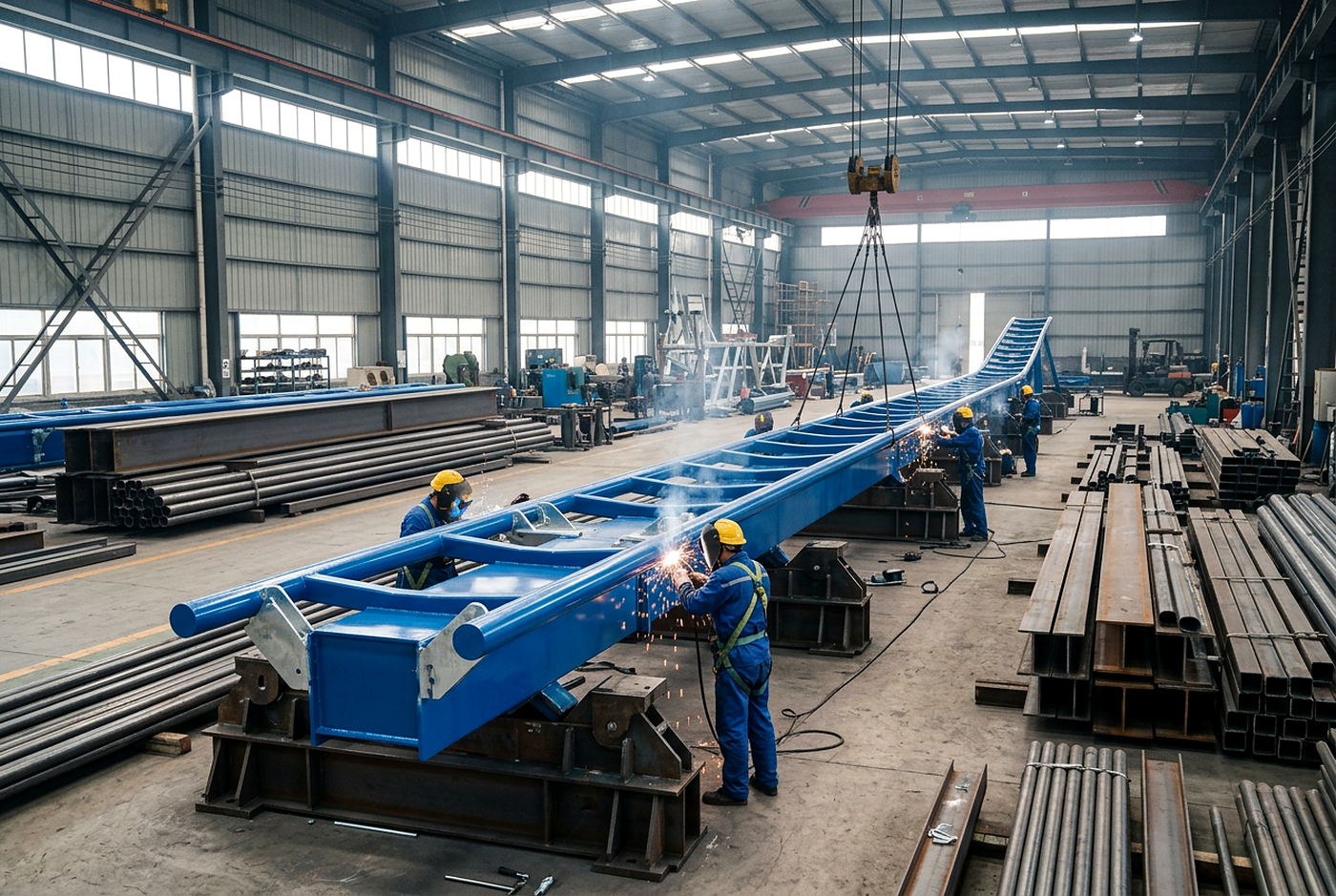
Welding a ride structure is a scheduled, repeatable task. A trained team with jigs and fixtures can complete the structural welds on a mid-size family coaster in a matter of weeks. Welding does not sit on the critical path for one reason: it can be parallelised. More shifts, more stations and pre-fabricated sub-assemblies all compress it.
Two other activities cannot be compressed the same way.
Moulds and tooling
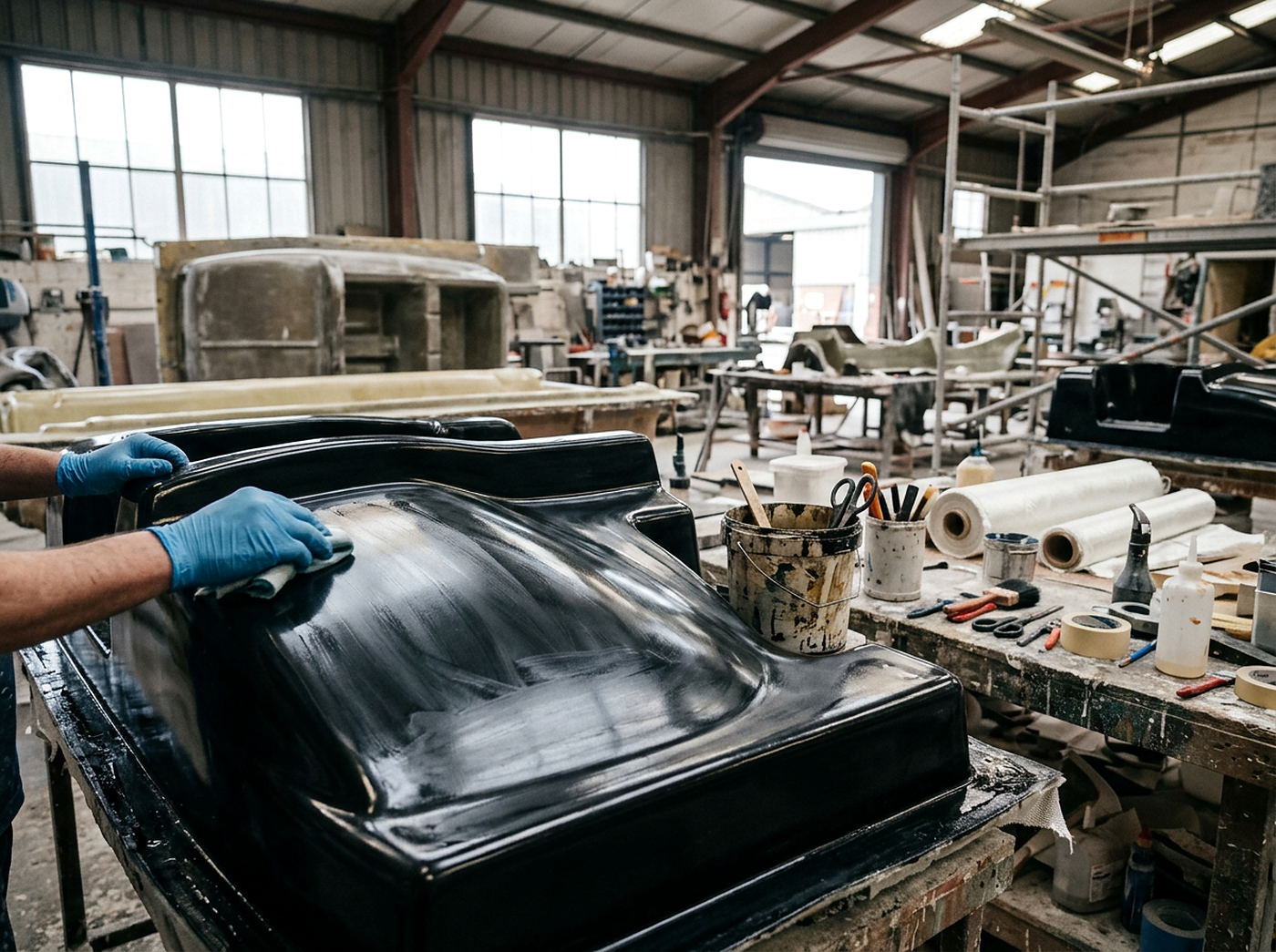
Every ride with fibreglass or composite components — train bodies, gondolas, themed enclosures, seats — needs moulds before those parts can exist. A mould is a precision form. It is built from a master pattern, finished by hand, and checked for dimensional accuracy. For a new ride model, mould production can take 8 to 16 weeks. It happens once, at the front of the schedule, and nothing downstream can start until it is done.
This is why a new model takes longer than a repeat order. If the moulds already exist from a previous build, that block disappears from your schedule. Ask any supplier, including us, whether the quoted model uses existing tooling or requires new moulds. The answer can move your delivery date by months.
Foundations and concrete curing
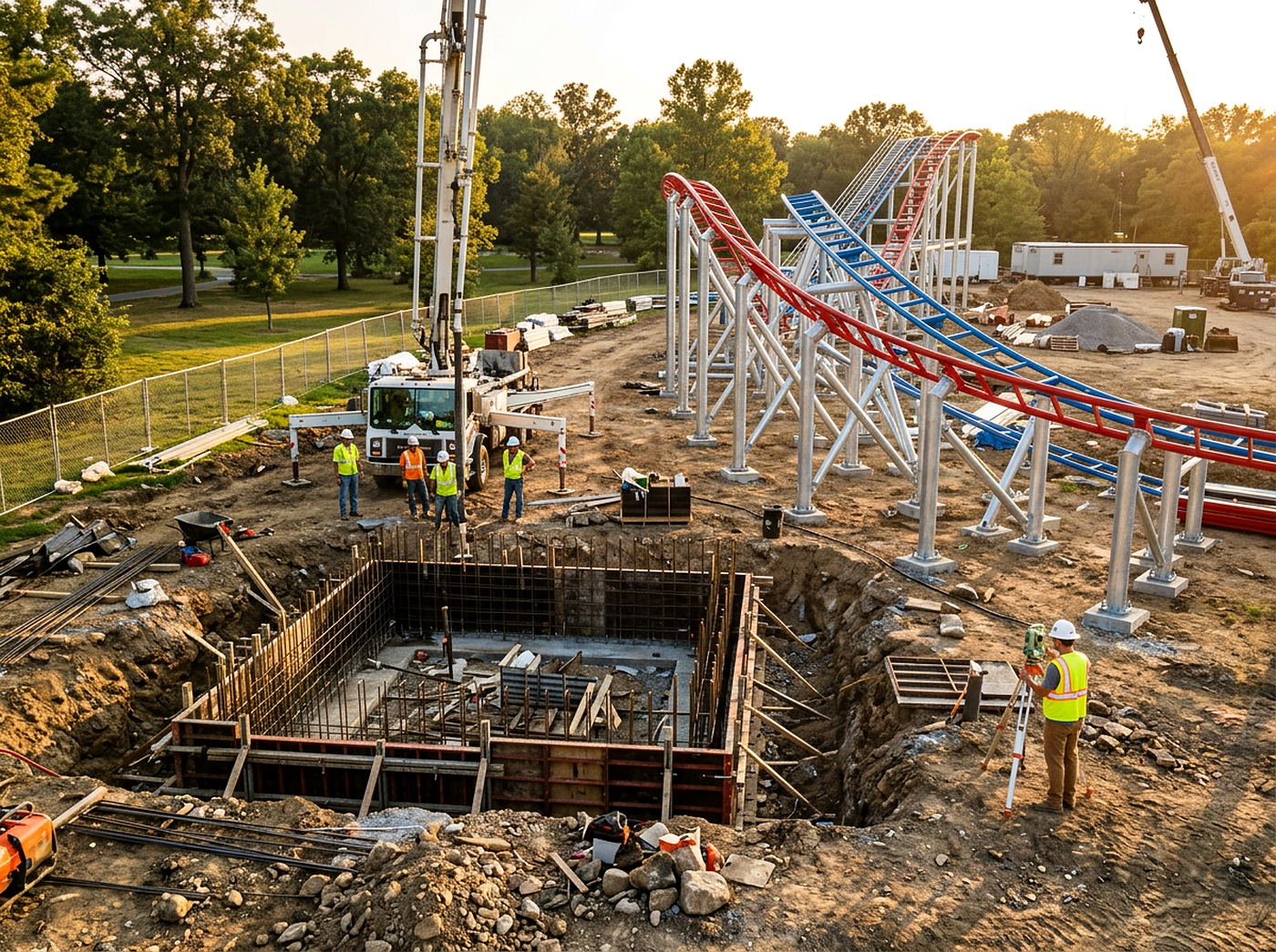
Foundations are the second fixed constraint. A ride foundation is designed for the loads the structure transfers to the ground, and the concrete must reach its specified strength before the ride is anchored and loaded. Curing is a chemical process measured in days and weeks. You cannot weld your way past it.
On site, foundation work includes excavation, reinforcement, formwork, pouring and curing, followed by anchor verification. In cold or wet seasons, curing takes longer. In poor soil, the foundation design itself becomes more extensive. Both extend the schedule regardless of how fast the factory works.
A phase-by-phase schedule
The table below shows a typical sequence for a mid-size ride with new tooling. Treat the ranges as planning figures, not commitments; your quotation will carry specific dates.
| Phase | Typical duration | On the critical path? |
|---|---|---|
| Design review and engineering sign-off | 2–4 weeks | Yes |
| Mould and tooling production (new model) | 8–16 weeks | Yes |
| Steel fabrication and welding | 6–12 weeks | Partly — overlaps with moulds |
| Composite part production | 4–8 weeks | Follows moulds |
| Factory assembly and pre-testing | 2–4 weeks | Yes |
| Packing and shipping | 3–8 weeks | Yes, by destination |
| Site foundations and curing | 4–10 weeks | Yes — can run in parallel with factory work |
| Installation | 3–8 weeks | Yes |
| Testing, inspection and handover | 2–4 weeks | Yes |
Two observations follow from this table. First, foundation work can overlap with factory production if the site is ready early. Parks that wait for the ride to arrive before breaking ground add the full foundation period to the end of the project. Second, mould production is the single largest front-loaded block, and it is the one most often underestimated in early budgets.
What you can do to shorten the schedule
- Choose a model with existing tooling. This removes the mould block entirely. It is the largest single lever a buyer has.
- Prepare the site before the order is placed. Ground surveys, soil reports and access routes let foundation design start early and let civil work run in parallel with fabrication.
- Confirm the inspection regime early. Local requirements vary by country. Knowing what documentation and witnessing your authority expects prevents a hold at handover.
- Keep design changes to a minimum after sign-off. A change to the train body or station layout can send you back to the moulds.
For a deeper look at how model choice affects the schedule, the technical specifications list the main parameters for each ride family. If you are weighing a coaster against other anchor attractions, the roller coaster range shows the configurations available and which ones share tooling.
How ZhipaoRides builds the schedule
ZhipaoRides manufactures in Xingtai, Hebei, in a 120,000 m2 plant with about 500 staff, and produces roughly 54 ride models. Rides are exported to Russia, Southeast Asia, the Middle East, South America and Africa, so shipping time is a real variable in every quotation. Because the company builds both steel structures and composite components in-house, the mould and fabrication stages can be sequenced together rather than handed between suppliers — which is one reason the schedule holds together.
When you request a quotation, ask for the schedule broken into the phases above, with the mould status of the model stated explicitly. A supplier who can tell you whether tooling exists, and when foundations must start, is giving you a plan you can build a budget around.
Next step
Send us your site location, target opening date and the ride type you are considering. We will return a scoped quotation with a phase-by-phase schedule, the tooling status of the model, and the dates by which foundation work must begin to hit your opening.