What is a themed family coaster?
A themed family coaster is a roller coaster designed around a narrative or character theme, with trains or cabins styled as characters, and ride forces kept within a range that children and adults can share. It sits between a children's ride and a full-scale thrill coaster: fast enough to feel like a real coaster, gentle enough for repeat rides. At ZhipaoRides, the format is built around character cabins and interchangeable train sets, so a park can change the story without replacing the track.
The category matters commercially because it serves the group that spends the most time in a park: families with children old enough to ride together. A coaster that a six-year-old and a parent can both enjoy, and want to ride again, does more for dwell time than a single high-thrill installation.
How the ride works
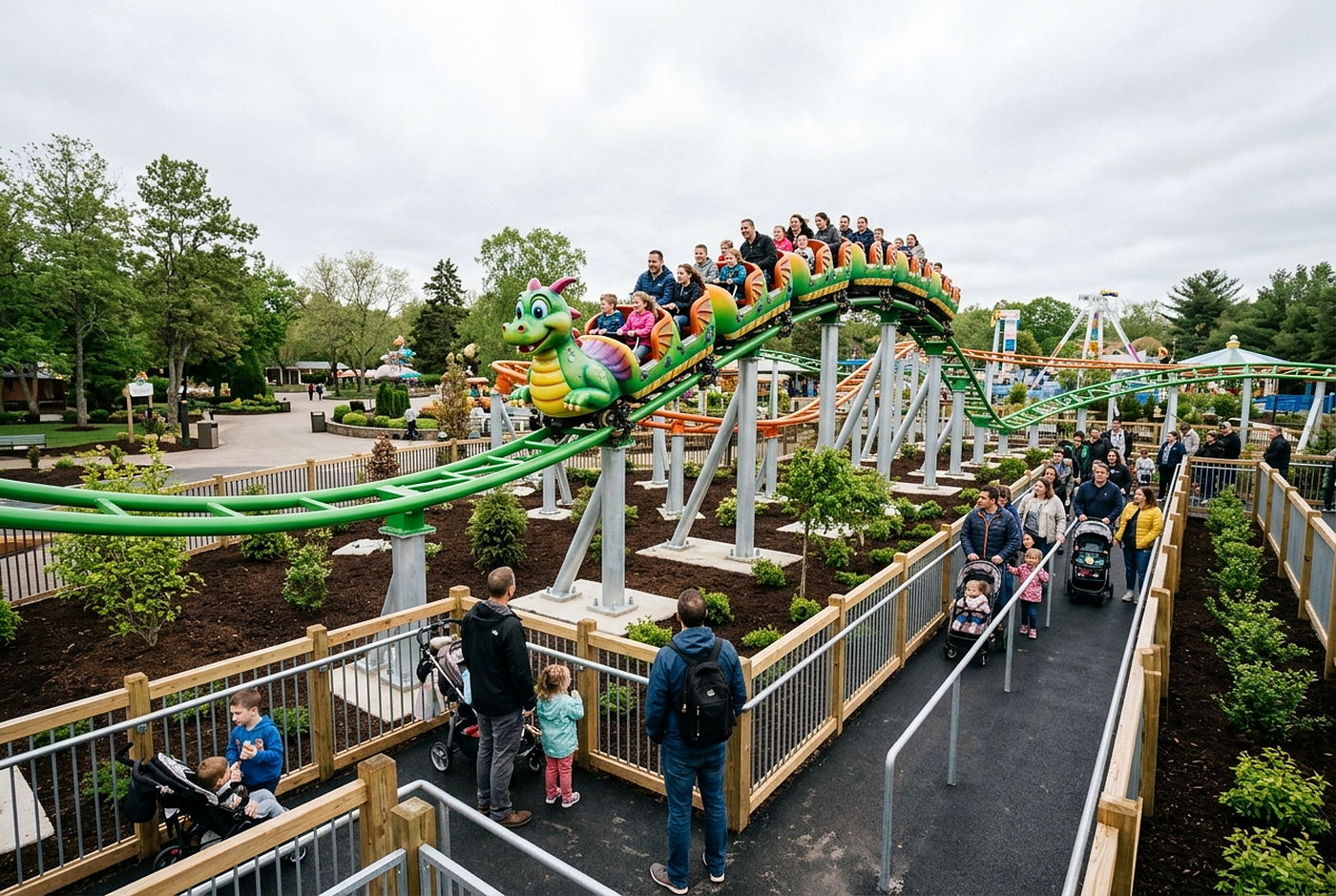
The layout is a closed circuit with a lift, a first drop and a sequence of low-to-moderate turns and small hills. Speed and height are deliberately limited; the design goal is a controlled sense of motion rather than airtime or inversion. Restraint systems are sized for smaller riders and checked per seat, and the station is laid out for quick loading so that cycle time stays short.
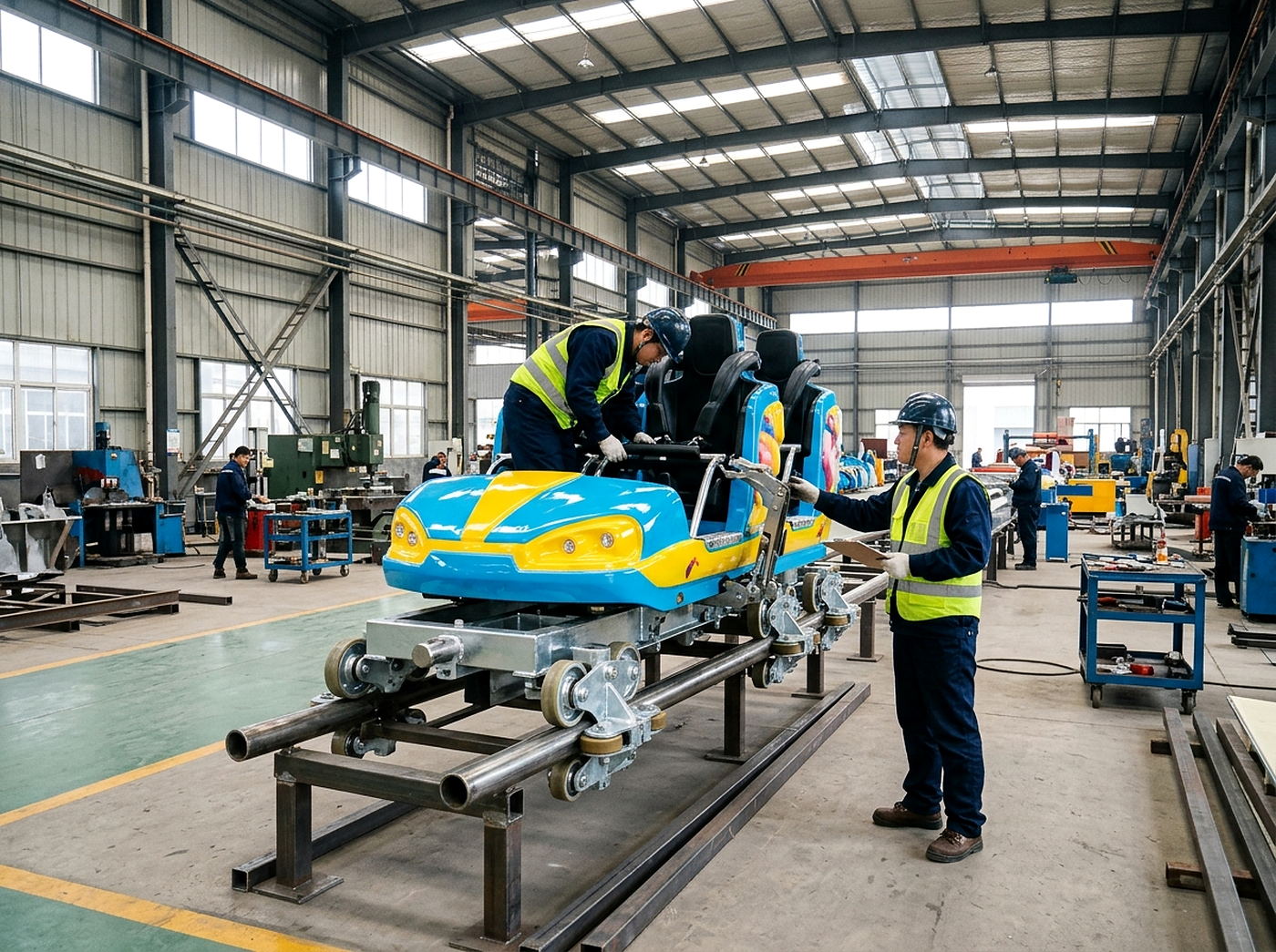
The defining mechanical feature is the train. Each car or cabin is a themed shell mounted on a standard chassis. Because the chassis interface is standardized, a park can swap cabin sets — a new character, a seasonal theme, a licensed property — without changing the track, the station or the control system. That is what makes the ride a repeat-ridership asset rather than a one-off installation: the hardware stays, the story changes.
Specification overview
Figures below describe the family coaster range as manufactured by ZhipaoRides in Xingtai, Hebei. Exact values are set per project during layout design; the table gives the design envelope, not a fixed catalogue entry.
| Parameter | Design range | Notes |
|---|---|---|
| Ride type | Powered or gravity family coaster | Selected by layout and throughput target |
| Track form | Closed circuit | Lift, drop, turns, small hills |
| Train configuration | Character cabins on standard chassis | Interchangeable cabin sets |
| Rider profile | Children accompanied by adults | Height limits set per project |
| Restraints | Per-seat, sized for smaller riders | Checked at dispatch |
| Theme scope | Cabin shells, station, landscaping | Track and controls unchanged on re-theme |
The table is intentionally short. Height, speed and capacity are project decisions that follow from the site, the target age band and the queue building. A park that fixes these numbers before the layout study usually pays for it later in station rework.
Character cabins and interchangeable trains
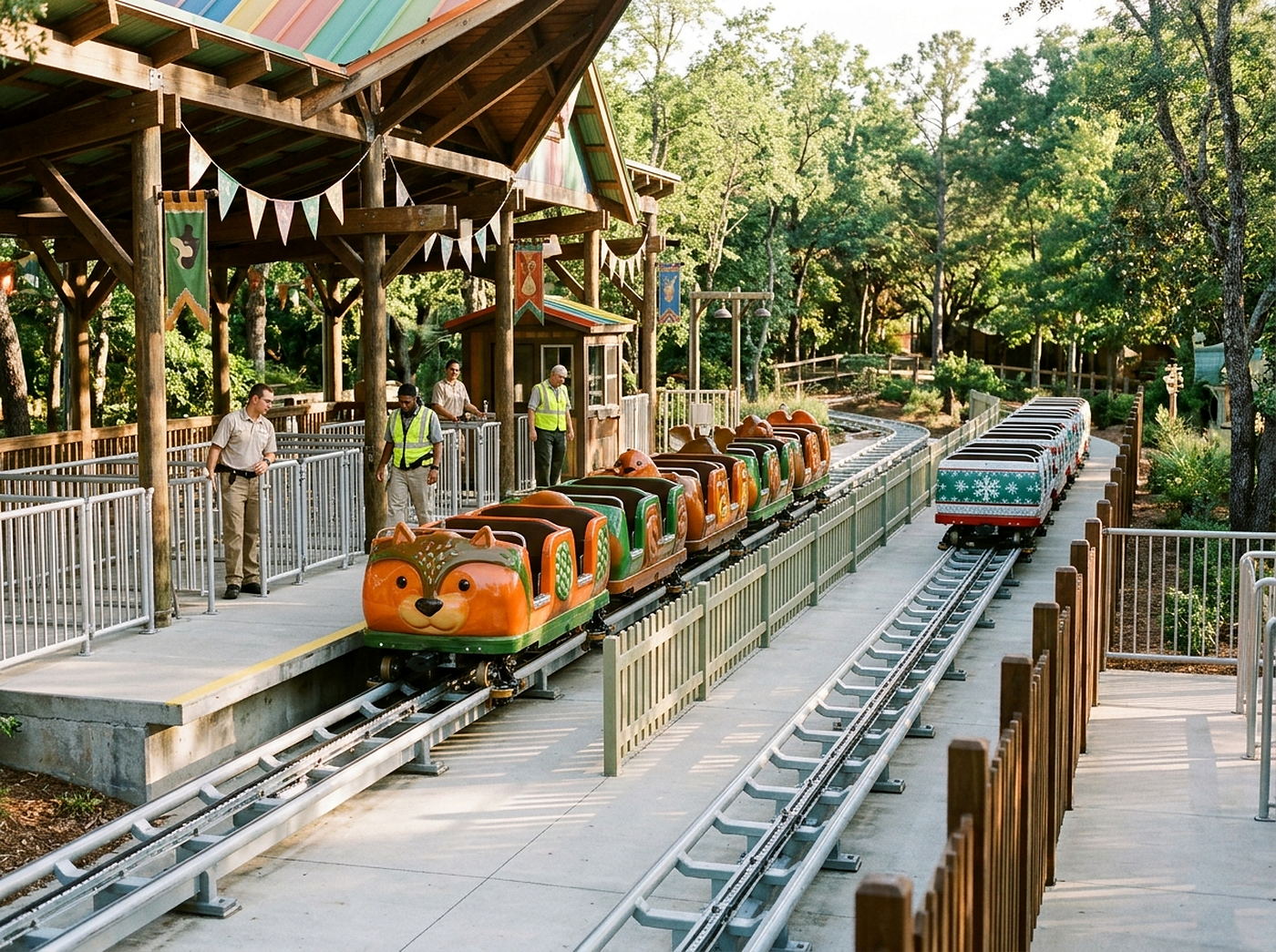
Cabins are the visible product. They carry the character, the colour scheme and the lighting, and they are what visitors photograph. Because they mount on a common chassis, a park can hold two or three cabin sets and rotate them: a base theme for most of the year, a seasonal set, and a promotional set tied to a partner brand or an in-park event.
The operational benefit is continuity. A re-theme is a cabin swap and a station dressing, not a rebuild. Maintenance access, spare parts and staff training stay the same. For a park planning a multi-year capital programme, that lowers the cost of keeping the ride visible in marketing.
Repeat ridership
Repeat ridership on a family coaster comes from three things: a low height restriction so younger siblings can join, a short cycle that keeps the queue moving, and a theme that changes often enough to be worth a second look. The interchangeable train supports the third directly. The first two are layout and station decisions made at design stage.
Where it fits
- Regional and municipal parks building a family zone around a single anchor ride.
- Parks with an existing children's area that need a step up for older children.
- FEC-to-park conversions where the site is tight and the queue building is shared.
- Parks running seasonal events that want a ride they can re-dress each year.
Where it does not fit
- Parks whose audience is primarily thrill-seekers; the forces are deliberately limited.
- Sites that cannot accommodate a closed circuit with a lift and a station of adequate length.
- Projects that need a licensed character from day one; licensing is the operator's agreement, not the manufacturer's.
- Parks unwilling to maintain two cabin sets; the interchangeability only pays off if the second set exists.
ZhipaoRides manufactures in Xingtai, Hebei, across roughly 54 ride models, including roller coasters, Ferris wheels, drop towers and flying theatres, and exports to markets including Russia, Southeast Asia, the Middle East, South America and Africa. The themed family coaster is one model in that range. Parks comparing formats should review the layout and train options before fixing a budget.
FAQ
Is a themed family coaster suitable for small children?
It is designed for children riding with adults. The exact height and age limits are set per project during layout design, based on the restraint system and the forces in the final layout.
Can the theme be changed after installation?
Yes. Character cabins mount on a standard chassis, so a park can swap cabin sets and re-dress the station without changing track or controls.
Does the ride need a licensed character?
No. Many parks use an original character. Any licensed property is a separate agreement between the park and the rights holder.
How is capacity determined?
By train size, cycle time and station layout. These are fixed during design once the site and target audience are known.