
Why the export paperwork decides your delivery date
When you buy an amusement ride from a Chinese manufacturer, the equipment is only half the project. The other half is a document chain that starts with the sales contract and ends with the customs release at your port. If any link is missing or inconsistent, the ride sits in a container yard instead of your park. This article walks through the amusement ride export documents in the order they are produced, so you can see what your supplier must provide and when. ZhipaoRides manufactures in Xingtai, Hebei, and ships rides to Russia, Southeast Asia, the Middle East, South America and Africa, so the sequence below reflects routes that cross several customs regimes.
Treat the list as a checklist for your own purchasing team. Ask for each document at the stage shown, and check that names, weights and values match across all of them. A mismatch between the packing list and the commercial invoice is one of the most common reasons a ride is held at destination.
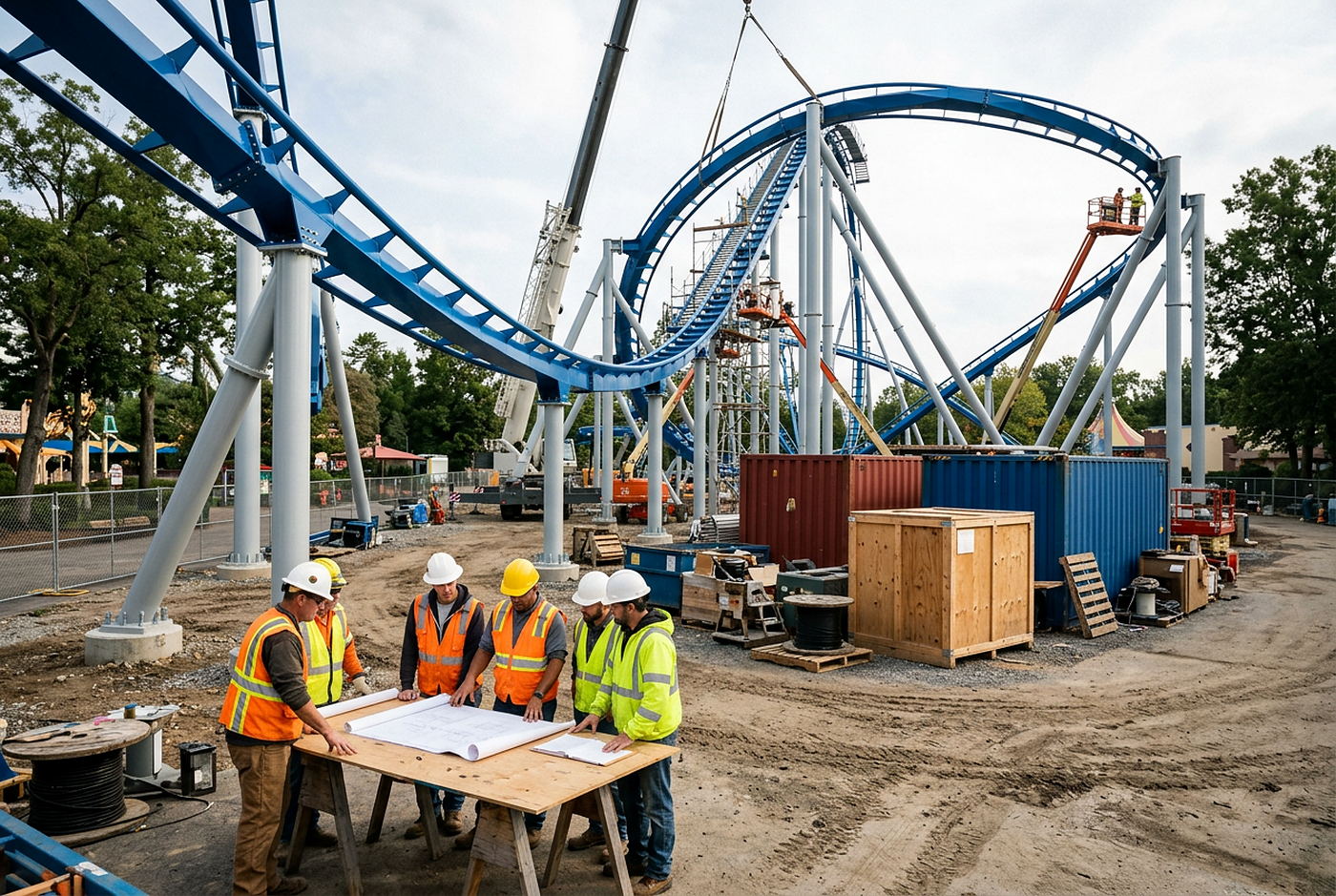
Step 1: Contract, Incoterms and payment terms
Everything downstream is built on the sales contract. Before signing, agree the Incoterm. FOB, CIF and DAP place different document duties on you and on the manufacturer. Under FOB, you nominate the freight forwarder and the supplier hands over the cleared goods at the Chinese port. Under CIF, the supplier arranges freight and insurance to your port. Under DAP, the supplier delivers to your site and you handle import clearance. Each choice changes which documents the supplier must produce and which ones you must obtain locally.
The contract should also fix the payment schedule, the expected shipping window, and the documentation language. If your country requires the commercial invoice in a specific form, or if your bank needs a certificate of origin for a letter of credit, write that into the contract. It is much harder to correct after the container has been booked.
Step 2: Export licence and manufacturer's declarations
Amusement rides are not a single customs category. A roller coaster, a Ferris wheel and a flying theatre have different HS codes, and the code determines whether an export licence or special declaration is needed. The manufacturer should confirm the HS code in writing and state whether the ride falls under ordinary export controls or requires additional review. For large structures, the supplier may also need to provide a declaration that the goods are new and not refurbished, which some destination customs authorities request.
At this stage, ask for the manufacturer's business licence, the export licence where applicable, and a technical file that matches the ride model. The technical file is not a customs document, but it supports the safety registration you will need at destination, so collect it early.
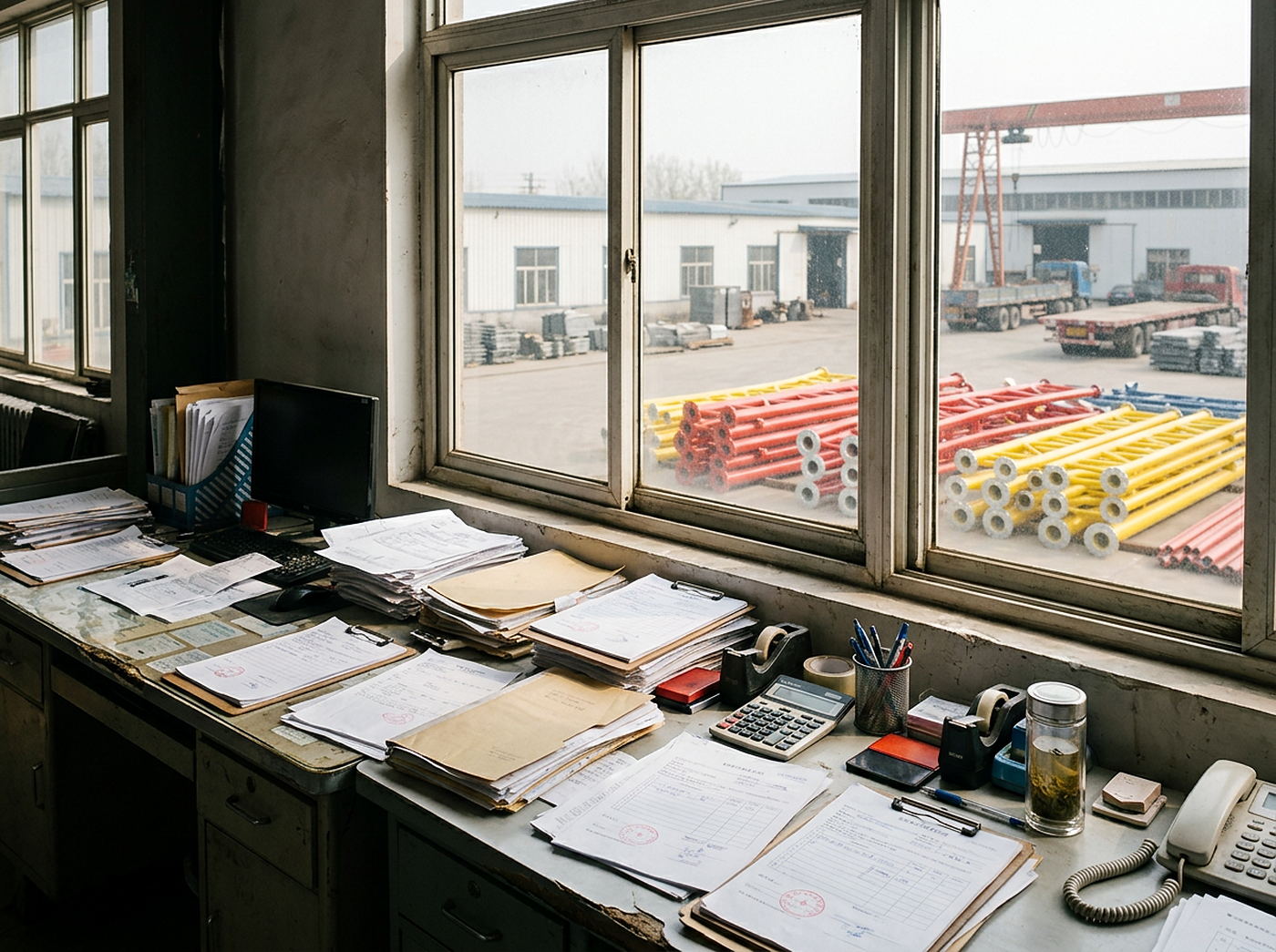
Step 3: Packing list, commercial invoice and certificate of origin
These three documents travel together and must agree with each other. The packing list gives the number of packages, dimensions, gross and net weight, and a description of contents per crate. For a ride, it is normal to have dozens of crates: structure, track sections, cabins, electrical cabinets, and loose components. The commercial invoice states the value, the Incoterm, the currency and the payment terms. The certificate of origin proves where the goods were made and is often required to apply the correct tariff at destination.
Check three things before the goods leave the factory: the total gross weight on the packing list matches the booking with the shipping line; the invoice value matches the contract and the payment received; and the origin certificate names the same exporter as the invoice. Small inconsistencies here cause most clearance delays.
Step 4: Transport documents and insurance
For sea freight, the bill of lading is the key transport document. It must show the shipper, consignee, notify party, port of loading, port of discharge, and the number of containers or packages. If you are paying by letter of credit, the bill of lading must match the credit terms exactly, including whether it is marked freight prepaid or collect. For overland routes to Russia or Southeast Asia, the equivalent is the CMR or the road/rail waybill.
Insurance is separate. Under CIF, the supplier arranges marine cargo insurance and should give you the policy or certificate. Under FOB, you arrange it. Confirm the insured value and the coverage before shipment, because a ride is a high-value, awkward-shaped cargo that is difficult to replace quickly.
Step 5: Destination clearance and safety registration
When the ride arrives, your import broker will use the documents above to clear customs. In many countries, the ride also needs a safety registration or permit before it can be assembled and operated. That process is local, but it depends on the manufacturer's technical file, structural calculations, electrical diagrams and operation manual. Ask the supplier to provide these in the language your authority requires, and confirm who will sign the declarations.
If you are comparing suppliers, ask each one which destination markets they already ship to and what documentation they routinely provide. You can see the regions ZhipaoRides serves on the markets page, and check recent shipment and project updates on the press page.
Step 6: On-site handover documents
The last group of documents is produced after delivery. It includes the installation and commissioning report, the test and inspection records, the as-built drawing set, and the training record for your operators. These are not customs documents, but they are part of the export package because they prove the ride was installed as designed. Keep them with the customs file so that future inspections or resale can be traced back to the original shipment.
Document checklist for your purchasing team
| Stage | Document | Who provides it |
|---|---|---|
| Contract | Sales contract, Incoterms, payment schedule | Both parties |
| Pre-shipment | HS code confirmation, export licence, business licence | Manufacturer |
| Shipping | Packing list, commercial invoice, certificate of origin | Manufacturer |
| Transport | Bill of lading or waybill, insurance certificate | Forwarder / insurer |
| Destination | Customs declaration, safety registration file | Importer / manufacturer support |
| Handover | Installation report, test records, as-built drawings | Manufacturer |
Use this table as a working checklist. For each row, write down the responsible person and the date you expect the document. That single habit prevents most of the delays that affect ride exports.
Next step: request a scoped quotation
If you are preparing a budget, the fastest way to get accurate numbers is to request a scoped quotation. Send your site location, the ride type and capacity you have in mind, your target opening date, and the Incoterm you prefer. With that information, a manufacturer can confirm the HS code, the document set for your country, and the shipping window, so the quotation reflects the real paperwork and logistics, not just the equipment price.