
What is a dark ride?
A dark ride is an indoor amusement attraction in which tracked vehicles carry passengers through a series of enclosed scenes, using controlled lighting, sound, animation and set pieces to tell a story. The ride path is guided by a track or wire, and the vehicle moves at low to moderate speed. Darkness between scenes is part of the design: it hides transitions, focuses attention on the next set and controls pacing.
Unlike a roller coaster, a dark ride does not depend on speed or height for its effect. Its product is narrative sequence. Riders sit in a vehicle, travel past or through scenes, and leave having experienced a story in physical space.
How a dark ride works
The core system has four parts: the track, the vehicles, the show control system and the scenes themselves.
- Track. Most dark rides run on a steel track, either a simple loop or a more complex layout with curves and switches. Some systems use a wire-guided path with no visible rail. The track determines the route, the direction riders face and the distance between vehicles.
- Vehicles. Cars are usually two to six seats, often arranged in rows. They may rotate, tilt or travel backwards, depending on the show. Each vehicle carries a speaker system and sometimes onboard lighting or effects.
- Show control. A central controller synchronises lighting, audio, animatronics and vehicle position. When a vehicle reaches a trigger point, the scene activates. This is what makes the ride repeatable: every car sees the same show in the same order.
- Scenes. Sets are built inside a dark building. Walls, floors and ceilings are painted matte black or dark grey so that lighting defines what riders see. Scene lighting is directional and low-level, with blacklight and projection used where appropriate.
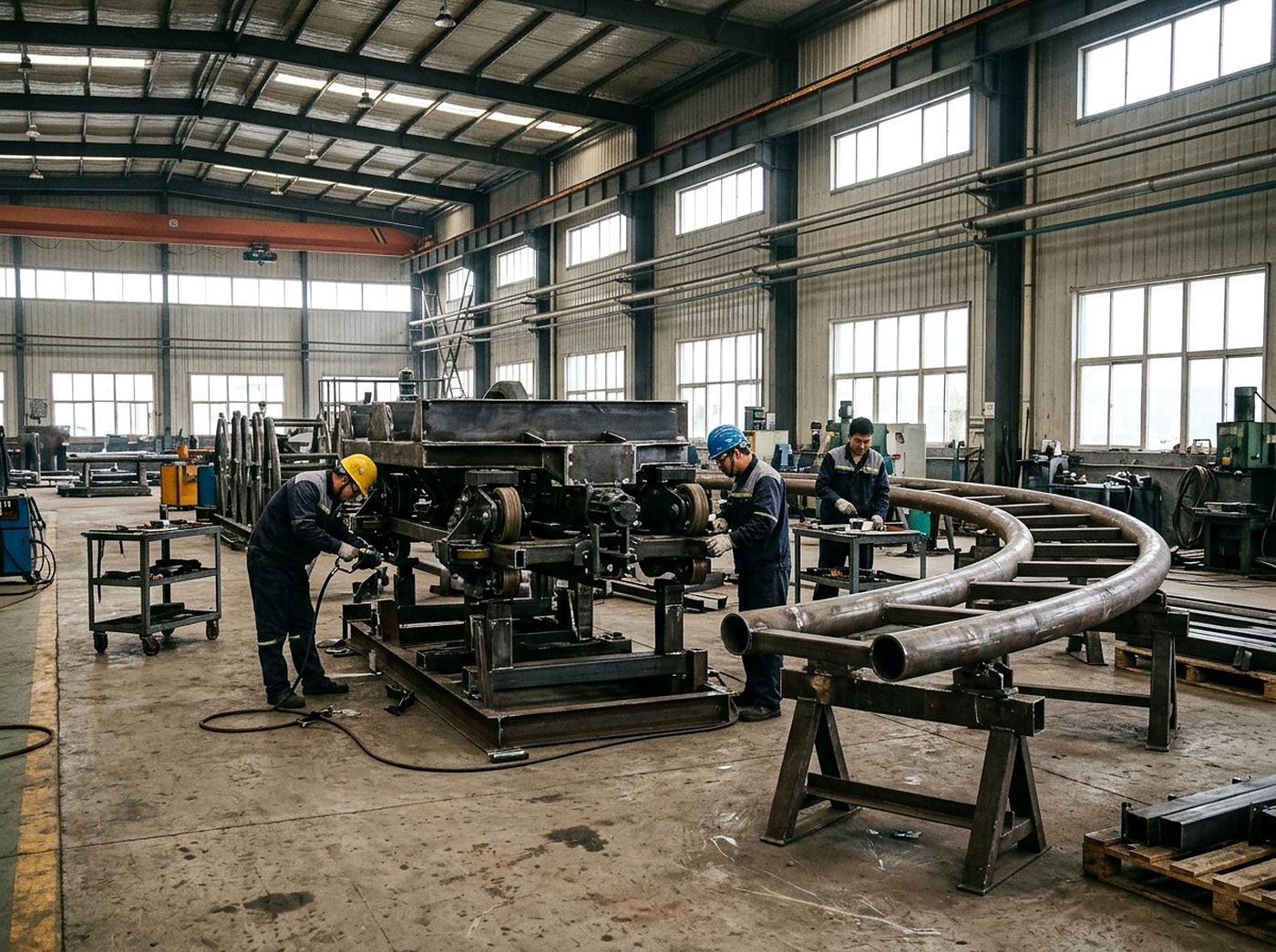
ZhipaoRides manufactures dark rides at its plant in Xingtai, Hebei, alongside roller coasters, Ferris wheels, drop towers and flying theatres. The company was founded in 2013 and operates a 120,000 m2 facility with about 500 staff.
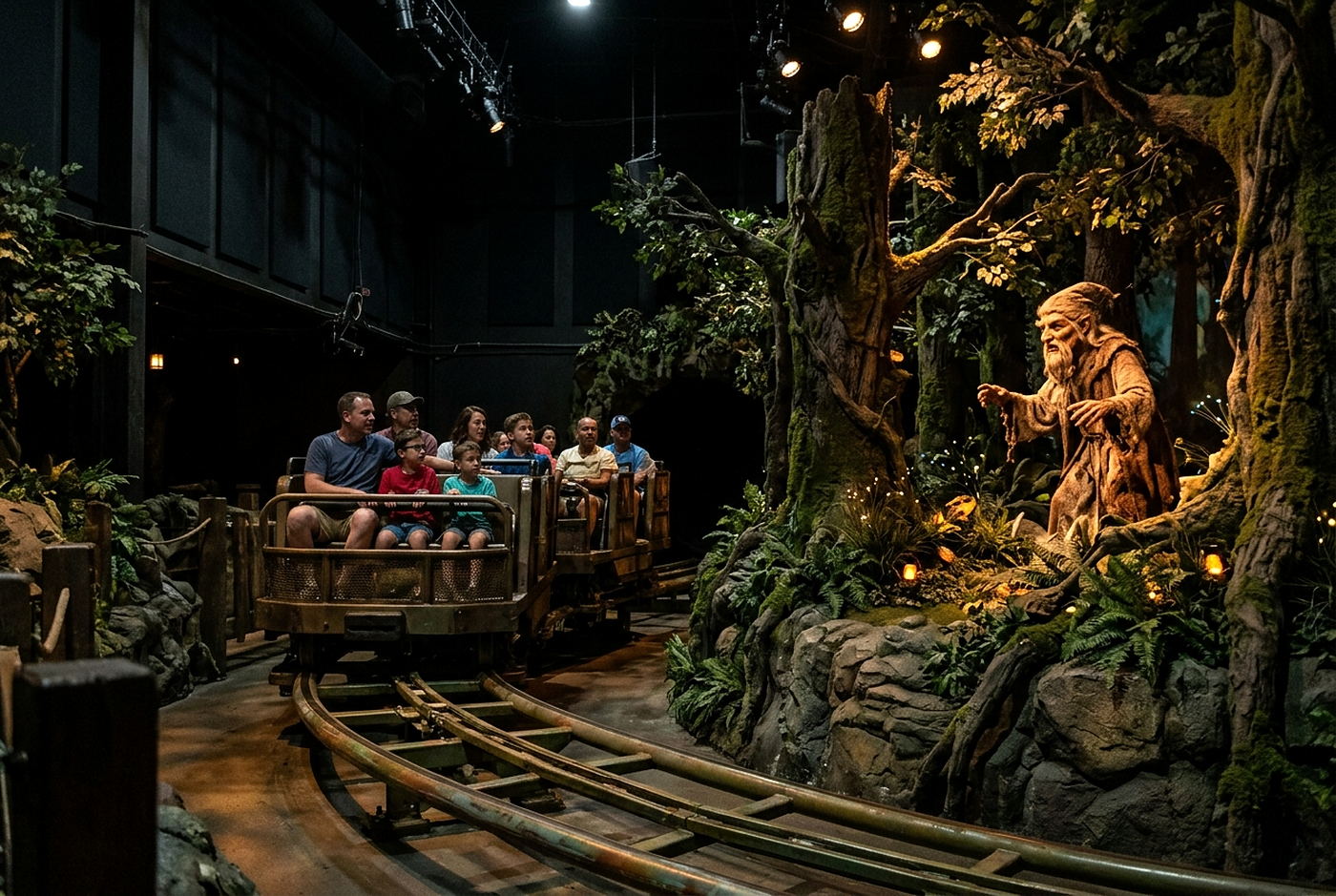
Scene design: the part that decides whether the ride works
Track and vehicles are engineering. Scene design is what riders remember. A dark ride scene has to work from a moving vehicle, in low light, for a few seconds at a time. That changes the rules.
First, sightlines. The designer maps what a rider sees from each seat at each point on the track. Anything outside that cone is wasted; anything inside it must be finished. A common mistake is to build detail that no rider ever faces.
Second, lighting contrast. Because the building is dark, a single lit figure against a dark background reads clearly. Too much ambient light flattens the scene and reveals the structure behind it. Most scenes use a few focused fixtures rather than general illumination.
Third, timing. A scene that lasts eight seconds needs its key action to happen in the middle of that window, not at the start or end. Animatronic figures, projection cues and sound effects are timed to the vehicle's arrival.
Fourth, transitions. The dark sections between scenes are not empty. They reset the rider's eye, cover the back of the previous set and prepare the next reveal. Doorways, bends and short tunnels are typical transition devices.
Specification overview
The table below gives typical ranges for a tracked dark ride. Exact figures depend on the layout and the show.
| Parameter | Typical range |
|---|---|
| Vehicle capacity | 2–6 seats per car |
| Ride duration | 3–8 minutes |
| Number of scenes | 6–15 |
| Track length | 150–600 m |
| Throughput | 400–1,200 riders per hour |
| Building type | Enclosed, light-controlled hall |
Throughput is set by the number of vehicles, seats per vehicle and dispatch interval. A ride with 20 cars of 4 seats dispatching every 20 seconds moves 1,440 riders per hour in theory; in practice, loading time and accessibility needs reduce that figure. Designers usually target a dispatch interval that matches the slowest guest, not the fastest.
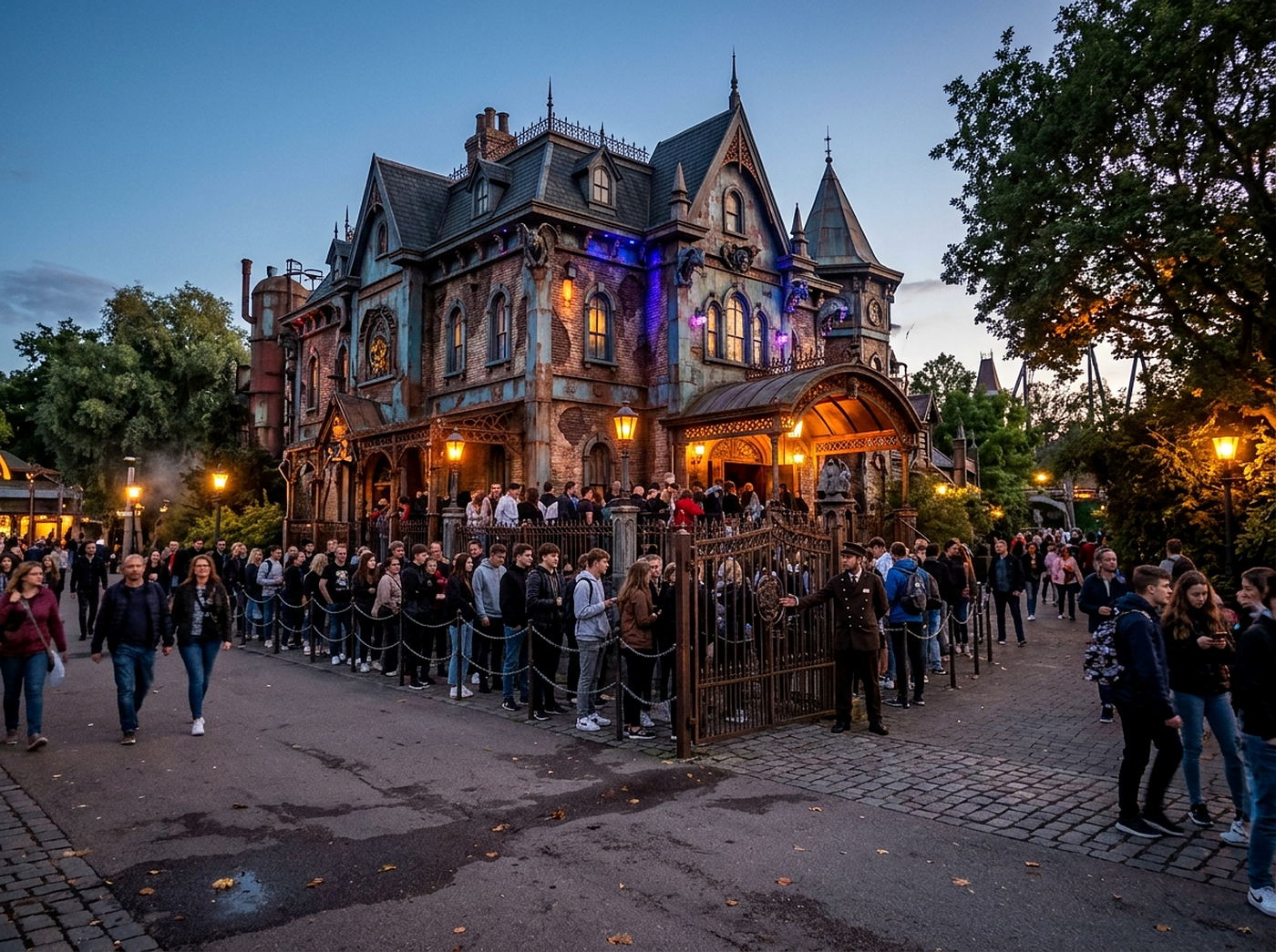
Where a dark ride fits
A dark ride suits parks that want an indoor, weather-independent attraction with broad appeal. It carries families, older visitors and guests who avoid high-thrill rides. Because it runs inside a building, it operates in rain, heat and cold, and it can be themed to a park's own intellectual property.
It also fits indoor entertainment centres, museums and mixed-use developments where a coaster would not be permitted. The low speed and controlled environment make it easier to integrate accessibility provisions than on a high-thrill ride.
ZhipaoRides lists dark rides among its roughly 54 ride models, and the company exports to Russia, Southeast Asia, the Middle East, South America and Africa. Parks in those regions often value enclosed attractions because they extend operating hours and reduce weather risk.
Where it does not fit
A dark ride is a poor choice when the site cannot support a large enclosed building. The hall is the dominant cost and the dominant constraint; without it, there is no dark ride. Sites with high land value or tight footprints may find the building hard to justify.
It is also a weak fit for parks whose audience is primarily thrill-seekers. A dark ride does not deliver the physical sensation that a coaster or drop tower provides, and it will not substitute for one in a park's lineup.
Finally, a dark ride needs maintenance of its show elements, not just its track. Animatronics, lighting and audio require scheduled servicing. A park without the staff to maintain those systems should plan for that before committing. For a closer look at the product category, see the tracked dark ride systems page.
Planning notes for developers
- Define the story before the track layout. The sequence of scenes determines the route, not the other way round.
- Size the building for the show, then check the track fits. Adding scenes later is difficult once the hall is built.
- Set the throughput target from the park's peak-day attendance, then choose vehicle count and dispatch interval to meet it.
- Plan maintenance access to every scene. A set that cannot be reached for repair will degrade.
- Confirm the local fire and egress requirements for an enclosed attraction early. They affect layout and cost.
ZhipaoRides builds dark rides and other tracked attractions at its Xingtai facility; the company's dark ride product range covers scene-based narrative layouts. For parks comparing ride types, the same plant also produces Ferris wheels and drop towers, which serve different audience segments.
FAQ
How fast does a dark ride go?
Most dark rides travel at walking pace to moderate speed, typically below 10 km/h, because the show depends on riders seeing scenes rather than on sensation.
How many riders per hour can a dark ride handle?
Typical throughput is 400–1,200 riders per hour, set by vehicle count, seats per vehicle and dispatch interval.
Does a dark ride need a building?
Yes. The dark ride depends on a light-controlled enclosed hall; without it, the scene lighting and transitions do not work.
Can a dark ride be themed to a park's own story?
Yes. Scene design, figures and audio are built to the operator's brief, so the narrative can be original or licensed.