
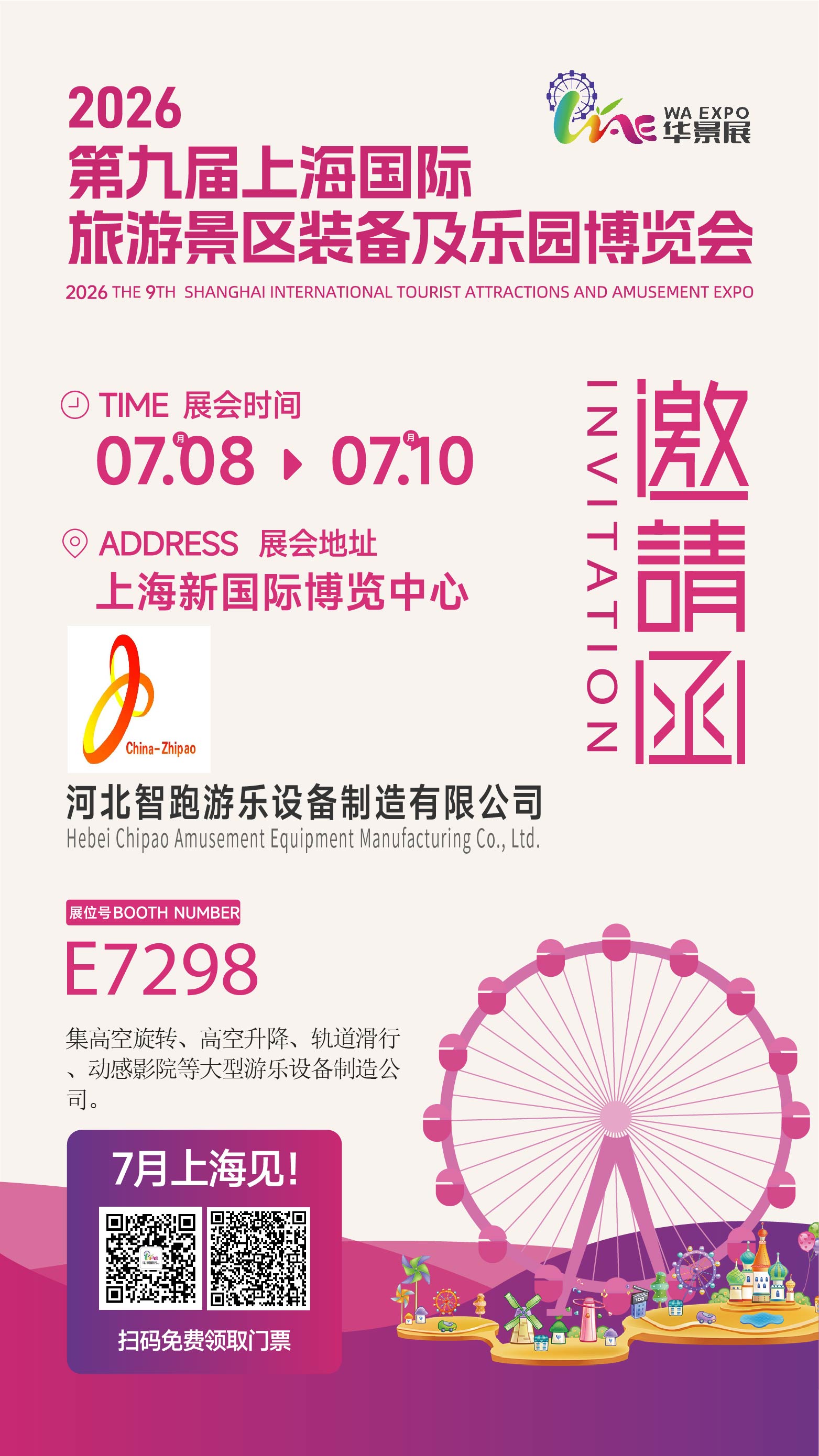
What the Expo Covers
The Tourism Scenic Area Equipment & Amusement Park Expo brings together ride manufacturers, scenic-area operators and park developers in one venue. For buyers, the value is not the show floor itself but the chance to compare several suppliers of the same ride category within a short period, using the same questions and the same specification sheet.
ZhipaoRides (Hebei Zhipao Amusement Equipment Manufacturing Co., Ltd.) is a Chinese ride manufacturer based in Xingtai, Hebei, founded in 2013, with around 500 employees and a 120,000 m² plant. Its range covers steel coasters with 4–11 inversions, Ferris wheels from 42 m to 130 m, drop towers, flying theaters, 4D cinemas, carousels and flume rides — a spread that maps closely onto the categories typically exhibited at this kind of event.
Prepare a Ride Brief Before You Travel
Buyers who arrive without a brief spend the day collecting brochures that cannot be compared. Before the show, write down the parameters that will not change after you return home:
- Available land — footprint, clear height limits, soil bearing capacity and any planning restrictions.
- Target audience — height bands, family versus thrill mix, and whether the ride must run in rain or heat.
- Throughput target — riders per hour you need at peak, not the manufacturer's theoretical figure.
- Power and utilities — available supply, compressed air, water for flume rides, drainage.
- Operating model — ticket price band, season length, staffing budget, maintenance capability in-house.
- Budget range and payment structure — kept internal, but used to filter which suppliers are worth a detailed conversation.
With this sheet, a 15-minute stand conversation becomes a data-collection exercise rather than a sales pitch.
How to Evaluate Different Ride Categories
The expo hall usually mixes very different product types. They should not be assessed with the same checklist.
| Ride type | Primary buyer question | Specification focus |
|---|---|---|
| Steel coaster (4–11 inversions) | Does the layout fit the site and the target thrill level? | Track length, height, speed, inversion count, restraint type, foundation loads |
| Ferris wheel (42–130 m) | What is the wind and foundation requirement at this height? | Cabin count, rotation time, drive and braking system, evacuation procedure |
| Drop tower | What is the cycle time and hourly capacity? | Tower height, braking principle, seat count, harness design |
| Flying theater / 4D cinema | What content and building envelope are needed? | Screen format, motion seat count, projection and audio package, ceiling height |
| Carousel | Is it indoor or outdoor, and what is the theme? | Diameter, figures, lighting, drive, deck finish |
| Flume ride | Water volume, treatment and trough layout? | Drop heights, boat count, pump specification, filtration, drainage |
Asking a Ferris wheel supplier about inversion counts, or a coaster supplier about water treatment, wastes the meeting. Match the question to the category.
Supplier Due Diligence at the Stand
An expo stand shows presentation, not production capability. Use the meeting to collect verifiable information you can check afterwards:
- Factory address, plant area and the specific workshops used for your ride type.
- Which components are made in-house and which are bought in — steel structure, drives, control systems, restraints.
- Whether the company can supply the structural calculations, foundation drawings and load data your local engineer will need.
- Documentation language and format, and who prepares the technical file for your market.
- Reference installations you can contact directly, with the operator's permission.
- Spare parts list, lead times and whether critical parts are held in stock.
Note that regulatory approval for a ride is granted by the authority in the country of installation. A manufacturer's paperwork supports that process; it does not replace it. Ask what documentation package is provided and confirm the approval route with your local authority early.
Procurement Implications After the Show
The expo produces contacts; the contract is where risk is allocated. When quotations arrive, compare them line by line rather than on total price alone. Typical lines that differ between suppliers include:
- Scope boundary — is foundation design, civil work, installation and commissioning included or excluded?
- Steel structure tonnage and coating specification.
- Drive, control and safety system brand and redundancy.
- Restraint and harness type, and spare seat sets.
- Spare parts package and warranty duration per component.
- Training, operating manuals and maintenance schedules.
- Shipping terms, packing, insurance and site supervision days.
- Payment milestones tied to factory acceptance testing and commissioning.
A low total that excludes foundation design, installation supervision or a spare parts package is not comparable with a complete offer. Normalise every quotation to the same scope before ranking.
Site and Operational Considerations
Ride selection is only half the decision. Before signing, confirm that the site can carry the ride and that the park can operate it:
- Foundations and ground conditions — obtain a soil survey and confirm dynamic loads with a local structural engineer.
- Wind exposure — tall rides such as large Ferris wheels require operating wind limits and an evacuation plan.
- Queue and circulation — throughput targets must match the queue line, exit route and adjacent paths.
- Staffing — daily checks, harness inspection and control-room operation all need trained staff per shift.
- Maintenance access — confirm how technicians reach the top of the structure and what lifting equipment is needed.
- Utilities — power quality, backup supply and, for water rides, treatment and refill capacity.
These items are usually cheaper to resolve at design stage than after delivery.
Next step
Before the next expo, prepare a one-page ride brief and a standard question list, then request quotations on a common scope template so they can be compared line by line. For suppliers such as ZhipaoRides, ask specifically which ride categories are manufactured in-house, what documentation package is supplied, and which reference installations you may contact.