
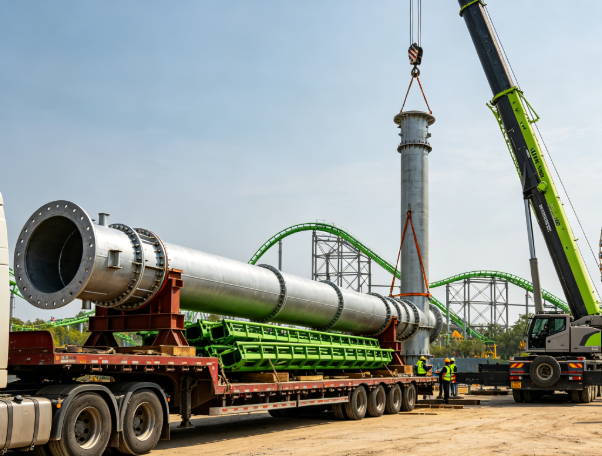
Large roller coasters and Ferris wheels do not move from factory to scenic area with simple loading and shipping. Components frequently exceed ten meters in length and weigh several tons, so ZhipaoRides' process covers pre-transport planning, route surveys, permitted oversize haulage, engineered lifting and staged installation, followed by no-load runs, load tests and safety checks before delivery.
For park developers, that sequence is not background detail. It is the part of the project most likely to affect schedule, site readiness and the division of responsibility between supplier, freight forwarder and local contractor.
What the transport and installation scope actually contains
A credible installation plan is built from the ride's dimensions, weight and part count. Before anything leaves the plant, the supplier should confirm which parts travel assembled and which are disassembled, which route is used, and whether an oversize permit is required. Route surveys check bridge height limits, turning radii and toll booth widths.
When comparing proposals, ask for this scope in writing rather than as a general promise. A useful checklist includes:
- Transport plan: component list with dimensions and weights, disassembly decisions, trailer type (low-bed or hydraulic), and permit responsibility.
- Route survey: documented bridge clearances, turning radii, toll and gate widths, and any road works or seasonal restrictions on the chosen corridor.
- Securing method: brackets, wooden blocks and straps, plus rain covers and anti-rust treatment for exposed steel.
- Packing and marking: precision parts individually packed and marked so site teams can match them to assembly drawings.
- Tracking: some projects use GPS tracking; confirm whether it is included and who monitors it.
Clarify early who pays for and arranges permits, escorts and any road modifications. These items sit between supplier and buyer in many contracts and are a common source of delay.
Lifting: where site readiness decides the schedule
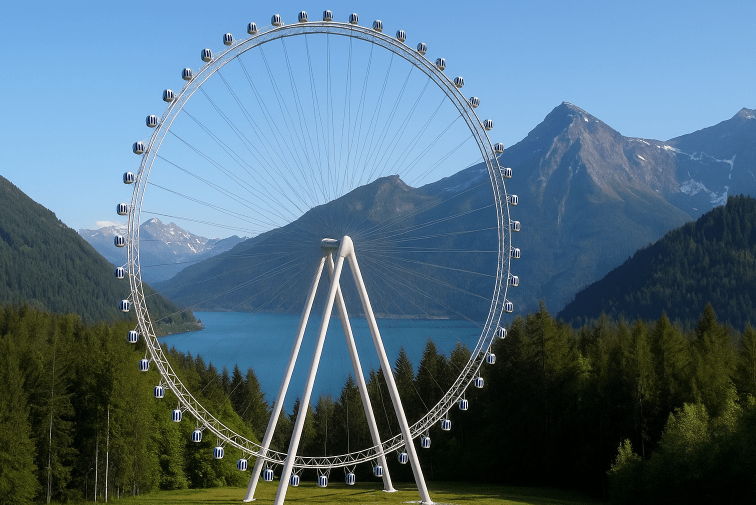
On arrival, the constraint shifts to the site. The installation team confirms foundation acceptance, crane capacity and lifting points before any lift. Truck or crawler cranes are used under a dedicated lift director, with a test lift followed by the official lift. Operations stop in excessive wind.
Park developers should treat these as preconditions they control:
- Foundation acceptance: concrete strength, anchor placement and dimensional checks signed off before cranes mobilize.
- Crane access: hardstanding, approach roads and swing radius clear of buildings, fences and buried services.
- Lifting plan: rigging, lifting points and load charts reviewed by the lift director, with a defined wind limit for stopping work.
- Laydown area: enough space to store oversized sections without double handling.
If foundations slip, crane standing time and remobilization costs follow. Build these milestones into the contract schedule rather than treating them as site-team matters.
Assembly sequence for Ferris wheels and coasters
The assembly order differs by ride type and should be reflected in the installation method statement.
| Ferris wheel | Steel coaster |
|---|---|
| Foundation | Columns |
| Columns | Track splicing |
| Wheel rim | Train and braking system |
| Cabins | Wiring and controls |
| Wiring | No-load runs |
| Commissioning | Load tests and safety checks |
Ask for the sequence in writing, with the interfaces marked: where the supplier's crew stops and where local contractors, electricians or civil works begin. Clear interfaces prevent gaps in responsibility during track splicing, cabin mounting or control wiring.
Commissioning and acceptance: specify the evidence
After installation, no-load runs, load tests and safety checks are performed before delivery. For procurement, the question is what documentation you receive and what counts as acceptance.
- Completed no-load and load test records with the loading method described.
- Braking system checks and control system function tests.
- As-built drawings and a punch list with agreed close-out dates.
- Operator training and a maintenance schedule handover.
- Spare parts list and recommended first-order consumables.
Define acceptance in the contract as the point where these records are delivered and outstanding items are closed, not simply when the ride first turns.
Procurement implications for park developers
Transport and installation are coordinated across technical, logistics and construction teams, and the contract should reflect that. Practical steps:
- Request the transport and installation plan as part of the tender, not after order.
- Fix responsibility for permits, escorts, cranes and site utilities in the contract.
- Agree milestone payments tied to foundation acceptance, mechanical completion and load testing.
- Confirm language, documentation and on-site support arrangements for your local crew.
- Check that the installation method statement matches your actual site access, not a generic template.
These points apply to any oversized ride, whether a multi-inversion steel coaster, a tall Ferris wheel, a drop tower or a flume ride, and they are usually cheaper to settle before mobilization than during it.
Next step
Before shortlisting suppliers, prepare a site brief covering access roads, crane standing areas, foundation status and permit responsibility, then ask each supplier to respond to it with a written transport and installation plan. Comparing those plans side by side will show which proposals are ready for your site.