
What a flying theater supplier actually delivers
A flying theater is not a single product you can drop into an empty hall. It is a system of four parts that must be designed together: the dome or curved screen, the projection or LED image system, the suspended seat rig with its motion base, and the building envelope that holds all of it. When you compare flying theater suppliers, the useful question is not who sells the cheapest seat but who can define the screen geometry, the seat motion envelope, and the structural loads as one package.
ZhipaoRides manufactures flying theaters and dome flying theaters at its plant in Xingtai, Hebei, alongside roller coasters, Ferris wheels, drop towers and family rides. This article walks through the decisions a park developer faces before signing: screen format, seat configuration, motion profile, and the building that has to contain them.
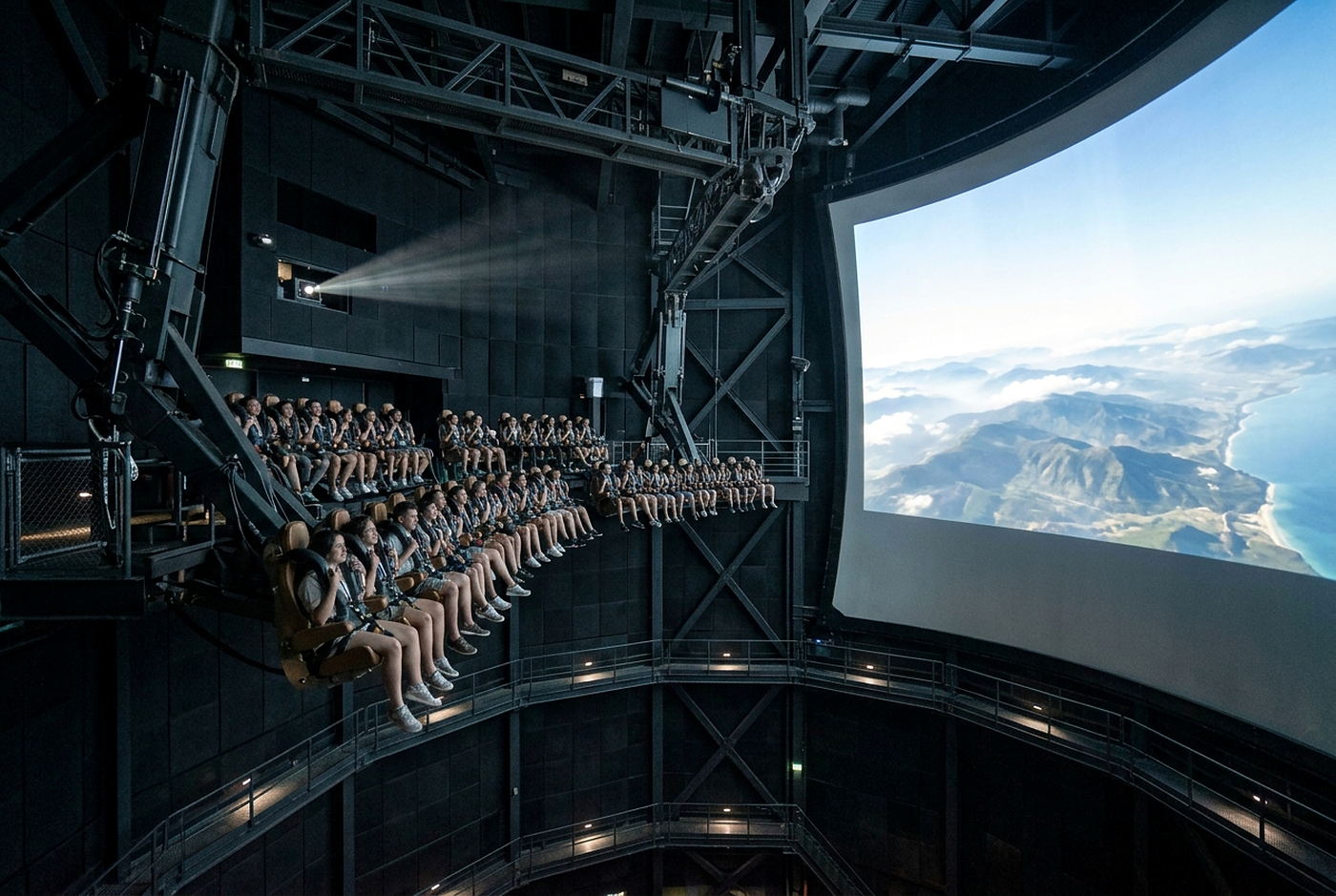
Screen format: dome or curved wall
The screen is the first decision because it fixes the room. A dome flying theater wraps the image above and around the audience, so the feeling of flight comes from peripheral vision. A curved wall screen is a section of a sphere or cylinder and is easier to fit into a rectangular building. Each has consequences for projection throw distance, lamp or laser maintenance access, and the number of projectors needed to cover the surface without visible seams.
Ask a supplier for the screen radius, the vertical and horizontal field of view, and the projector count and resolution per channel. If the supplier quotes a screen size without these numbers, the quote is not comparable. For an overview of the format, see the dome flying theater product page, which lists the geometry and projection layout.
Seating rows and sightlines
Seats are arranged in rows on a suspended platform, and the row spacing determines whether the person in the back row sees the bottom edge of the screen. A supplier should provide a sightline drawing showing the eye point of the first and last row relative to the screen edge. Rows are usually 8 to 12 seats wide, and the number of rows sets the hourly throughput. Do not accept a seat count without the sightline drawing and the load per seat.
Seat motion and the ride profile
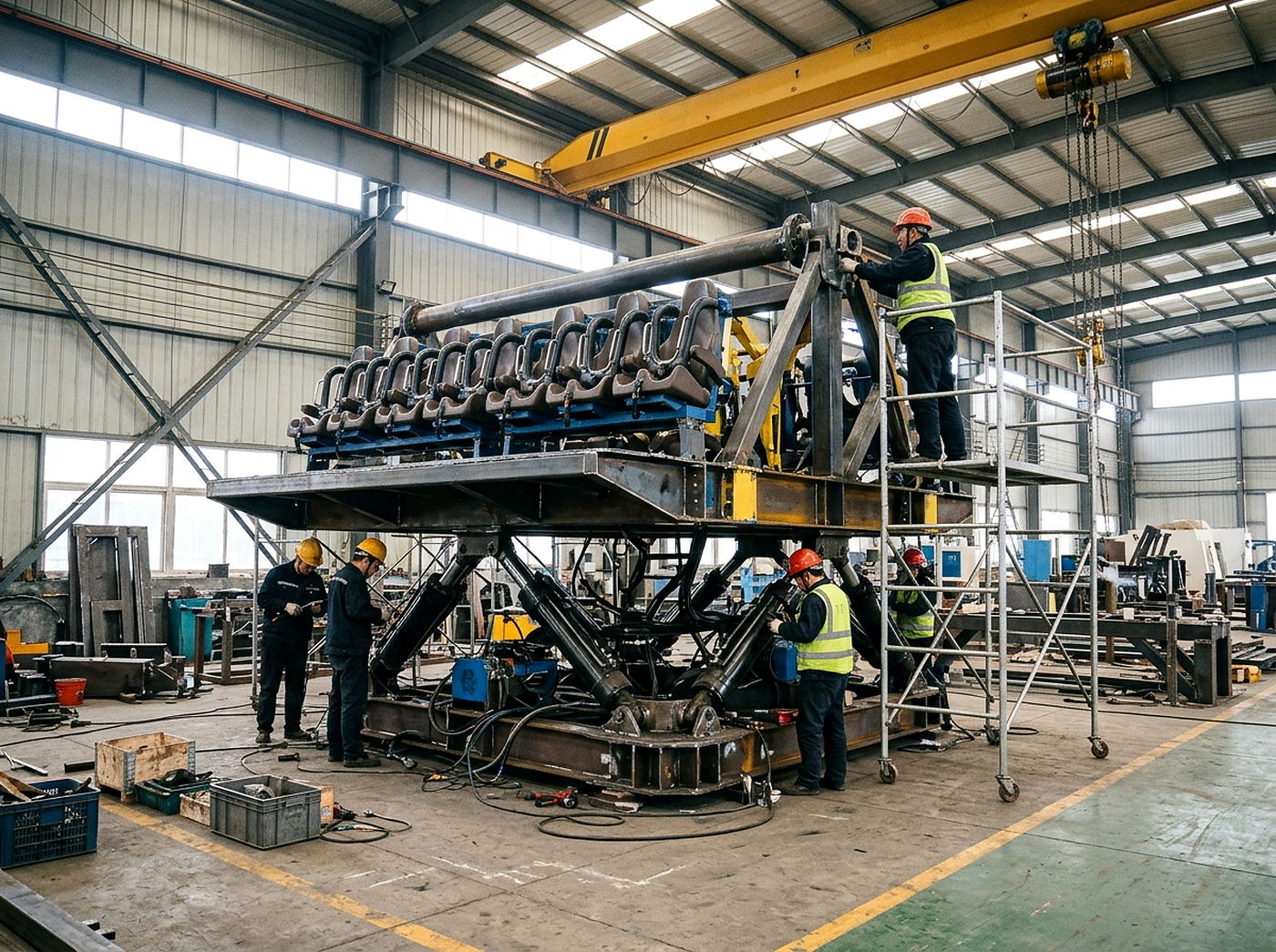
The seat rig moves in two or three axes: pitch, heave and sometimes roll. The motion profile is programmed to match the film, and the supplier should show the maximum acceleration, the travel limits, and the restraint type. For a family audience, the profile is gentler than a coaster; for a thrill audience, the heave travel is longer. Ask for the restraint test and the evacuation procedure for a power failure at full extension.
Motion bases are hydraulic or electric. Electric actuators are easier to maintain in a clean indoor environment and avoid oil storage, but the supplier should state the duty cycle and the maintenance interval either way. The seat rig also carries the audio and the leg-restraint sensors, so the cable routing and the control cabinet location belong in the building plan, not in a later retrofit.
Building envelope: the part buyers underestimate
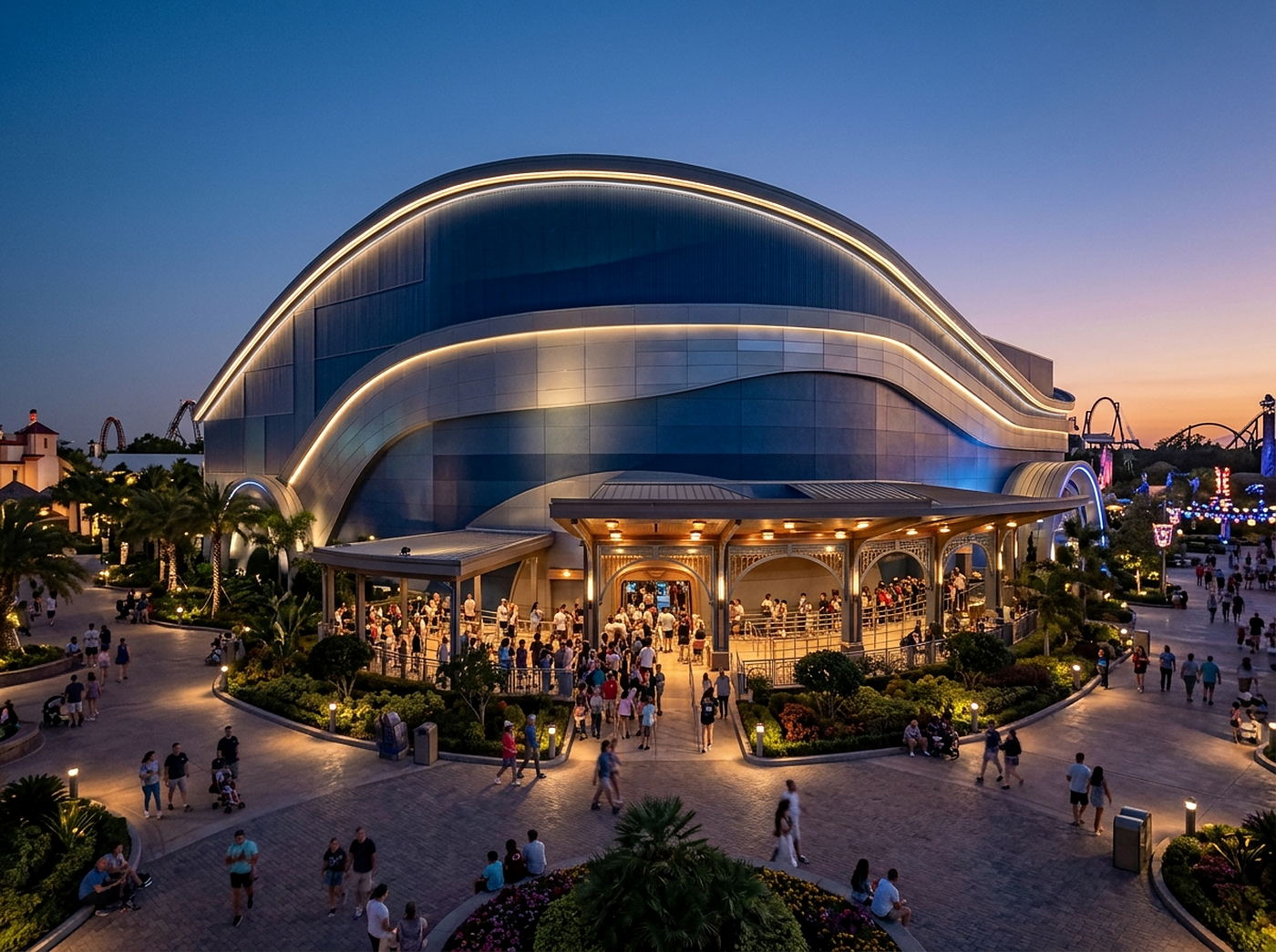
The building is where budgets move. A flying theater needs a clear span with no columns inside the screen volume, a floor slab that takes the seat rig's dynamic loads, and a ceiling height that allows the screen and the projection booth. The envelope also needs a controlled climate, because projector heat and audience load both affect the image and the comfort.
- Clear span: the width and depth of the screen volume, with no structural columns inside the sightline.
- Floor loading: static and dynamic loads from the seat rig, including emergency stop cases.
- Height: screen top, projection throw, and maintenance walkway above the dome.
- Access: a loading path for the dome panels and the seat rig that fits the door and the crane.
- Services: power capacity, HVAC, and a dark, acoustically treated interior.
A supplier that also builds the envelope can coordinate these items; a supplier that only ships seats will hand them back to your architect as a list of requirements. Either model can work, but the responsibility line must be clear in the contract.
Projection versus LED
Projection is the common choice for domes because it fills a curved surface without tiles. LED walls are brighter and need no projector room, but the panel seams and the cost per square meter change the budget. Ask the supplier which image system they have integrated before, and ask for the brightness in nits or lumens at the screen surface, not at the projector lens.
How to compare flying theater supplier quotes
Put every quote into the same table. The rows that matter are screen surface area and radius, projector count and resolution, seat count and rows, motion axes and travel, restraint type, building scope (included or excluded), power demand, and maintenance access. A low seat price with the building excluded is not a lower total; it is a different scope.
| Item | What to request | Why it changes the budget |
|---|---|---|
| Screen | Radius, field of view, surface area | Sets the room size and projector count |
| Seats | Rows, seats per row, sightline drawing | Sets throughput and floor loads |
| Motion | Axes, travel, acceleration, restraint | Sets the ride profile and maintenance |
| Building | Clear span, height, floor loading | Often the largest single line |
| Services | Power, HVAC, acoustics | Affects operating cost |
ZhipaoRides has supplied ride systems to parks in Russia, Southeast Asia, the Middle East, South America and Africa, and the same scoping questions come up in each market: what the building must provide, and what the ride package includes. The flying theaters for sale page lists the models and the main specifications to start that comparison.
Next step: request a scoped quotation
To get a quotation you can compare, send the supplier four things: your available building dimensions (clear span, height, floor loading), your target hourly throughput, your audience profile (family or thrill), and your power supply. With those, a supplier can propose a screen format, a seat count and a motion profile, and state clearly what the building must provide. Ask for the sightline drawing, the load table and the maintenance access plan with the price, not after the order.
ZhipaoRides is based in Xingtai, Hebei, and builds flying theaters as part of a 54-model range across coasters, towers and family rides. A scoped quotation starts with your building, not with a catalog page.