Why the geotechnical report drives coaster foundation design
Coaster foundation design starts with the ground, not the track. Before a manufacturer can size footings, anchor bolts, or pile caps, the project needs a geotechnical investigation that answers specific questions about soil and rock behavior under static and dynamic loads. A generic soil report written for a warehouse or parking lot will not support coaster foundation design. This article explains what the report must contain so that foundation drawings can be produced without assumptions.
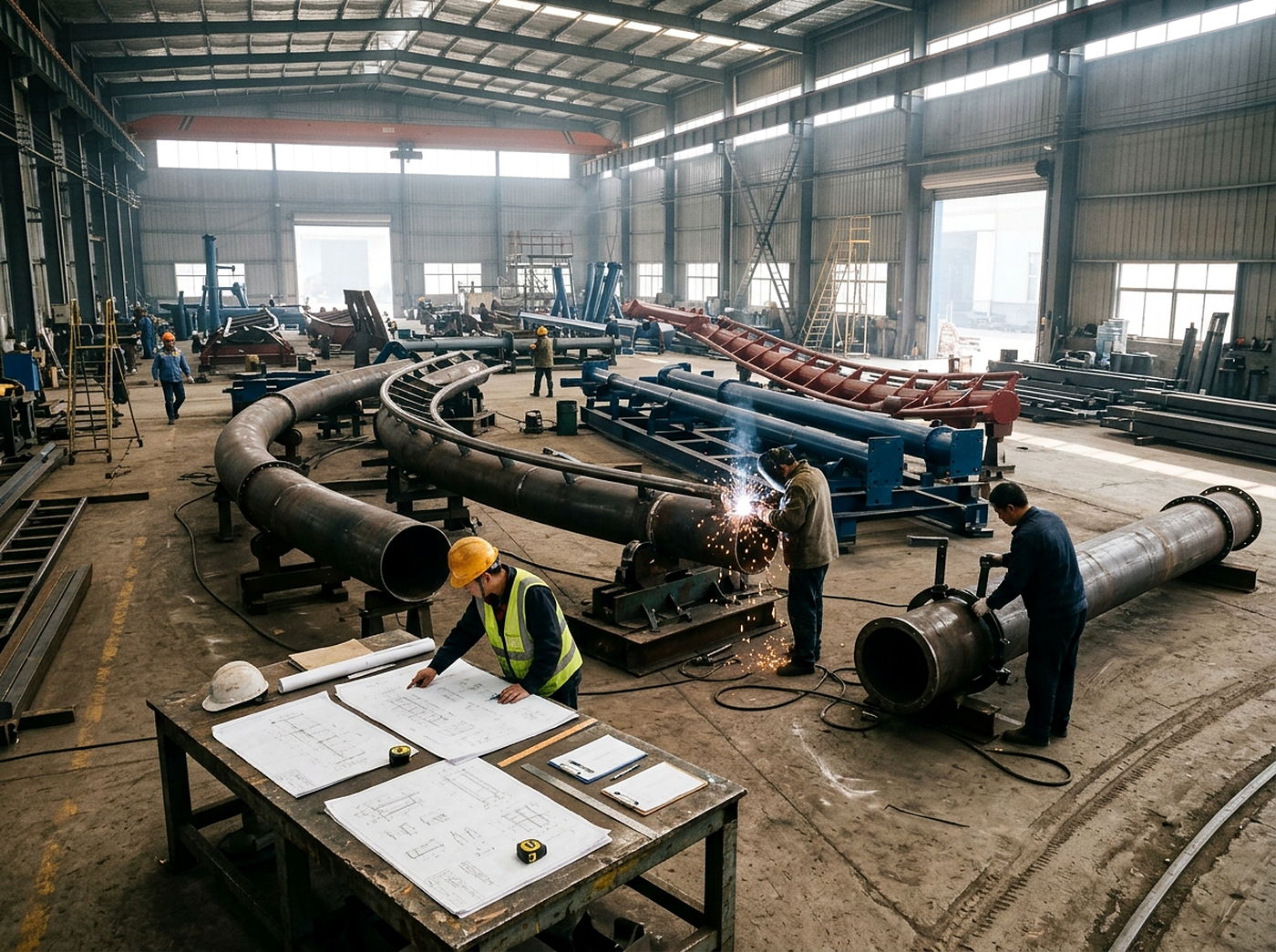
ZhipaoRides manufactures roller coasters and other amusement rides in Xingtai, Hebei, and exports to parks in Russia, Southeast Asia, the Middle East, South America, and Africa. The foundation requirements below reflect the load information the factory needs from the site before it can issue a coordinated foundation package.
Loads the foundation must resist
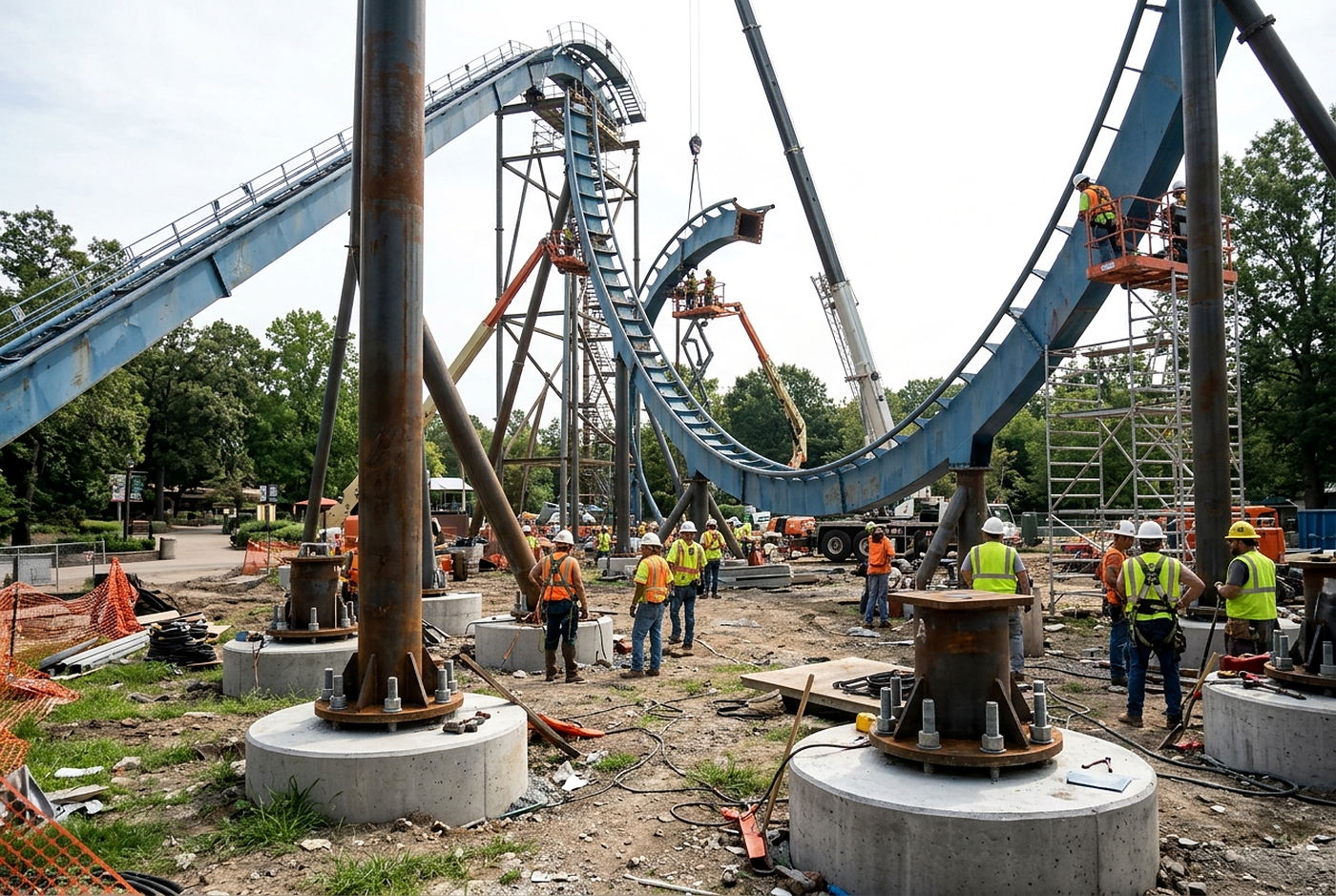
Coaster foundations carry load cases that differ from buildings. The geotechnical report should be scoped with these in mind, and the structural engineer will confirm magnitudes from the ride model. Typical load types include:
- Vertical dead load from track, supports, trains, and passengers, including unbalanced train positions.
- Lateral and longitudinal forces from braking, acceleration, and curve thrust.
- Dynamic amplification from train passage, which can be treated as a dynamic factor on static loads or as a fatigue-relevant cyclic load.
- Wind and seismic loads on tall elements such as lift hills and station roofs.
- Uplift and overturning at footings where the track cantilevers or where supports are widely spaced.
The report should state whether the investigation covers these load types or only building-code gravity loads. If it does not, the scope needs to be revised before design begins.
Soil and rock parameters the report must provide
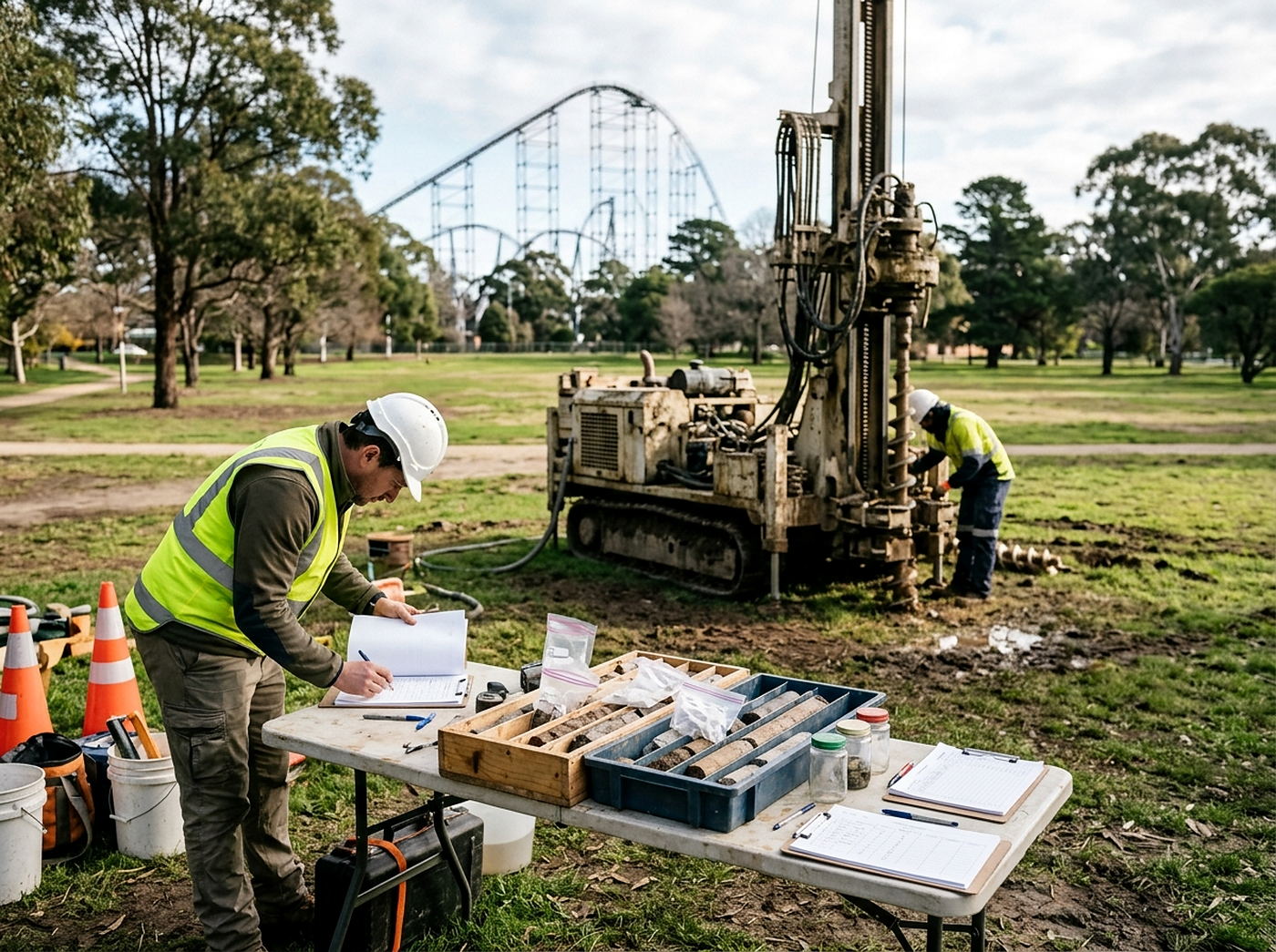
For each soil layer and for rock, the report should include borehole logs with depth, stratum description, standard penetration test (SPT) N-values or cone penetration test (CPT) data, groundwater level, and laboratory results. The design team needs the following parameters, preferably as characteristic values with a stated basis:
- Unit weight above and below the water table.
- Angle of internal friction and cohesion for drained and undrained conditions as applicable.
- Undrained shear strength for cohesive soils.
- Consolidation parameters (compression index, preconsolidation pressure) where settlement matters.
- Modulus of elasticity or subgrade reaction modulus for foundation stiffness analysis.
- Allowable bearing capacity or the parameters to calculate it, with a clear statement of the factor of safety used.
- Pile design parameters if deep foundations are anticipated: skin friction and end bearing values.
- Rock strength and weathering profile where rock is encountered, including RQD if relevant.
Where the site has fill, the report must distinguish engineered fill from uncontrolled fill and state whether it can support foundations or must be removed.
Settlement and dynamic behavior
Coaster foundations are sensitive to differential settlement because track alignment tolerances are tight. The report should provide predicted total and differential settlement for the expected footing loads, and state the allowable limits it recommends. For rides with dynamic loading, the report should also address:
- Cyclic loading effects on soil strength, particularly for saturated sands and soft clays.
- Natural frequency of the soil-foundation system relative to the ride's operating frequency, to avoid resonance.
- Vibration propagation to nearby structures or utilities, if the site is constrained.
If the geotechnical engineer cannot provide these items, the structural designer may need to request additional testing or a separate dynamic analysis.
Groundwater and groundwater control
The report must state the groundwater level, its seasonal variation, and chemical aggressiveness to concrete and steel. For foundations below the water table, it should recommend a construction dewatering method and note any risk of settlement caused by dewatering. This matters in river plain sites common in parts of Southeast Asia and China, where the water table can be close to the surface.
Seismic and site classification
Provide the seismic site class and design response spectrum according to the local code, or the parameters needed to derive them. Coaster structures are not buildings, but they are occupied structures with evacuation requirements. The report should state the design earthquake level and whether liquefaction is a concern. If liquefaction is possible, the report should recommend ground improvement or deep foundations and give the post-improvement parameters.
Recommendations the report should make
A useful geotechnical report ends with recommendations, not just data. It should recommend a foundation type (spread footings, mat, piles, or ground improvement), give preliminary footing sizes or pile capacities for the load cases provided, and state any construction constraints such as excavation support, frost depth, or corrosion protection. It should also list the tests performed and any limitations of the investigation, such as borehole spacing or depth.
For a first planning discussion, the ride specification package and the technical specifications page show the load information ZhipaoRides can provide to the geotechnical engineer. The roller coaster range lists models and typical support configurations that affect foundation layout.
How the report feeds into foundation design
Once the report is available, the foundation design process follows a sequence: confirm load combinations from the ride manufacturer, select foundation type based on the geotechnical recommendations, size footings or piles, check settlement and dynamic response, and detail reinforcement and anchor bolts. The manufacturer's foundation drawings typically show anchor bolt locations, base plate levels, and reaction loads; the local structural engineer adapts these to the site conditions reported. Any discrepancy between the report's assumptions and the final design must be resolved before construction.
Common delays occur when the report lacks dynamic soil parameters, when boreholes are too shallow for the deepest footing, or when the groundwater level is not monitored over a full season. Reviewing the report against the checklist above before issuing it to the design team reduces rework.
Next step: request a scoped quotation
If you are preparing a budget for a coaster project, the fastest path is to share your site's geotechnical report and intended ride model with the manufacturer. ZhipaoRides can then provide the load data your geotechnical engineer needs and issue a scoped quotation that includes foundation interface drawings, anchor bolt schedules, and the required reaction loads. Send the report and your project parameters to start the foundation coordination.