
Buying an amusement ride for a UAE site is a procurement exercise shaped by three constraints that rarely appear together in other markets: a named approval authority with a defined submission file, an outdoor ambient and solar environment that changes the ride specification rather than merely the paint, and a construction calendar in which the hottest months restrict site work. A park or developer should settle the approving authority, the indoor/outdoor decision and the erection window before issuing an enquiry, because each one changes what the supplier has to design, document and deliver. ZhipaoRides supplies roller coasters, Ferris wheels, drop towers, flying theaters, 4D cinemas, carousels and flume rides, and the sections below set out what a UAE buyer should put into the specification and the contract.
Approvals: which authority is involved and what they ask the supplier for
Ride approval in the UAE is handled at the emirate level, and the competent authority differs depending on where the asset sits. A park inside a free zone or a master development is typically reviewed by the developer's own technical and safety department in parallel with the municipal authority; a standalone attraction is reviewed by the municipality. In every case the ride is assessed against the standards required by your market, confirmed per project, and the supplier is asked to demonstrate conformity to that standard set rather than to a generic claim.
The supplier's submission pack normally includes:
- General arrangement and foundation drawings, signed and dated, in the revision that matches the shipped configuration.
- Structural and mechanical design calculations prepared for the ride as configured, not a catalogue reference.
- Electrical schematics, control philosophy and the ride's failure-mode behaviour, including evacuation from every stopping position.
- Operating manual, maintenance manual and the daily, weekly and annual inspection schedules.
- Bill of materials for wear parts, with part numbers, so the operator can hold spares from opening day.
- Test and commissioning records produced on site, signed by the supplier's engineer and witnessed by the operator.
Two practical points. First, the authority reviews the configuration you intend to build, so any change after submission restarts part of the review; freeze the ride specification before the file goes in. Second, the operator, not the supplier, holds the operating licence, so the supplier's documents must be complete enough for the operator to run the ride without further input. Ask for the document list as a contract deliverable with a due date, not as a courtesy at handover.
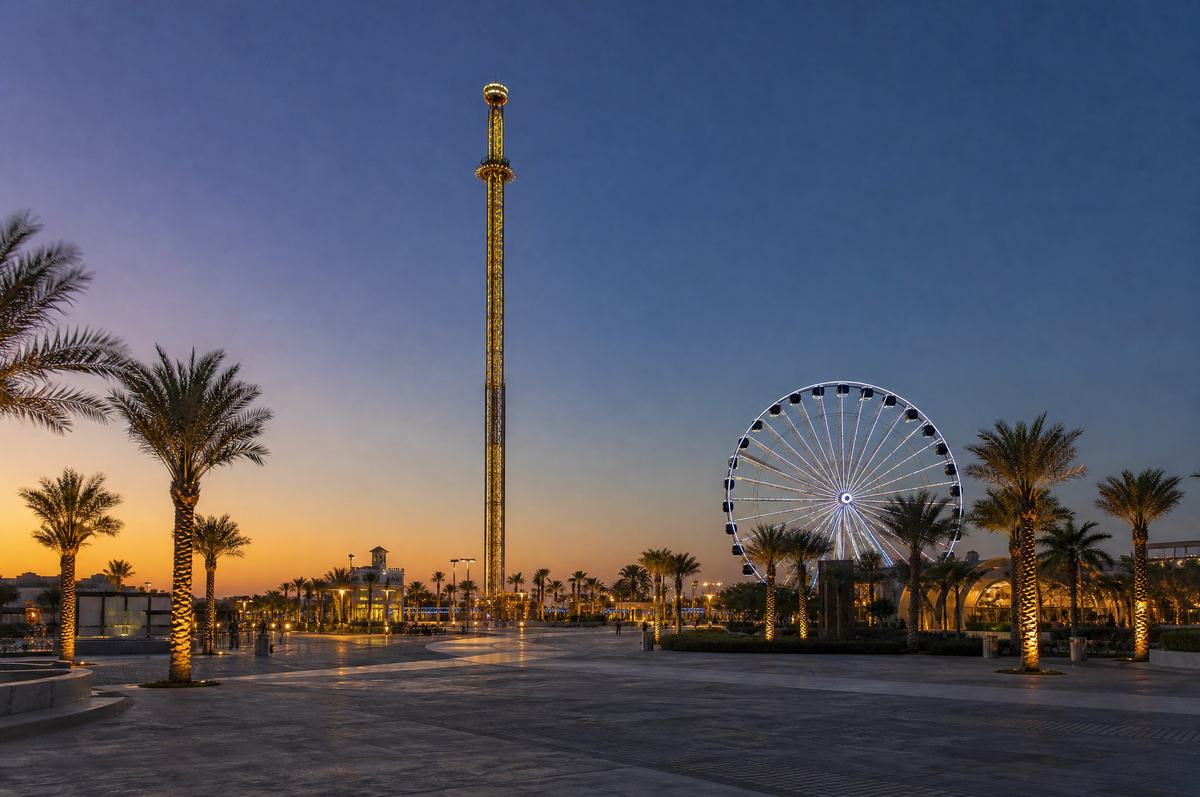
Climate engineering: ambient temperature, solar load, cabin cooling and derating
An outdoor ride in the UAE operates in an environment that affects the structure, the drive system, the electrical enclosures and the guest. Treat climate as a design input stated in the specification, not as a site condition the supplier discovers at commissioning.
Ambient temperature. State the design ambient and the operating ambient range in the enquiry. The difference matters: a ride designed to a moderate ambient will have drive and control cabinets that run hotter than intended, and the supplier will need to specify cooling, ventilation or a higher-rated enclosure. Ask the supplier to state the ambient range their design assumes and to confirm the ride's operating limits in writing.
Solar load. Direct radiation raises surface temperatures well above air temperature and drives thermal movement in long structural elements. Specify whether exposed steel is to be shaded, whether walkways and queue lines are covered, and whether the ride's paint system is specified for high-ultraviolet exposure. On a Ferris wheel or a tall drop tower, the shading strategy is a design decision with a cost, and it should be taken at enquiry stage.
Cabin cooling and guest comfort. For enclosed cabins, flying theaters and 4D cinemas, cooling is part of the ride specification. State the internal heat load from guests and equipment, and require the supplier to size the cooling to the design ambient. For open rides, specify misting, shading and queue-line cooling as separate line items so the operator can see what each costs.
Derating. Heat reduces the output available from drives and motors, and suppliers account for this by derating equipment. Ask the supplier to confirm that the ride's stated throughput and cycle are achievable at the design ambient, not only at moderate temperature, and to state any condition under which the ride must be stopped. A ride that has to close on the hottest afternoons is an operating decision the buyer should know about before signing.
Outdoor vs indoor: how the decision changes the ride specification
The indoor/outdoor decision is usually taken for commercial reasons, but it changes the engineering scope substantially. An outdoor ride carries the full climate package: structural design for thermal movement, ultraviolet-resistant finishes, weatherproof enclosures, drainage, and a foundation designed for the site's ground conditions. An indoor ride moves those loads into the building, which means the building structure becomes part of the ride's support and the interface between ride and building must be designed by one party with authority over both.
Indoor installation also changes evacuation and fire strategy: the ride's stopping positions, evacuation routes and the building's means of escape have to be reviewed together. For a flying theater or a 4D cinema, indoor installation is the normal case, and the specification should cover the screen or projection geometry, the seating motion envelope and the building services the ride depends on. For a drop tower or a coaster, outdoor is the normal case, and the specification should cover wind, sand and thermal exposure. Where a ride is placed under a canopy or inside a partially enclosed structure, define who is responsible for the interface and put it in the contract.
Installation windows: why summer work is restricted and how that moves the schedule
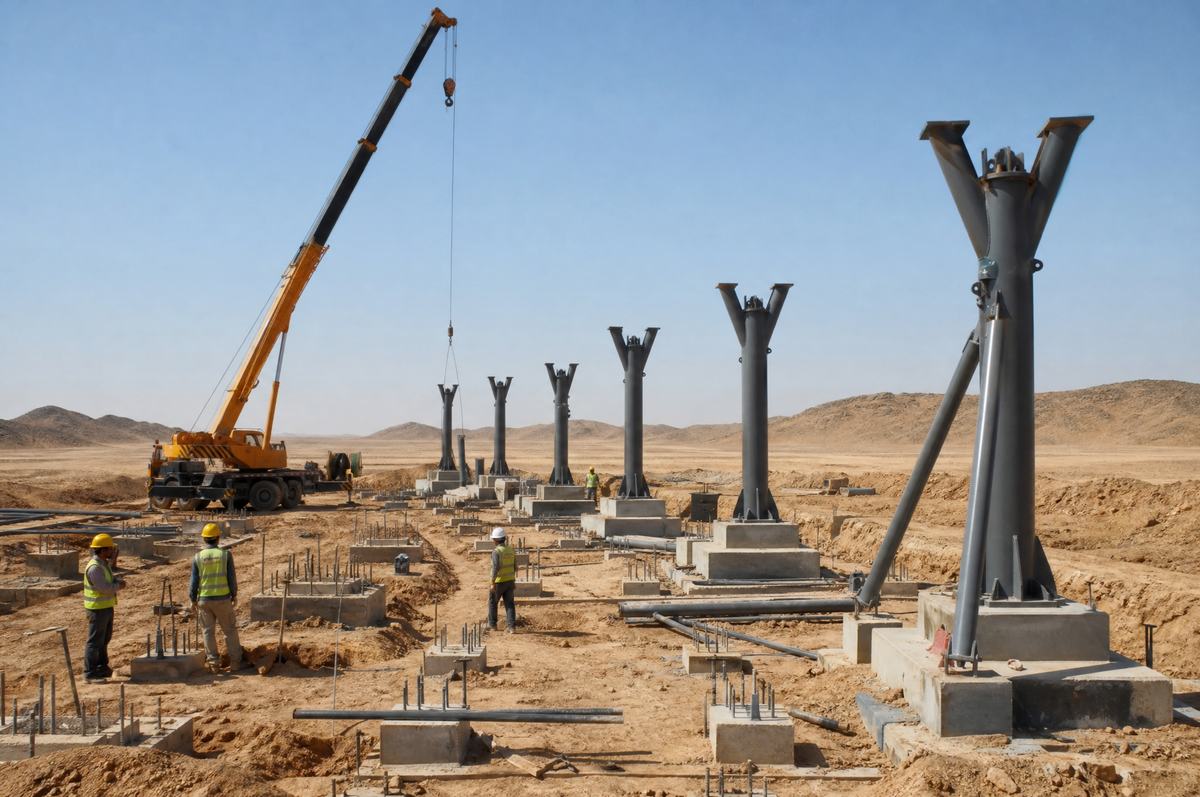
Outdoor construction work in the UAE is restricted during the hottest months, with midday outdoor work limited by regulation. For a ride project this compresses the erection calendar into the cooler months and pushes the critical path earlier. The consequences for a buyer are concrete:
- Foundation and civil works must be complete before the restricted period, because concrete placement and curing in high ambient heat require specific measures and are best scheduled outside it.
- Steel erection, which is outdoor work at height, has to fit inside the permitted window; a large coaster or a tall wheel may need more than one season if the window is missed.
- Commissioning and testing should not be scheduled in the restricted period, because the supplier's engineers need unrestricted site access and the ride needs to run repeatedly at design ambient.
- Shipping and customs clearance must land the ride on site with margin before the window opens, not on the first day of it.
The practical rule is to work backwards from the restricted period: commissioning, then erection, then foundation, then shipment, then manufacturing. A buyer who issues the order late in the year should expect the erection to fall in the following cool season, and should plan opening accordingly rather than compress the sequence.
Power, water and maintenance access on a desert site
Site services are frequently underestimated on UAE projects because the park's infrastructure is delivered by others. The ride specification should state the electrical supply characteristics the ride requires, the point of connection, and who provides the transformer, cabling and earthing. Ask the supplier for the ride's electrical load profile, including starting currents, so the park's distribution can be sized correctly.
Water matters for two reasons: guest comfort systems such as misting, and cleaning. Sand and dust accumulate on tracks, walkways and cabin surfaces, and the maintenance regime has to include cleaning at a frequency the operator can sustain. Specify the cleaning method and the water quality required, and confirm that the ride's materials and finishes tolerate it.
Maintenance access is a design issue on a desert site. Specify walkways, handrails and access platforms to every service point, and confirm that the supplier's maintenance schedule can be carried out from those platforms without temporary scaffolding. For tall rides, state whether the operator will hold a service lift or whether access is by ladder, and require the supplier to price the access solution as part of the ride. For drop towers, the access arrangement around the tower and the brake section is a recurring maintenance cost and should be reviewed at design stage — see the drop tower range for the configurations available.
What to put in the contract about heat, sand and commissioning
Contract clauses should convert the technical points above into obligations with dates and acceptance criteria. Include:
- Design ambient and operating limits, stated as figures, with the supplier's confirmation that throughput and cycle are achievable at that ambient.
- Derating statement: any condition under which the ride must be stopped or operated at reduced capacity, and the supplier's written confirmation of those conditions.
- Finish and material specification for ultraviolet and sand exposure, with the cleaning method the finish tolerates.
- Commissioning scope: the tests to be performed, the ambient conditions under which they are valid, the records to be issued, and the witness required.
- Schedule milestones tied to the installation window, with the restricted period named as a known constraint rather than an excusable delay.
- Document deliverables for the authority submission, with due dates before shipment.
- Spares list for the first operating period, delivered with the ride.
For indoor attractions such as flying theaters, add the building interface to the same clause set: who designs the support, who signs off the interface, and what happens if the building programme moves. The flying theater range is specified against the building, so the interface is part of the ride contract, not a separate package.
Design factor | UAE-specific issue | What to specify
| Design factor | UAE-specific issue | What to specify |
|---|---|---|
| Ambient temperature | Drive and control cabinets run above intended temperature | Design ambient and operating range; enclosure cooling; written operating limits |
| Solar load | Surface temperature and thermal movement on exposed steel | Shading strategy; ultraviolet-resistant finish; movement allowances in the design |
| Cabin cooling | Guest and equipment heat load in enclosed cabins | Internal heat load; cooling sized to design ambient; separate line item |
| Derating | Reduced output at high ambient | Confirmation of throughput and cycle at design ambient; stop conditions |
| Sand and dust | Accumulation on tracks, walkways and cabins | Cleaning method and frequency; finish tolerance; water quality |
| Installation window | Restricted outdoor work in the hottest months | Milestone schedule working back from the window; commissioning outside it |
| Site services | Power and water delivered by others | Load profile; point of connection; responsibility split |
| Maintenance access | Access at height without temporary works | Walkways and platforms to every service point; access solution priced in |
Next step. Prepare a specification sheet stating the site, the design ambient, the indoor or outdoor decision, the target installation window and the approving authority, and send it with your enquiry so the supplier can respond to the actual project rather than a catalogue model.