
Buying an amusement ride from a Chinese manufacturer for a South African park is a landed-cost and scheduling exercise before it is a product decision. The FOB price is only the first line: ocean freight, port charges, clearing, inland transport, rigging and commissioning all sit on top, and the port you choose changes that total. The design basis must also be agreed against the standards required by your market, confirmed per project, and the installation window must be set against your season. This guide sets out what to compare, what documentation to prepare, and where South African buyers typically lose time and money.
What South African buyers actually compare
Experienced buyers do not compare FOB quotes. They compare the delivered-and-commissioned figure at the gate of the park, and the date the ride can open. Two suppliers quoting the same FOB number can land 10–20% apart once freight, duty, clearing and inland haulage are added, and the gap widens if the ride needs abnormal-load permits or a crane that has to be mobilised from another province.
Build the comparison on these lines:
- Ex-works or FOB price — the manufacturer's scope, and what is excluded (spare parts, tools, manuals, training).
- Ocean freight and insurance — driven by volume, not weight, for most ride structures. Ferris wheel sections and coaster track are bulky.
- Port and terminal charges at the South African port of discharge.
- Customs duty and VAT — payable on the customs value, which includes freight and insurance.
- Clearing agent fees and any storage or demurrage if documents are late.
- Inland transport to site, including escorts and permits for oversize loads.
- Offloading, rigging and assembly — crane hire, labour, supervision.
- Commissioning, testing and staff training — usually a manufacturer's technician visit, with flights, accommodation and per-diem billed to the buyer.
Ask every supplier to quote against the same list, with exclusions stated in writing. A quote that omits rigging and commissioning is not cheaper; it is incomplete.
Ports and inland freight: Durban, Cape Town, Coega — how the choice changes the budget
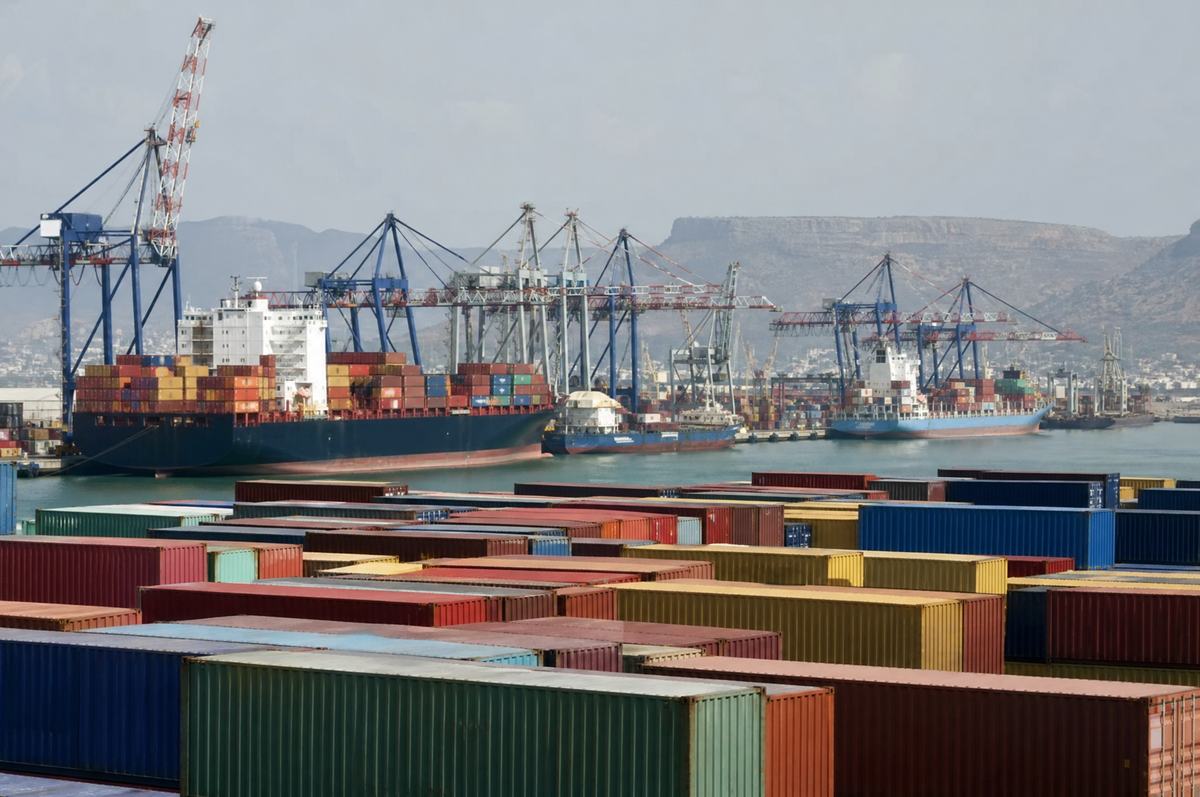
Most ride imports from China enter through one of three gateways, and the choice is usually made on inland distance rather than on port convenience.
Durban
Durban handles the largest share of container and breakbulk traffic from Asia and is the natural entry for Gauteng, KwaZulu-Natal and Mpumalanga parks. Inland haulage to Johannesburg is the shortest of the three, which matters for oversize loads that need permits and escorts. Durban is also the busiest, so terminal congestion and storage charges are the risk to plan for.
Cape Town
Cape Town suits Western Cape parks and avoids a long inland haul, but the sea leg from China is longer and schedules are less frequent. For a park in the Cape, the saving on inland transport usually outweighs the extra sailing time — provided the order date allows for it.
Coega (Port of Ngqura)
Coega serves the Eastern Cape and is often used as an alternative to Durban when schedules allow. Inland distance to Eastern Cape sites is short, but the range of clearing agents and heavy-haulage operators is narrower, so book capacity early.
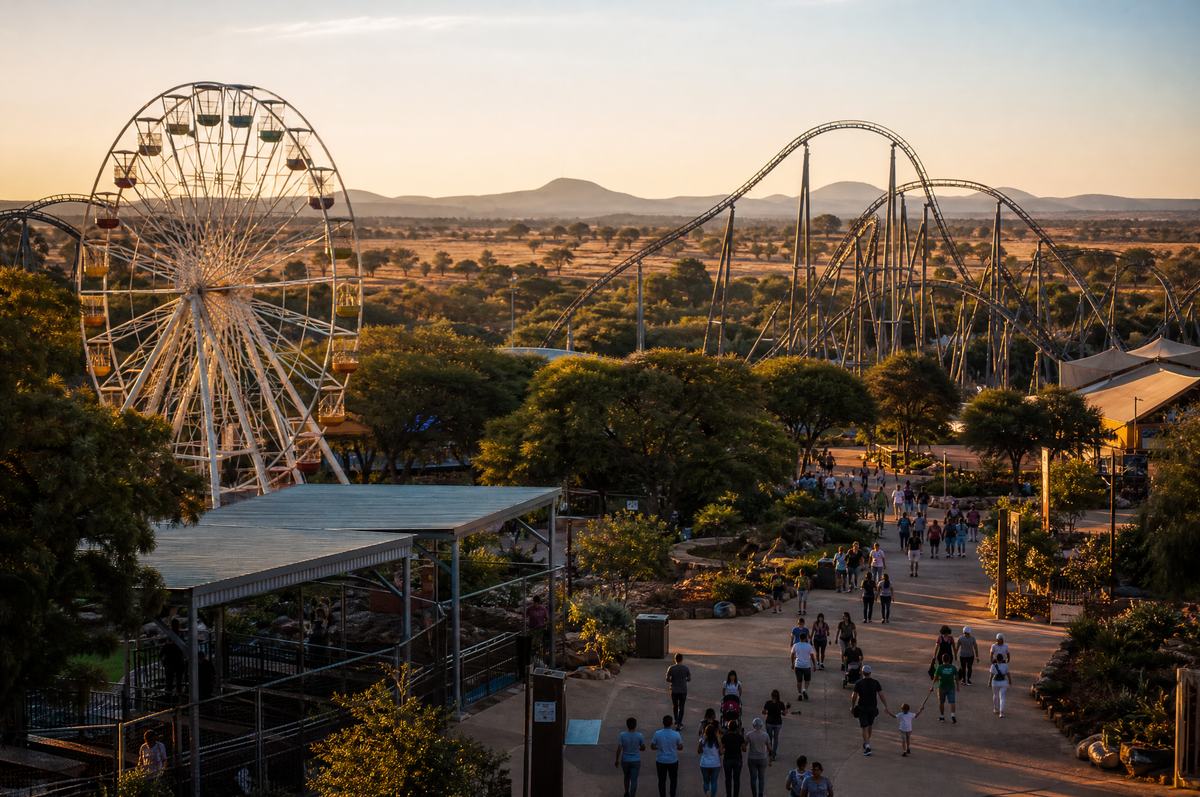
For any of the three, confirm before booking: the maximum cargo dimensions the port and route can handle, whether the load is containerised or breakbulk, and whether abnormal-load permits are needed for the final leg. A Ferris wheel shipped in sections may still produce individual components that exceed normal road limits. If you are comparing wheel options, see our Ferris wheels for sale range and confirm section dimensions before you fix the port.
Import documentation and duty: what the clearing agent will ask for
Your clearing agent will work from a document set. Missing one item stops the shipment at the terminal and starts the clock on storage charges. Prepare:
- Commercial invoice — description matching the tariff heading, Incoterm, currency, and the full value including any technical supervision or training billed separately.
- Packing list — per package, with dimensions, weights and marks matching the shipping documents.
- Bill of lading or sea waybill, consigned correctly to the importer or their agent.
- Certificate of origin where a preferential rate is claimed.
- Import permit or ITAC approval where the goods fall under a controlled category — confirm with the agent before order.
- Customs code registration and, for VAT, the importer's tax status.
- Technical file — drawings, load data and manuals, which the agent may not need but the inspection body will.
Duty and VAT are assessed on the customs value, which includes freight and insurance, so a cheap FOB price with expensive freight does not reduce the duty base. Ask the agent for a landed-cost estimate in writing before you place the order, and check the tariff classification of each major component — ride structures, electrical panels and control systems may not fall under one heading.
Standards and inspection: how the design basis is agreed for South African operation
South African operation brings its own requirements: the applicable national standards, local electrical practice, and the inspection regime your insurer and local authority will expect. The design basis is therefore agreed project by project, not assumed from the manufacturer's home market.
Set it out in a design basis document before manufacture begins, covering:
- The standards required by your market, confirmed per project, listed by number and edition.
- Structural design loads, wind and seismic assumptions for the site, and the soil conditions the foundation design will be based on.
- Electrical supply characteristics, earthing arrangement and control-system architecture.
- Guardrails, restraint systems, evacuation routes and access for maintenance.
- The inspection and test plan: what is witnessed at the factory, what is checked on site, and who signs off before the ride carries passengers.
Arrange third-party inspection at the factory if your insurer or local authority requires it, and agree the hold points in advance so production is not delayed. On site, the commissioning report, as-built drawings and operating manual should be handed over in English and retained for the ride's life. For coaster projects, the inversion count and track layout are fixed early — review the roller coasters for sale range and confirm the design basis before the order is released.
Power and site conditions: supply, load shedding and generator provision
Ride availability depends on power continuity. Load shedding affects the park's whole operation, and a ride that stops mid-cycle creates an evacuation procedure, not just a queue. Plan for it at the design stage:
- Confirm the supply — voltage, phases, frequency and available capacity at the point of connection, verified by a local electrical engineer.
- Size the generator for the ride's starting and running loads, and decide whether it backs up the ride alone or the whole area.
- Agree the changeover arrangement — automatic or manual — and how the ride is brought to a safe position before transfer.
- Provide safe evacuation for a power loss at any point in the cycle, with staff procedures and equipment.
- Protect the controls — surge protection and a stable earth, given supply fluctuations.
Generator provision is a capital item and a site-works item. It should be in the budget from the start, not added after the ride arrives.
Season planning: why the installation window drives the order date
South African parks generally earn most of their revenue in one high-traffic season. A ride that misses the opening week loses the year's best trading, so the installation window — not the factory lead time — sets the order date.
Work backwards from the opening date:
- Commissioning and testing: allow weeks, not days, and more if third-party inspection is required.
- Assembly and rigging: crane availability and weather affect this.
- Inland transport and port clearance: add buffer for congestion and document queries.
- Ocean freight and sailing schedule: the longest single block, and the least controllable.
- Manufacturing and factory testing: confirmed against the design basis.
Add contingency at each stage. Buyers who order late pay for air freight on spares, expedited clearing, and premium crane hire — costs that exceed any saving on the ride itself.
Cost line | Who arranges it | Where buyers get caught
| Cost line | Who arranges it | Where buyers get caught |
|---|---|---|
| Ocean freight and insurance | Buyer or freight forwarder | Quoted on weight; ride structures are charged on volume |
| Port and terminal charges | Clearing agent | Storage and demurrage when documents arrive late |
| Customs duty and VAT | Clearing agent, paid by importer | Duty base includes freight and insurance, not just FOB |
| Inland transport and permits | Buyer's haulier | Oversize components need permits and escorts not in the quote |
| Offloading and rigging | Buyer's contractor | Crane capacity and site access assumed, not verified |
| Commissioning and training | Manufacturer's technician, billed to buyer | Flights, accommodation and per-diem omitted from budget |
| Generator and electrical works | Buyer's electrical contractor | Added after the ride arrives; supply capacity not confirmed |
| Spare parts and manuals | Manufacturer | Not in the initial scope; ordered later at premium freight |
Next step
Before requesting a quotation, prepare a site brief: the port you intend to use, the inland route and access constraints, the electrical supply and generator plan, the standards required by your market confirmed per project, and your target opening date. Send it with your ride type and capacity requirement, and ask for a landed-cost breakdown against the table above rather than an FOB figure alone.