
Buying an amusement ride from a Chinese manufacturer for a Saudi park comes down to three things: the landed cost at your site rather than the FOB price, a document set that clears Saudi approval and inspection, and engineering that holds up in ambient heat and sand. ZhipaoRides builds roller coasters, Ferris wheels, drop towers, flying theaters, 4D cinemas, carousels and flume rides at a 120,000 m² factory in Xingtai, Hebei, and ships to Saudi projects. This guide sets out what to agree before you place an order — commercial terms, paperwork, climate specification, routing, scheduling and site services — so the ride arrives ready for installation rather than ready for a second negotiation.
1) Landed cost at site versus FOB
FOB pricing covers the ride loaded at the Chinese port. It does not tell you what the ride costs when it is standing on your plot in Riyadh, Jeddah or Dammam. For a Saudi buyer the gap between the two is where budgets move, and it should be mapped before the order is signed.
The main components of that gap are ocean freight and its surcharges, marine insurance, Saudi customs duty and VAT, port handling and storage, inland transport, and the cost of getting the ride from the inland point to the foundation. On top of that sit the site-side costs that are easy to leave out of a first budget: unloading and heavy lift at site, temporary storage if the foundation is not ready, and the supervision days required for installation and commissioning.
Ask for a delivered-to-site cost breakdown, not a single number. Agree the Incoterm precisely — DAP to your named site is clearer than a port-to-port term when the last leg crosses a dry port — and state who pays for demurrage, storage and a second lift if the site is not ready on the arrival date. Agree the currency and the payment schedule against production and shipping milestones, and confirm what is included in the ex-works scope: spare parts list, special tools, foundation anchor sets, and the documents package.
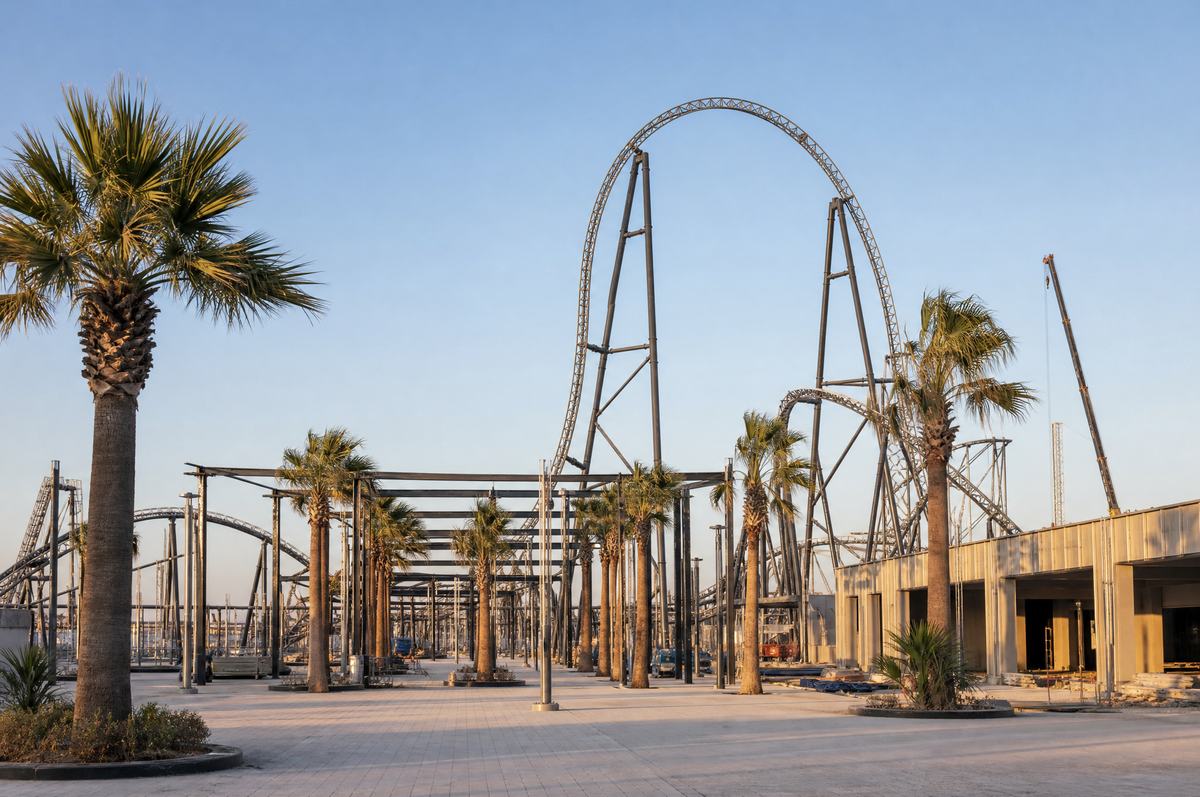
For ride-specific scope, see our roller coasters for sale page, which sets out the model range and the information we need to quote a delivered scope.
2) Approval and inspection documents
Saudi approval is a document exercise as much as a technical one. The ride must satisfy the standards required by your market, confirmed per project, and the authority reviewing your submission will ask for evidence that the design, manufacture and testing were controlled. Establish the applicable standard set with your local consultant at tender stage, not after the ride is built.
The documents package typically includes: general arrangement and foundation drawings; structural and mechanical design calculations; electrical schematics and control logic description; risk assessment and failure mode analysis; operation and maintenance manuals in Arabic and English; the parts list and recommended spares; manufacturing inspection and test records; non-destructive testing records for critical welds; and material and component traceability.
Plan for third-party inspection. Many Saudi projects appoint an independent inspection body to witness factory acceptance testing and to review the design file before shipment. Build that into the production schedule — a witnessed FAT is a scheduled event, and rescheduling it costs calendar time. Confirm who holds the documents, in what format, and whether the authority expects stamped hard copies or a digital submission.
Two practical points. First, agree the language and format of the manuals early; translation is a schedule item, not an afterthought. Second, keep the document set and the physical shipment matched — a container held at the port for a missing certificate is the most common avoidable delay in this market.
3) Climate engineering (ambient heat, sand ingress, cabin cooling)
Saudi operating conditions are a design input, not a service note. Ambient heat affects structural temperature, hydraulic and pneumatic behaviour, electrical cabinet temperatures, bearing lubrication, and above all the comfort of guests standing in a queue or sitting in a cabin. Sand and dust affect filters, seals, sensors, pivot points and anything with a close tolerance.
Raise the following with the manufacturer before the design is frozen:
- Design ambient range. State the maximum and minimum site temperatures the ride must operate and survive in, and ask for the derating or duty cycle that applies at the top of that range.
- Electrical and control enclosures. Specify cooling and filtration appropriate to dust and heat, and agree the acceptable internal cabinet temperature.
- Sand ingress. Agree seal types and wiper arrangements on moving joints, the filtration standard on ventilation, and the inspection interval for dust accumulation.
- Cabin cooling. For enclosed cabins and dark-ride vehicles, agree whether cooling is fitted, its power demand, and how condensate is drained. For open rides, agree shade and queue-line cooling as part of the guest-area design.
- Materials and finishes. Agree the coating system and colour fastness for high-UV exposure, and the corrosion protection for coastal sites such as Jeddah.
- Lubricants and fluids. Confirm the specified lubricants are available in the Kingdom or agree equivalents in writing.
The same questions apply to a Ferris wheel, where cabin cooling and drive-system heat are the dominant climate issues; our Ferris wheels for sale page covers the 42–130 m range and the cabin options.
4) Ports and inland delivery
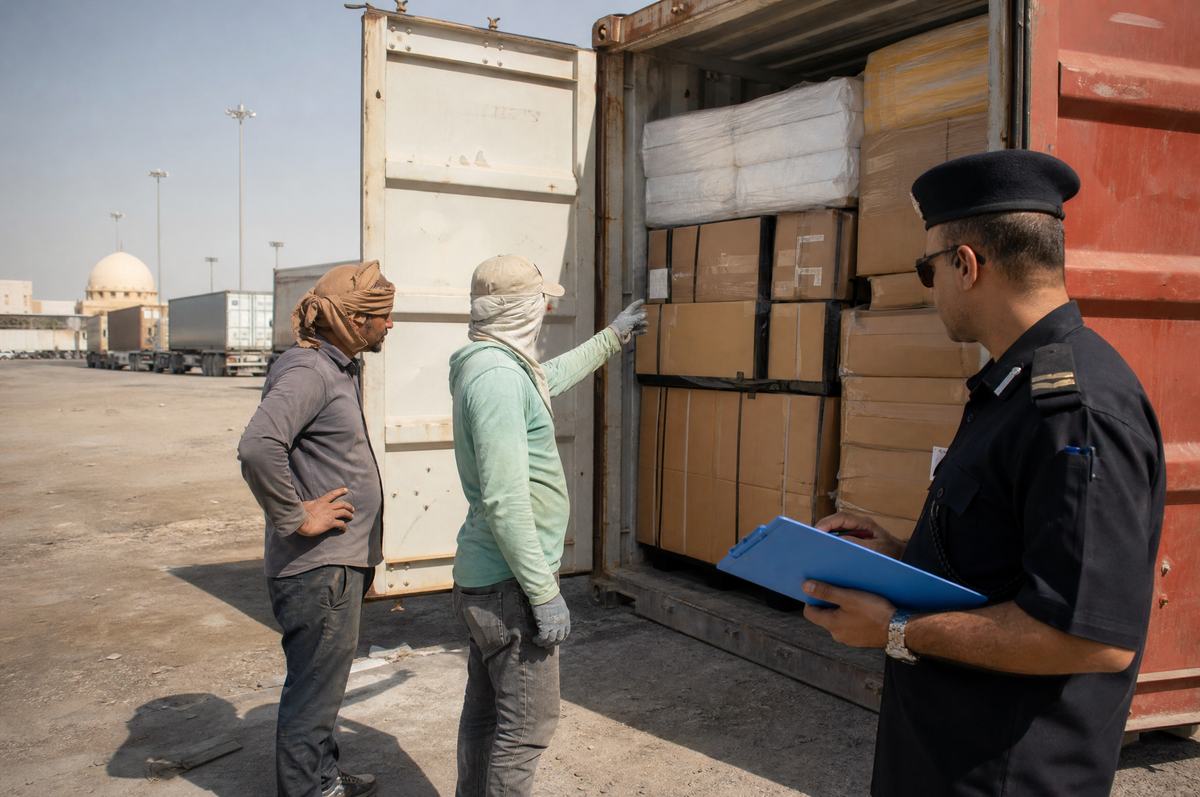
Saudi projects are served through three practical gateways, and the choice changes the inland leg, the transit time and the lift equipment needed at the other end.
Dammam (King Abdulaziz Port)
The natural entry for projects in the Eastern Province and a reasonable route to Riyadh. Confirm the heavy-lift capacity at the port and the road route for out-of-gauge loads before booking.
Jeddah (Islamic Port)
The main gateway for the western region and the Red Sea coast. Congestion and seasonal volume affect release times, so build float into the schedule and confirm storage charges in advance.
Riyadh dry port
Inland clearance can suit projects in the capital, but the container still arrives by sea first. Agree who handles the sea-to-dry-port leg and where customs clearance actually happens.
For all three, agree: the shipping terms, whether containers are loaded for out-of-gauge sections, the crane capacity required at destination, the road permits for oversize loads, and the insurance cover from port to foundation. Ask for a packing list keyed to the installation sequence so the site team opens containers in the right order.
5) Installation windows, summer and Ramadan scheduling
Installation in Saudi Arabia is a calendar problem as much as a technical one. Summer heat limits outdoor work to early morning and evening, which stretches every outdoor task; enclosed work such as control rooms and indoor dark rides can continue through the middle of the day. Plan the sequence so that heavy lifting and outdoor structural work fall outside the hottest months where the programme allows.
Ramadan affects working hours, site catering and the availability of local labour and inspection staff. The Eid holidays around it are fixed points that should be shown on the programme rather than discovered during commissioning. Agree with the manufacturer how supervision days are counted, what happens if the site is not ready when the supervisor arrives, and the daily rate for extension. Agree the commissioning and testing sequence in advance, including the witnessed tests and who signs them off.
6) Power, water and maintenance access
Three site services decide whether the ride runs reliably after handover. Power: confirm the connected load, the voltage and frequency, the quality of supply expected, and whether the ride needs its own transformer or a backup supply for safe evacuation. Water: confirm demand for flume rides and water features, and the drainage and treatment arrangements. Maintenance access: agree the access routes, platform heights, lifting points and the space needed to remove major components without dismantling the ride.
Ask for the maintenance schedule and the recommended spares holding, and agree the training package — classroom and on-ride — for your operations and maintenance team, including the language of delivery.
Cost or design factor | Saudi-specific issue | What to agree before order
| Cost or design factor | Saudi-specific issue | What to agree before order |
|---|---|---|
| Delivery term | Inland leg from port or dry port to site | Incoterm, named site, who pays demurrage and storage |
| Customs and duty | Clearance point and document matching | Who clears, which broker, document set and format |
| Approval documents | Standards required by your market, confirmed per project | Applicable standard set, language, stamped copies |
| Third-party inspection | Witnessed factory acceptance testing | Inspection body, FAT date, who bears rescheduling cost |
| Ambient heat | Operating and survival temperature range | Design range, derating, cabinet cooling |
| Sand ingress | Seals, filters, sensors, pivot points | Seal and filtration standard, inspection interval |
| Cabin cooling | Guest comfort in enclosed cabins | Whether fitted, power demand, condensate drainage |
| Port routing | Dammam, Jeddah or Riyadh dry port | Gateway, heavy-lift capacity, oversize road permits |
| Installation window | Summer heat and Ramadan hours | Programme with fixed points, supervision day rate |
| Site services | Power quality, water, maintenance access | Connected load, backup supply, access and lifting points |
Next step
Send us your site location, the ride type and capacity you are planning, your target opening date and the standard set your consultant has identified. We will return a delivered-scope outline, a document list for your approval submission, and a climate specification for your review — so the commercial and technical questions are settled before the order, not after the container is released.