
Buying an amusement ride for a Philippine park is an import project before it is a construction project. The buyer or a nominated customs broker normally acts as importer of record, the ride must be designed to a wind speed agreed in writing for the specific site, and the delivery route from port to foundation slab often sets the schedule. This guide sets out what to settle with an amusement rides supplier in the Philippines before a purchase order is issued, covering Bureau of Customs (BOC) documentation, typhoon loading, coastal corrosion, power quality, island logistics and wet-season planning.
1. Import route: importer of record, BOC requirements, what the supplier must issue
Decide who is the importer of record before the contract is signed. Most Philippine park developers import in their own name and appoint a licensed customs broker; a smaller number use a trading company. The choice affects who carries the duty and VAT liability, who holds the bond, and who deals with any examination or hold at the port.
The supplier's documentation package is what the broker works from. Confirm early that the supplier will issue, in the form your broker requires:
- Commercial invoice and packing list, with each major component listed separately so that tariff classification can be checked line by line.
- Bill of lading or airway bill, consigned to the importer of record.
- Certificate of origin, so that the applicable tariff treatment can be assessed.
- Fumigation or phytosanitary documentation for any timber crating, where required by Philippine quarantine rules.
- Technical file: general arrangement drawings, electrical schematics, component manuals and the operations and maintenance manual, in English.
- Declaration of the standards the ride is designed and built to, stated as the standards required by your market and confirmed per project, not as a certification claim.
Ask the supplier to confirm the shipping terms (FOB, CIF Manila or CIF Cebu) and which party arranges marine insurance. Under CIF the supplier insures to the named port only; inland movement, port storage and any demurrage sit with the importer. Agree who pays for port storage if examination delays release.
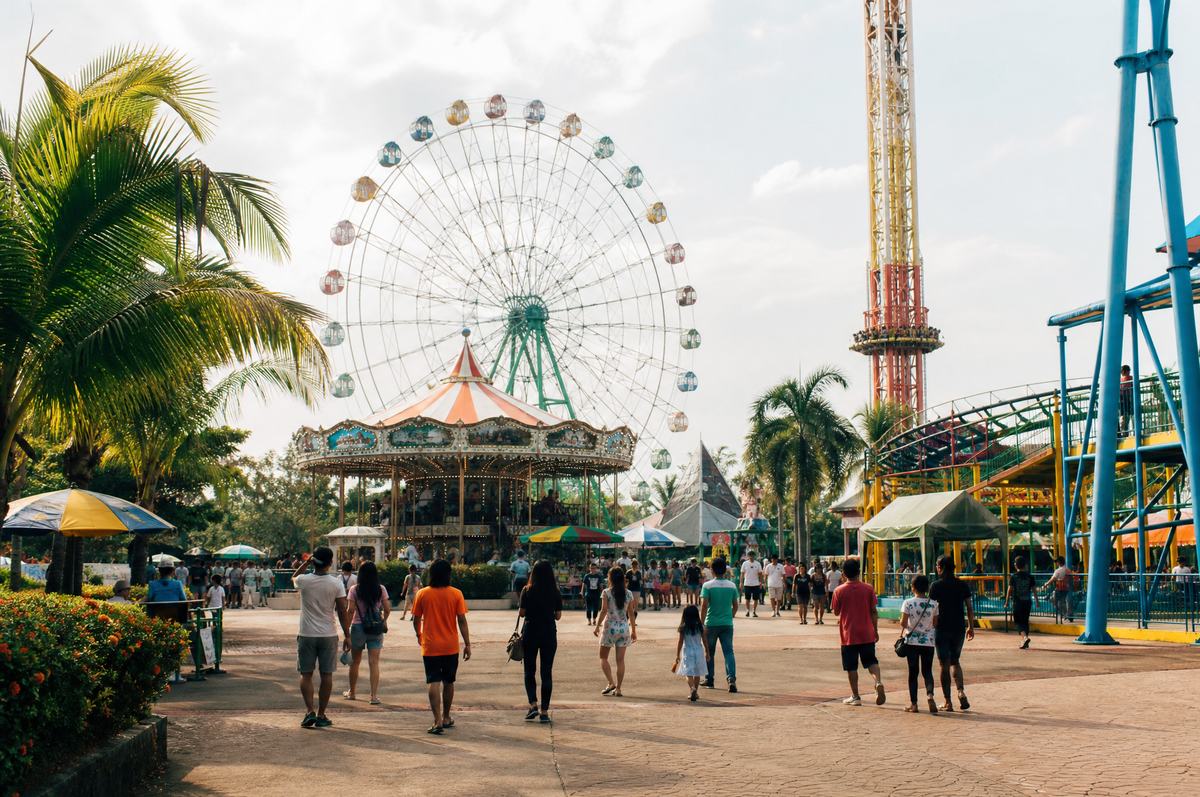
2. Typhoon and wind loads: how the design wind speed is agreed and what it changes
Wind is the single design input that most changes the structure, the foundation and the price of a Philippine ride project. The design wind speed is not a catalogue value; it is agreed per project, for the specific site, against the standards required by your market and confirmed per project. The usual route is for the buyer's structural engineer to state the site wind speed and exposure assumptions, and for the supplier to confirm in writing that the ride structure, foundation interface and operating wind limits are designed to them.
What changes when the agreed wind speed rises:
- Foundation size and reinforcement, because overturning and uplift govern the design of tall rides such as Ferris wheels and drop towers.
- Structural member sizing and bracing on the tower or support frame.
- Operating and stowage rules: the wind speed at which the ride stops accepting passengers, and the procedure for leaving it parked in a typhoon.
- Anchoring and tie-down provisions for rides that are partly demountable or seasonally installed.
Put the agreed wind speed, the exposure category and the stowage procedure into the contract as a technical annex. If the site is near an open coastline or on exposed reclaimed ground, say so at enquiry stage; the supplier cannot price the foundation interface without it. For tall ride options, see the Ferris wheels for sale range and confirm the wind design basis before shortlisting a height.
3. Coastal versus inland sites: salt, drainage and foundation
A coastal site changes the specification before the ride model is discussed. Salt-laden air drives the corrosion protection system: galvanising specification, coating systems, stainless fasteners and the frequency of inspection and touch-up in the maintenance manual. State the distance from the shoreline and whether the site is directly exposed to onshore wind and sea spray.
Drainage matters as much as corrosion. Philippine rainfall is intense and concentrated, and a ride pit, flume trough or station floor that holds water will fail early. Confirm site levels, the finished floor level relative to the surrounding ground, and where surface water goes during a heavy event. For water rides, confirm the water treatment and recirculation design and the make-up water source.
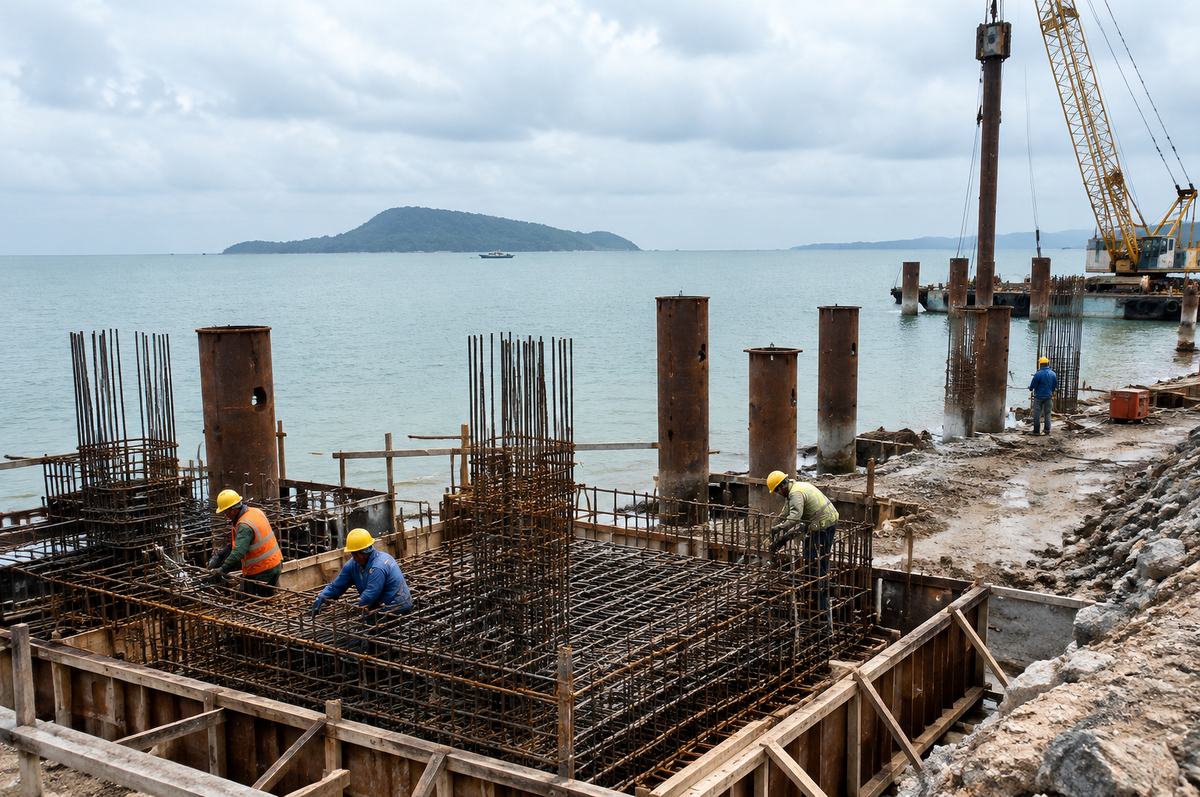
Foundation conditions vary widely between reclaimed coastal land, alluvial inland plains and upland sites. Commission a geotechnical investigation before final design, and give the report to the supplier so the foundation interface can be designed to actual soil conditions rather than assumed ones. The supplier should issue foundation interface loads and anchor layouts to your structural engineer, who designs and signs off the foundation to local code.
4. Power quality and generator backup
Confirm the available supply, voltage and frequency at the site, and whether the supply is stable enough for the ride's control system without conditioning. Voltage fluctuation and short outages are common in some service areas, and a ride that stops abruptly with passengers on board is an evacuation event, not just an inconvenience.
Decide the backup philosophy early. Options range from a generator sized for the full ride load to a smaller unit that powers controls, lighting, communications and a controlled return-to-station sequence. Whichever is chosen, the changeover procedure and the ride's behaviour on power loss must be documented in the operations manual and rehearsed in staff training. Ask the supplier to state the ride's electrical load profile and its behaviour on supply loss, so your electrical engineer can size the supply and the generator.
5. Island logistics: Manila versus Cebu versus Mindanao delivery
The delivery route sets the schedule as much as the manufacturing lead time does. Manila is the main container gateway; Cebu and Mindanao ports are served by feeder services with different sailing frequencies and different equipment availability. Confirm with your freight forwarder:
- Which port of discharge is practical for your site, and the onward road route from that port.
- Whether the largest indivisible components fit the containers or flat racks available on that route, and whether a heavy-lift crane is needed at the port or on site.
- Road restrictions on the final leg: bridge weight limits, overhead clearance, and whether an escort or night movement permit is needed.
- Site access for the delivery vehicle and the mobile crane, including gate width and ground bearing capacity on the access road.
For Mindanao and smaller island sites, add buffer time for feeder connections and for weather disruption to inter-island sailings. Sequence delivery so that components arrive after the foundation is cured and the crane is on site, and agree storage and security responsibility for anything that arrives early.
6. Season planning around the wet season
Work backwards from your intended opening date. Civil works, foundation curing, steel erection, electrical installation, commissioning and staff training each need a slot, and outdoor erection is the activity most exposed to rain. Where possible, place the erection and commissioning window in the drier months and use the wet season for design, permitting, import documentation and staff recruitment.
Allow contingency in the programme for typhoon-related port closures and for site access loss after heavy rain. Agree with the supplier which commissioning activities can be done under cover and what the acceptance test sequence is, so that a weather delay does not automatically move the opening date. For technical parameters to discuss at enquiry stage, see the ride specifications page.
Requirement, Philippines-specific issue and what to confirm early
| Requirement | Philippines-specific issue | What to confirm early |
|---|---|---|
| Importer of record | Duty and VAT liability, bond, port examination | Who imports, which broker, who pays storage and demurrage |
| Supplier documentation | Line-by-line classification, timber crating rules | Invoice detail, certificate of origin, fumigation papers, English manuals |
| Design wind speed | Typhoon exposure varies by site and terrain | Site wind speed and exposure stated by your engineer, confirmed in writing by supplier |
| Corrosion protection | Salt air on coastal sites | Distance from shoreline, coating system, inspection interval |
| Drainage | Intense concentrated rainfall | Site levels, pit drainage, water ride make-up water |
| Foundation | Reclaimed, alluvial and upland soils differ | Geotechnical report issued before final design |
| Power | Voltage fluctuation and short outages | Load profile, behaviour on supply loss, generator sizing and changeover |
| Logistics | Feeder services to Cebu and Mindanao | Port of discharge, component dimensions, crane and road permits |
| Schedule | Wet season and typhoon closures | Erection window, commissioning sequence, weather contingency |
Next step
Send ZhipaoRides your site location, the geotechnical report if available, your engineer's design wind speed and exposure assumptions, the intended port of discharge and your target opening date. The reply will set out the documentation package, the foundation interface information your engineer needs and a delivery sequence for your route, so that the commercial discussion starts from confirmed site conditions rather than assumptions.