
Buying an amusement ride for a Kazakh park means treating winter as a design input, not a seasonal inconvenience. Low temperatures affect steel behaviour, lubricants, hydraulics, cabin heating and guest comfort, and they also shape foundation depth and maintenance access. The import route runs through the EAEU customs union, and inland delivery to Almaty or Astana is a choice between rail and road with different constraints. This guide sets out what to specify at procurement stage so that the ride, the site works and the operating plan fit a continental climate.
1. Winter operation and what low temperature changes
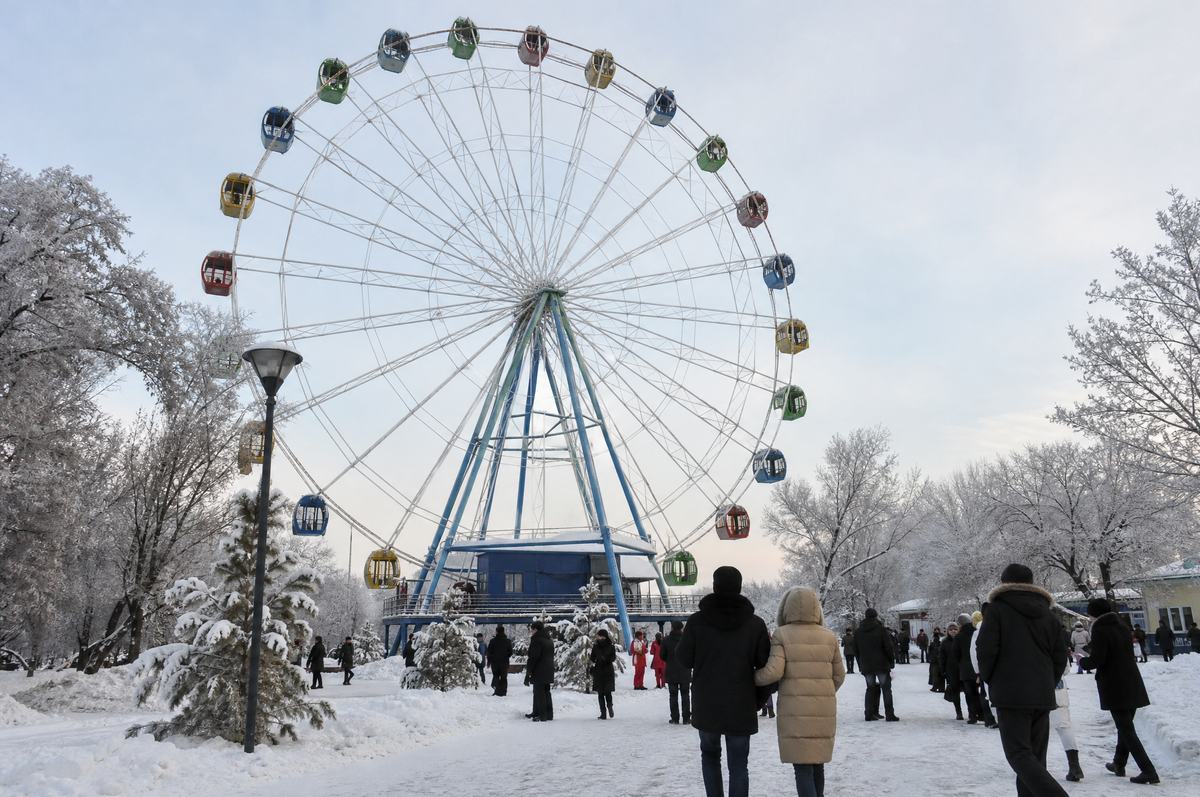
Kazakhstan’s continental climate produces long cold periods, and a ride specified for a temperate market may need changes before it is suitable. Low temperature affects the mechanical behaviour of structural steel, the viscosity of lubricants and hydraulic fluids, the flexibility of seals and cables, and the performance of batteries and electronics. It also changes how guests use the ride: open cabins become uncomfortable, queue lines need shelter, and boarding times lengthen when people are wearing heavy clothing.
At procurement stage, state the minimum operating temperature you intend to support and the minimum temperature at which the ride will be parked. These are different figures and both matter. A ride that operates to a given low temperature needs heated enclosures, low-temperature lubricants, trace heating on hydraulic lines where applicable, and control cabinets rated for the site conditions. A ride that is parked below that temperature needs a documented preservation procedure: drain points, battery removal, seal protection and a restart checklist.
Ask the manufacturer to confirm which components are affected by low temperature and what the operating limits are. Do not accept a single “winterised” label without a list. The specification should identify the low-temperature limits of the ride’s systems and the measures taken to meet them. For drop towers and other tall structures, also confirm how ice formation on guide rails, cables and platforms is managed and inspected.
2. EAEU import route and documents
Kazakhstan is a member of the Eurasian Economic Union, so rides enter under EAEU customs rules. The importer of record should be established before shipment, because the customs declaration, conformity documents and marking obligations sit with the importer. The technical documents required for the ride should be prepared for the EAEU market and confirmed per project against the standards required by your market.
The document set typically includes the contract, commercial invoice, packing list, transport documents, customs declaration and the conformity documents applicable to the ride type. The manufacturer should supply technical files, drawings, operating manuals and maintenance schedules in a form that supports both customs clearance and local registration. Where the ride is subject to EAEU technical regulations, the conformity assessment route should be agreed before the order is placed, not after the ride arrives.
Plan for translation. Kazakh and Russian language versions of operating and maintenance documentation are normally needed for local inspectors and for the operating team. Confirm who prepares the translations and whether the manufacturer supplies source files in editable format. Also confirm the customs classification and the duties and taxes that apply; these are project-specific and should be verified with your customs broker.
- Importer of record identified and registered.
- Conformity documents agreed per project against the standards required by your market.
- Technical file, drawings and manuals supplied in editable format.
- Kazakh and Russian translations planned before shipment.
- Customs classification and duty position confirmed with a broker.
3. Inland delivery by rail versus road to Almaty and Astana
Most rides arrive in Kazakhstan by rail or road after sea or rail freight from China. The choice between rail and road for the inland leg depends on the size and weight of the largest pieces, the destination, the season and the handling equipment available at the site.
Rail is generally suited to heavy and bulky consignments over long distances and can be cost-effective for structures such as Ferris wheel segments, coaster track sections and tower components. The constraints are the loading gauge, the availability of flat wagons or containers, transloading at the border, and the distance from the rail terminal to the site. Almaty and Astana both have rail terminals, but the final road leg and crane capacity at the site still need to be planned.
Road transport offers more direct delivery and is often used for containers and for smaller rides. It is limited by axle loads, bridge and road restrictions, winter road conditions and the availability of low-bed trailers for oversize pieces. For Almaty, the mountain approach and winter weather can affect scheduling; for Astana, the longer winter and road closures can do the same. In both cases, the delivery schedule should include weather contingency.
Ask the manufacturer for a packing list with dimensions, weights and centre-of-gravity notes for each major piece. Confirm lifting points and whether special lifting frames are required. The site works plan should identify the crane capacity and access routes needed for the largest piece, and the delivery contract should state who is responsible for unloading and for any transloading.
4. Foundation and frost depth
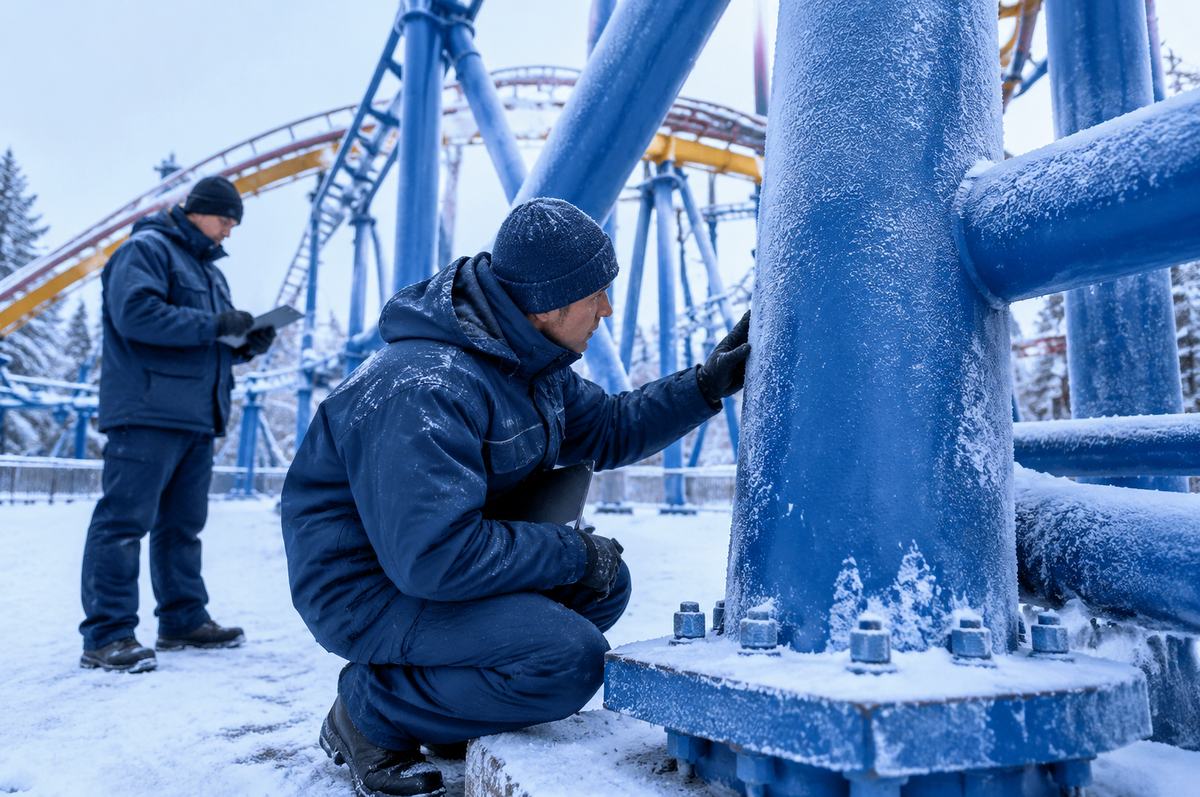
Foundation design in Kazakhstan must account for frost depth and for the soil conditions at the site. Frost depth varies by region and by local conditions, and it affects the depth at which foundations are founded and the detailing needed to prevent frost heave. The ride manufacturer supplies foundation loads and anchor layouts; the local structural engineer designs the foundation to the site’s geotechnical report and to the frost depth required by local norms.
Do not rely on a foundation design from another project. A geotechnical investigation is needed at the actual site, and the foundation design should be reviewed by a local engineer familiar with Kazakh norms. The interface between the ride and the foundation — anchor bolts, base plates, grouting and corrosion protection — should be specified in the contract, with clear responsibility for each item.
For tall rides such as Ferris wheels and drop towers, wind and ice loads also need to be considered in the foundation and structure design. The manufacturer should confirm the design wind speed and any ice load assumptions used for the ride, and the local engineer should check them against the site conditions.
5. Enclosed versus open rides in a continental climate
The choice between enclosed and open rides affects both guest comfort and the operating season. Enclosed rides — such as flying theaters and 4D cinemas — can operate in colder weather because guests are indoors, but the building itself needs heating, ventilation and insulation suitable for the climate. Open rides — such as roller coasters, drop towers and Ferris wheels — are more exposed to weather and may have a shorter operating season unless the ride is designed for cold operation and guests are prepared for it.
For open rides, consider adding enclosed or heated waiting areas, windbreaks at boarding stations and heated operator cabins. For the ride itself, specify low-temperature materials and lubricants, heated control cabinets and, where applicable, heated seats or cabins. The goal is to extend the comfortable operating range without compromising safety or reliability.
For enclosed rides, the building services become part of the ride specification. Heating capacity, air quality, emergency lighting and evacuation routes all need to be designed for the local climate and for the number of guests. The interface between the ride and the building should be clearly defined in the contract.
6. Maintenance planning for a short operating season
A short operating season concentrates maintenance into a few months and makes winter the main window for overhaul. Maintenance planning should start with the manufacturer’s schedule, which sets out daily, weekly, monthly and annual tasks. The park then maps these tasks onto the operating calendar and the winter shutdown, allowing enough time for inspections, parts replacement and any modifications.
Winter maintenance has its own requirements. Access platforms, stairs and walkways need to be safe in snow and ice, and maintenance staff need space to work in winter clothing. Lubricants and spare parts should be stored in conditions that match the manufacturer’s recommendations. The restart procedure after winter should be documented and followed, including checks on electrical systems, hydraulics and safety devices.
Spare parts planning is part of the same exercise. Identify the critical parts that should be held on site and the lead times for others. Agree with the manufacturer how technical support will be provided during the operating season and during winter maintenance.
Design factor | Kazakhstan-specific issue | What to specify
| Design factor | Kazakhstan-specific issue | What to specify |
|---|---|---|
| Operating temperature range | Long cold periods; low-temperature effects on steel, lubricants and hydraulics | Minimum operating and parking temperatures; low-temperature measures for each system |
| Import and conformity | EAEU customs union; conformity documents and marking | Importer of record; conformity route confirmed per project against the standards required by your market; translated documentation |
| Inland logistics | Rail versus road to Almaty and Astana; winter road conditions | Packing list with dimensions and weights; lifting points; unloading responsibility; weather contingency |
| Foundation and frost | Frost depth and soil conditions vary by site | Geotechnical report; foundation design by local engineer; interface responsibilities |
| Enclosure and comfort | Continental climate; guest comfort and operating season | Enclosed waiting areas; heated operator cabins; building services for enclosed rides |
| Maintenance access | Snow and ice; winter clothing; short operating season | Safe access in winter conditions; winter maintenance window; spare parts plan |
For ride options that suit cold-climate parks, see our drop towers for sale. Technical data and model ranges are listed in our specifications section.
Next step
Send us your site location, the minimum operating temperature you want to support, and the ride types you are considering. We will respond with a specification outline and a document checklist for the EAEU import route, so you can confirm the standards required by your market and plan the site works before you commit.