
Why substation sizing starts with the ride cycle, not the motor nameplate
When you plan the amusement ride power supply for a launch coaster or a drop tower, the utility connection is often the longest-lead item on the project. The ride's motors, drives and controls are only part of the load. The substation must also carry lighting, compressed air, station services and the peak that occurs in the first seconds of a cycle. Sizing from a single motor nameplate almost always produces either an oversized transformer or a connection that trips on the first launch.
This article explains how to build a load profile, choose a transformer size, decide on redundancy, and prepare the data that lets a manufacturer return a scoped quotation instead of a rough estimate.
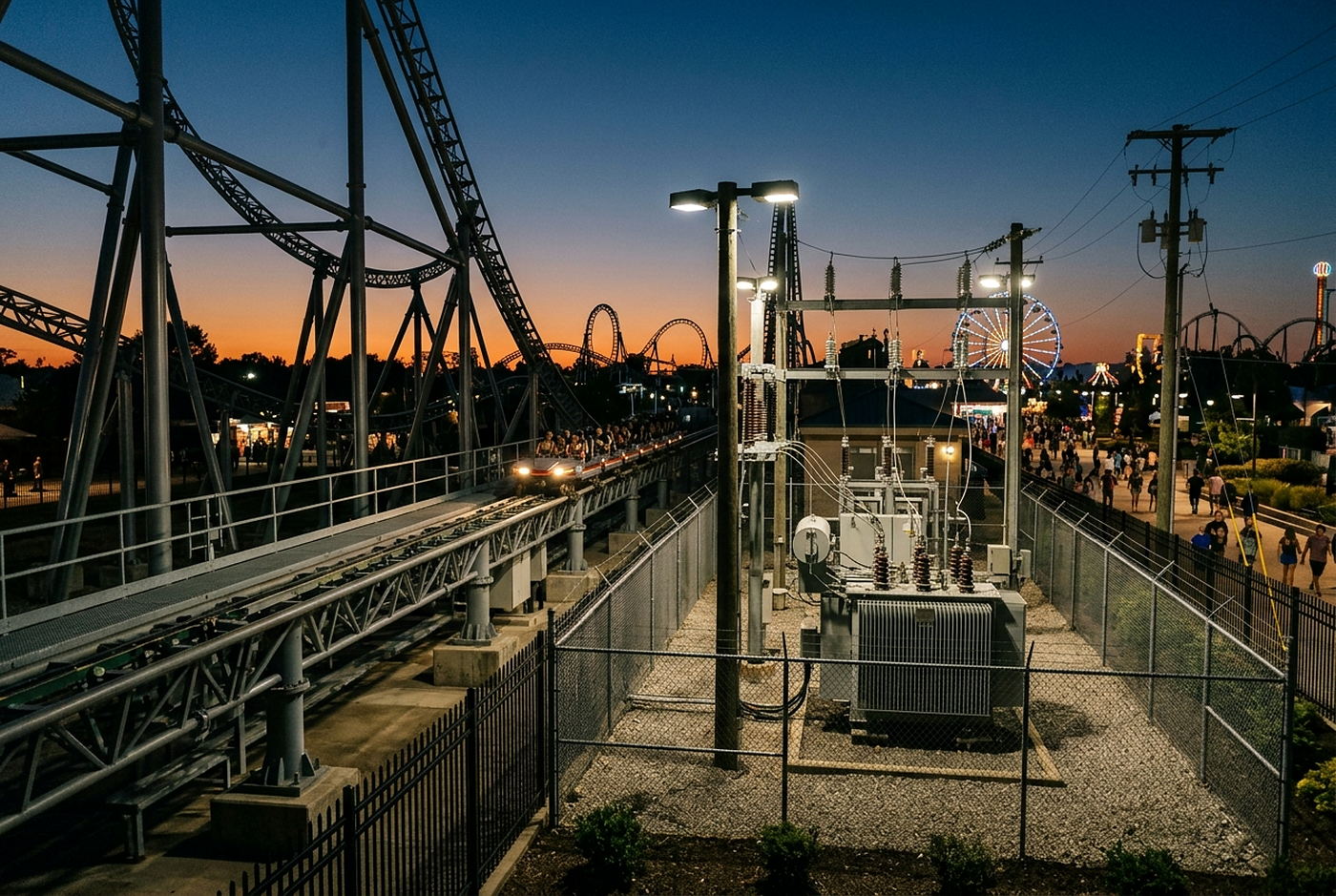
Step 1: Build a load profile for one complete cycle
List every consumer on the ride and note when it draws power during the cycle. For a launch coaster, the launch drive dominates but only for a few seconds; the lift, station, brakes and control system draw steady, lower power. For a drop tower, the hoist motor and the brake system create short peaks, while the compressor and lighting run continuously.
Record for each consumer:
- Rated power in kW, from the manufacturer's data sheet.
- Starting method — direct-on-line, soft starter, or variable frequency drive (VFD). VFDs limit starting current but can inject harmonics.
- Duty cycle — how long the consumer runs and how often, expressed in seconds per cycle and cycles per hour.
- Power factor at the point of connection. Launch drives and large VFDs often operate at a lagging power factor, which increases the apparent power (kVA) the transformer must supply.
Multiply each consumer's kW by its run time to get energy per cycle, then convert to kVA using the power factor. The result is a time-stamped profile. The highest 10–15 minute average on that profile is the demand you present to the utility; the highest instantaneous value is what the transformer and switchgear must withstand.
Step 2: Apply diversity and demand factors correctly
Not every consumer runs at full power at the same moment. A diversity factor accounts for this. For a single ride, a factor of 0.8–0.9 on continuous loads is common, but the launch or hoist peak should be taken at its full value unless the control system explicitly interlocks it with other loads.
Two common mistakes:
- Applying diversity to the peak. The launch drive draws its maximum for a few seconds; diversity does not reduce that maximum, it only reduces the average.
- Ignoring the station and queue line. Lighting, HVAC and point-of-sale loads in the station add up, especially in hot climates.
Add the ride load to the park's existing demand at the point of connection. If the ride shares a substation with other attractions, the combined peak may occur when several rides cycle together.
Step 3: Size the transformer and switchgear
Transformer sizing uses the larger of two values: the maximum demand in kVA and the starting kVA of the largest motor. For a VFD-driven launch, the starting kVA is limited by the drive, so the maximum demand usually governs. For a direct-on-line hoist, the starting kVA can be several times the running kVA and may govern.
Allow for future expansion. A transformer loaded to 80% of its rating at peak leaves room for a second ride or additional station loads. Standard distribution transformer sizes vary by country; in export markets, confirm the local voltage and frequency before ordering. ZhipaoRides manufactures ride systems in Xingtai, Hebei, and supplies electrical data sheets that list the required supply voltage, frequency and maximum demand for each model.
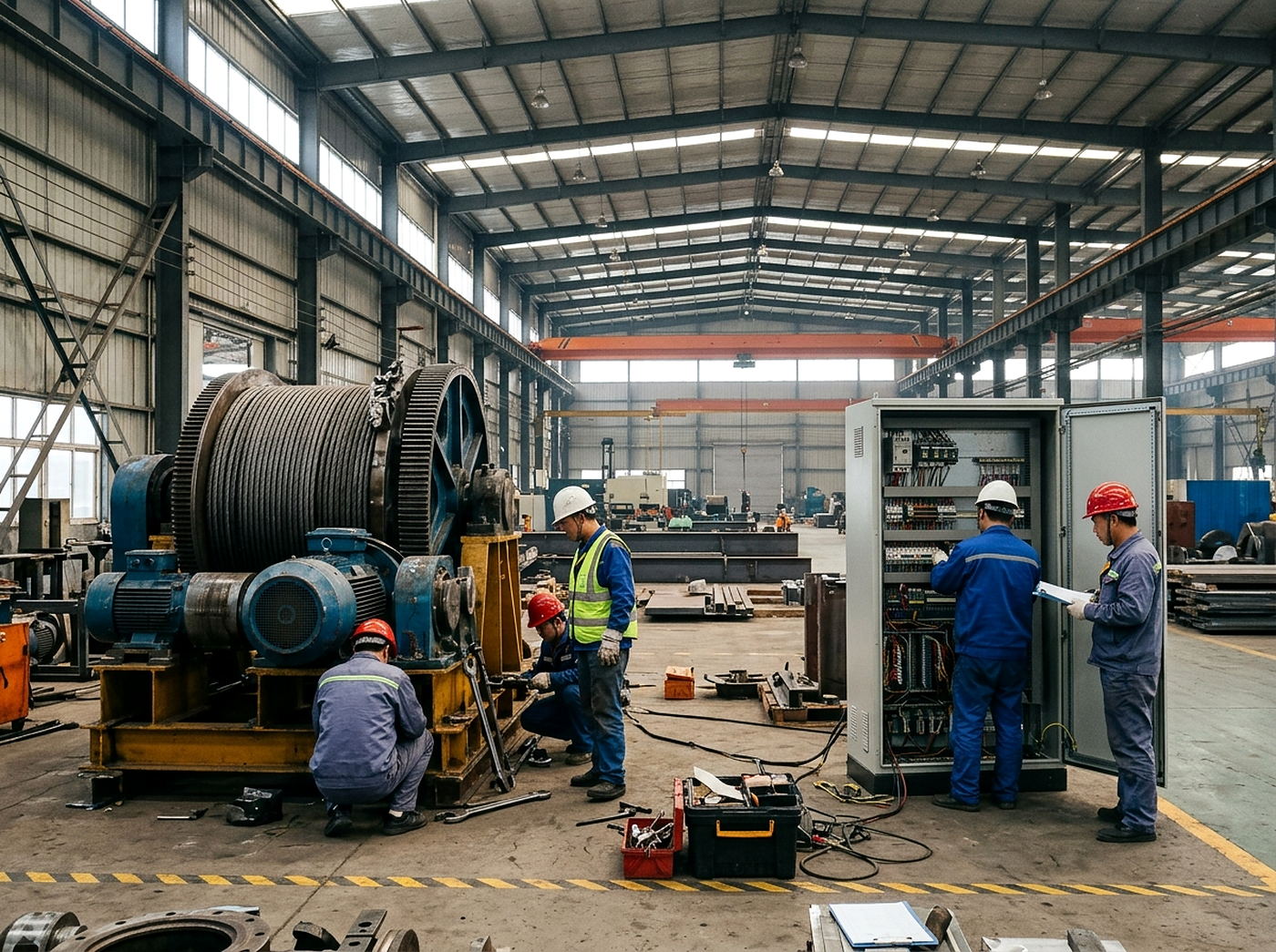
Step 4: Decide on redundancy and power quality
Redundancy is a commercial decision. A drop tower can usually complete its cycle and lower passengers on a controlled stop if power fails, provided the brake system has a backup supply. A launch coaster may need an uninterruptible power supply (UPS) for controls and brakes to bring the train to the station safely. Discuss the failure mode with the ride manufacturer before specifying the substation.
Power quality matters for VFDs and controls. Harmonics from drives can distort voltage and affect other rides on the same supply. Specify harmonic filters or a drive with low harmonic distortion if the park has sensitive equipment. Also confirm the earthing arrangement and surge protection at the substation; lightning is a common cause of control faults in outdoor parks.
Step 5: Prepare a data pack for a scoped quotation
A manufacturer cannot quote a power supply scope without site data. Assemble the following before requesting a quotation:
- Site plan showing the proposed substation location and cable routes.
- Utility supply voltage, frequency and available fault level.
- Ride model and cycle profile, including launches per hour and passenger load.
- Required redundancy level and any local code requirements.
- Climate data: ambient temperature affects transformer derating.
The more complete the data pack, the more accurate the quotation. ZhipaoRides can provide the ride-side electrical load schedule and interface requirements; the local utility and a licensed electrical contractor usually handle the substation design and installation. For detailed electrical specifications per ride model, see the ride specifications.
Common questions buyers ask
How much does a substation for a launch coaster cost?
Cost depends on the transformer size, switchgear, redundancy and local labour. Prices vary widely by country and cannot be estimated from the ride alone. Request a scoped quotation with a bill of quantities from a local contractor, using the ride load schedule as the basis.
Can the ride share an existing substation?
Sometimes. Compare the combined peak demand with the existing transformer rating and spare capacity. If the ride's peak pushes the transformer above its rating or causes voltage dips that affect other attractions, a dedicated supply is safer.
What voltage do ZhipaoRides rides require?
Requirements differ by model and destination market. The electrical data sheet for each model states the required voltage, frequency and maximum demand. Confirm these against the local utility supply before ordering.
Who is responsible for the substation?
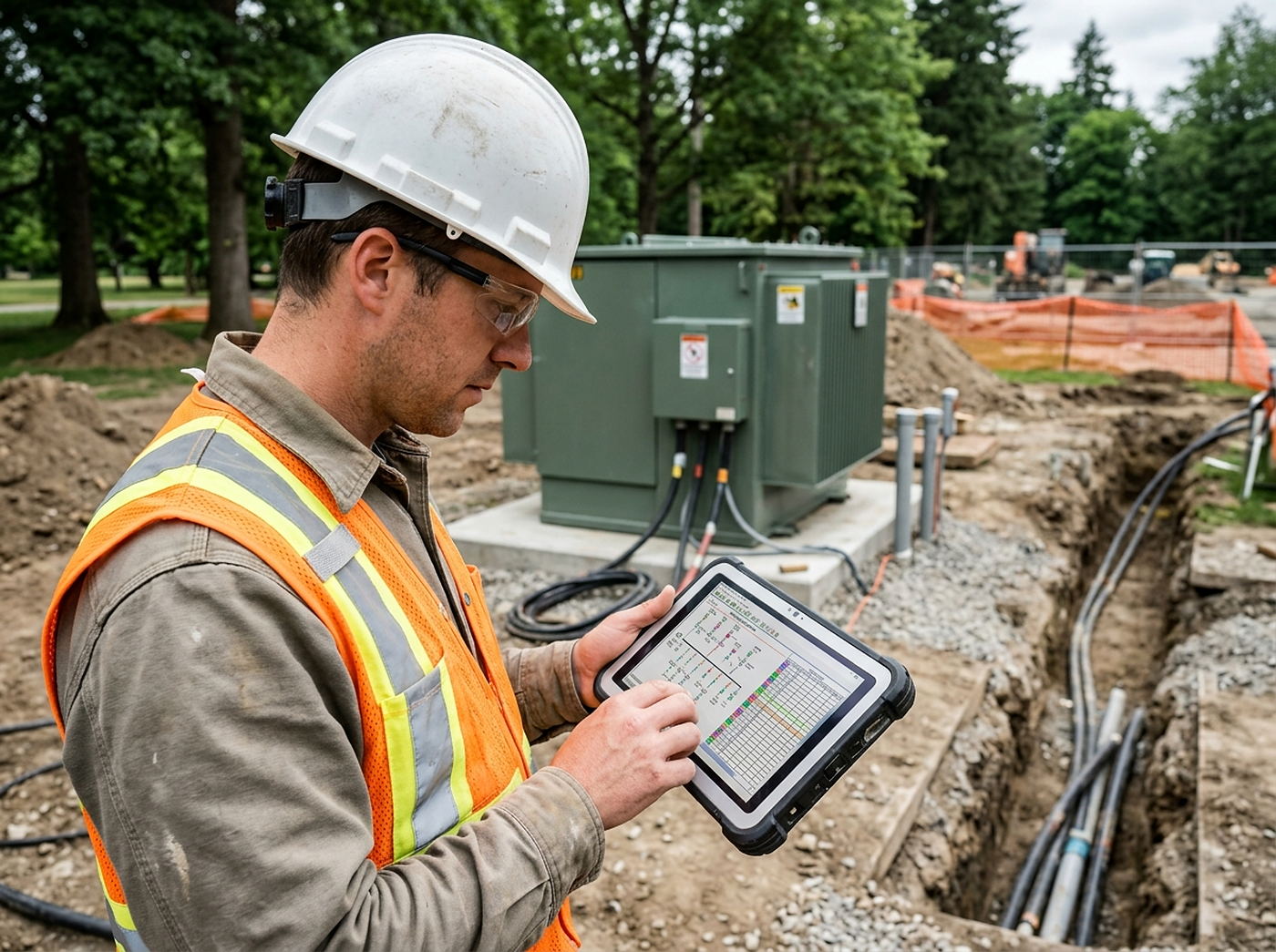
The park or developer typically owns the substation and contracts its design and installation to a local electrical engineer. The ride manufacturer supplies the load data and interface details. Clear division of responsibility at the contract stage avoids delays during commissioning.
Next step
If you are planning a launch coaster or drop tower, start with the ride cycle load profile and the site's utility data. Send both to ZhipaoRides with your target opening date and redundancy requirements, and request a scoped quotation that covers the ride electrical package and the interface data your substation designer needs. You can review model specifications first at /specifications.