
What is a 360 degree dome theatre?
A 360 degree dome theatre is an enclosed attraction with a hemispherical or full-sphere projection screen that surrounds the audience. The audience sits on a rotating platform at the centre of the sphere, and pre-rendered or real-time content is projected across the dome surface so that the image fills the viewer's entire field of vision. It is a fixed-site, seated experience rather than a track-based ride.
The format combines three elements: a spherical screen, a rotating audience platform, and content authored for a dome. All three have to match. A dome screen with flat-screen footage looks distorted; a rotating platform without dome-native content adds no value. ZhipaoRides builds this attraction as part of its flying theatre and dome range, manufacturing in Xingtai, Hebei.
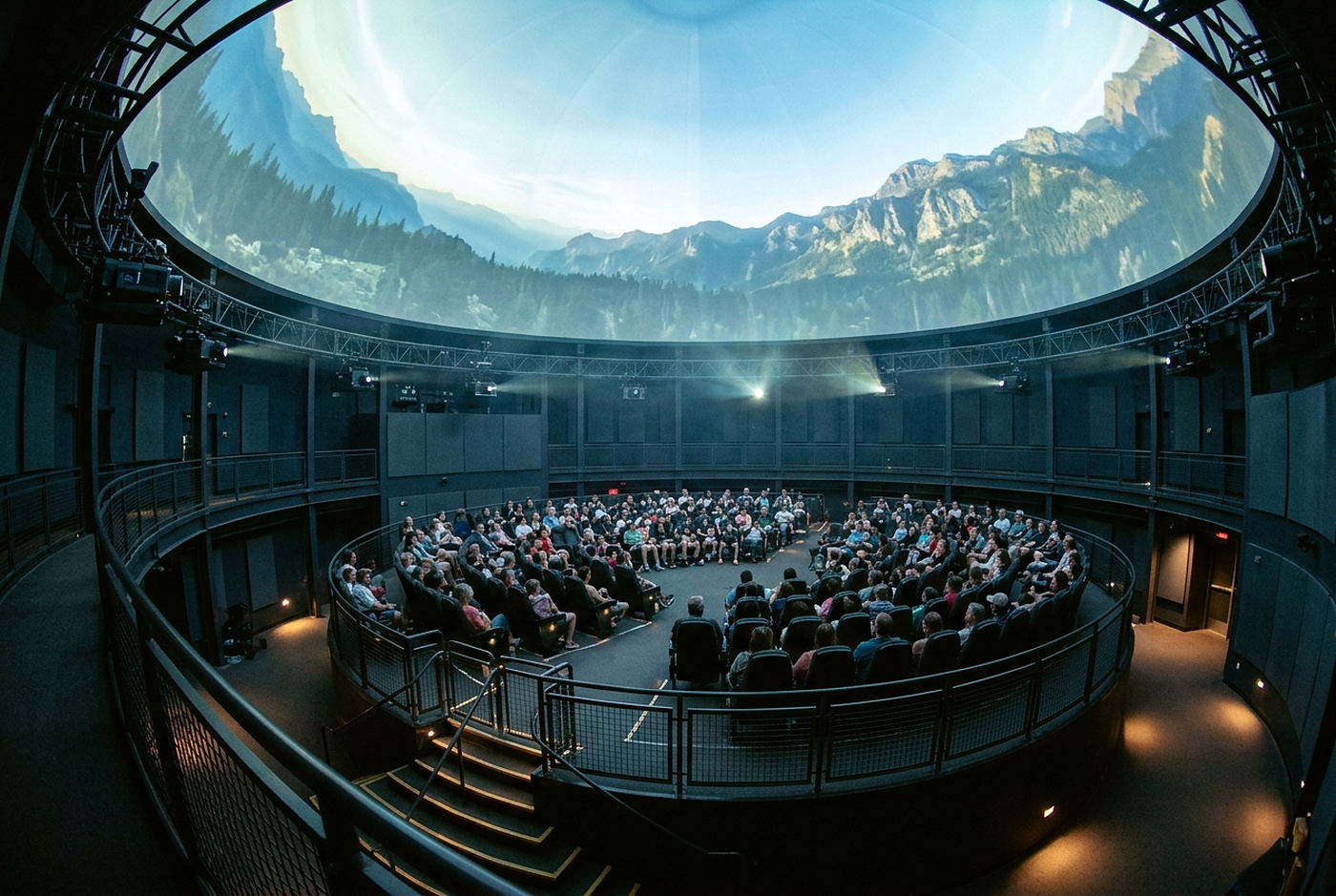
How the three elements work together
The spherical screen
The screen is a rigid dome, typically assembled from curved panels and coated with a projection surface. Projectors are mounted around the perimeter or behind the audience, and edge-blending software stitches their output into one continuous image. Because the screen curves in every direction, the projection mapping must be calibrated on site: the same projector layout that works in one dome will not transfer unchanged to a dome of a different radius.
Screen size drives everything else. A larger dome needs more projectors, more throw distance and a higher-resolution source to keep pixel density acceptable. The dome also sets the audience capacity, because the platform has to fit inside the sphere with clearance for rotation.
The rotating platform
The audience platform turns slowly during the show, carrying seated viewers past different parts of the dome. Rotation is what makes the format 360 degrees in practice: without it, viewers face one direction and the rear of the dome is wasted. Platform speed is low and controlled, and the rotation is synchronised with the content timeline so that scene changes line up with the platform's position.
Engineering points a park developer should raise early:
- Rotation drive and braking: the platform must start and stop smoothly, because seated viewers notice abrupt motion.
- Load and egress: capacity per cycle depends on seat count and on how quickly one audience clears before the next boards.
- Maintenance access: the drive, slip rings and projector mounts need service routes that do not cross the audience area during operation.
The content format
Dome content is not standard cinema footage. It is authored for a spherical canvas, with the action placed where seated viewers will actually be looking as the platform turns. Content types that suit the format include travel and landscape films, space and underwater sequences, and branded or educational shows. The content is usually a fixed-duration loop, which keeps the operating schedule predictable.
Content is also the part that ages fastest. A park buying a dome should plan for a content refresh cycle and confirm that the projection and playback system can accept new shows without replacing hardware.
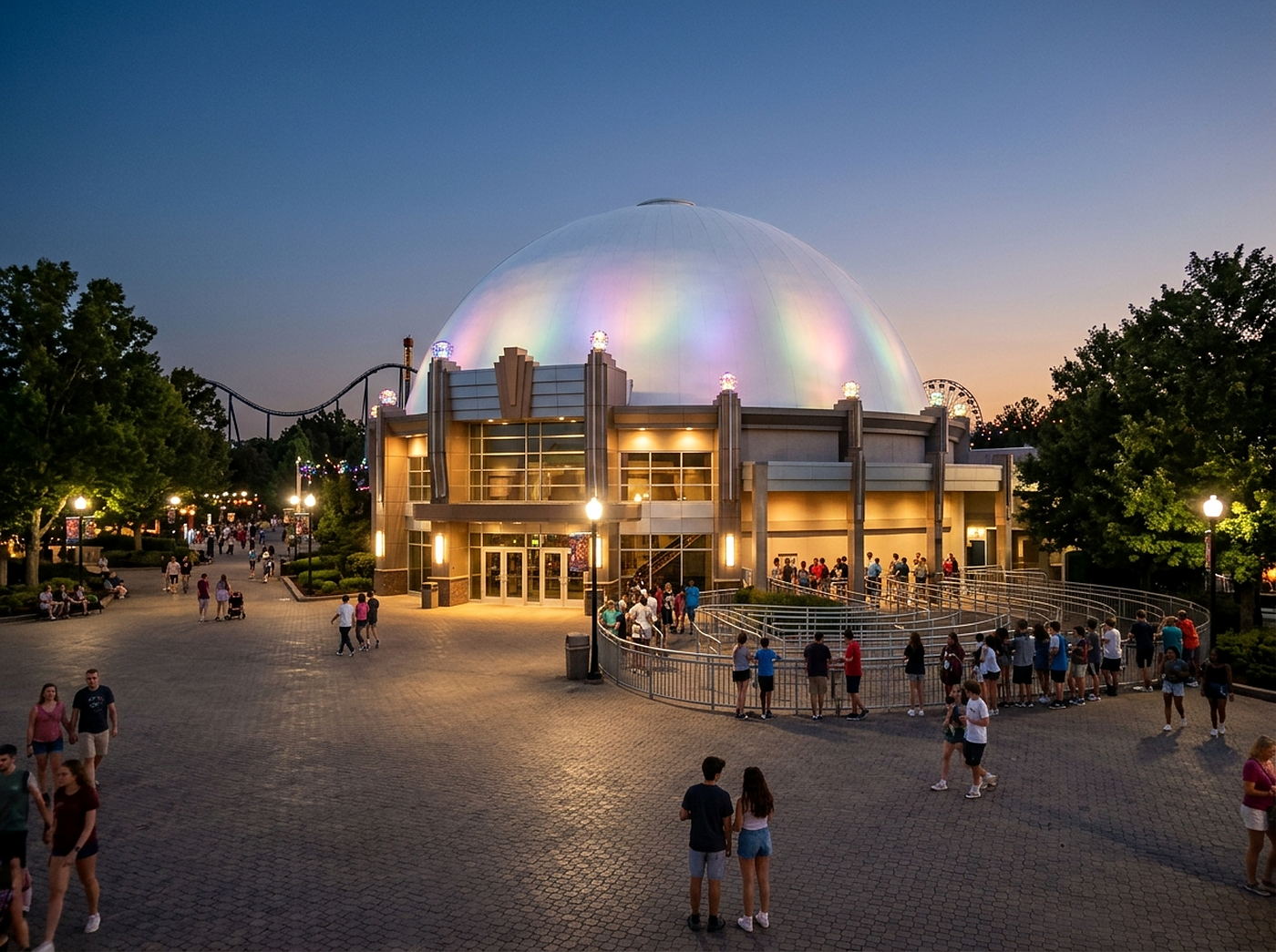
Specification planning table
The table below lists the parameters that define a dome theatre project. It is a planning framework, not a catalogue: ZhipaoRides confirms actual values per project rather than publishing fixed numbers for every model.
| Parameter | What it controls | Planning note |
|---|---|---|
| Dome diameter | Screen area, projector count, audience capacity | Larger dome raises both capacity and projection cost |
| Screen type | Image brightness and seam visibility | Panel joints must be calibrated after installation |
| Projector count and resolution | Pixel density across the dome | Set by dome size and target image sharpness |
| Platform diameter and seat count | Guests per cycle | Must leave rotation clearance inside the dome |
| Rotation speed and direction | Viewer comfort and content sync | Slow, smooth motion; matched to the show timeline |
| Show duration | Cycles per hour and throughput | Balance film length against queue time |
| Entry and exit configuration | Loading efficiency and safety | Separate paths speed up turnover |
| Building height and footprint | Civil works and site fit | Confirm before foundations are poured |
Where a dome theatre fits
The format suits indoor or covered locations where a park wants a seated, weather-independent attraction with a fixed show length. It works well as an anchor in an indoor entertainment zone, as an educational or edutainment exhibit, and as a complement to outdoor ride hardware when a park needs capacity that does not depend on weather.
It also fits operators who want a repeatable cycle: the same show runs to a timetable, staff training is straightforward, and throughput can be calculated from seat count and show length before construction begins. Parks that already run a flying theatre can use dome content and dome operations knowledge across both attractions. Details of the dome product line are on the 360 flying dome theater product page.
Where it does not fit
A dome theatre is a poor choice when the park needs a thrill ride with motion, height or speed. The platform rotates slowly and the sensation comes from the image, not from forces on the body. Developers looking for a dynamic ride experience should compare it with tracked or suspended formats instead.
It is also a weak fit for very small sites. The dome geometry, the platform clearance and the projection throw distance all consume floor area, and a undersized dome loses the wraparound effect that justifies the format. Sites with low ceiling height or no space for a separate entry and exit route should review the building requirements before committing.
Finally, the format depends on content. An operator with no plan for show production or licensing should treat content as a line item in the budget from day one, not an afterthought.
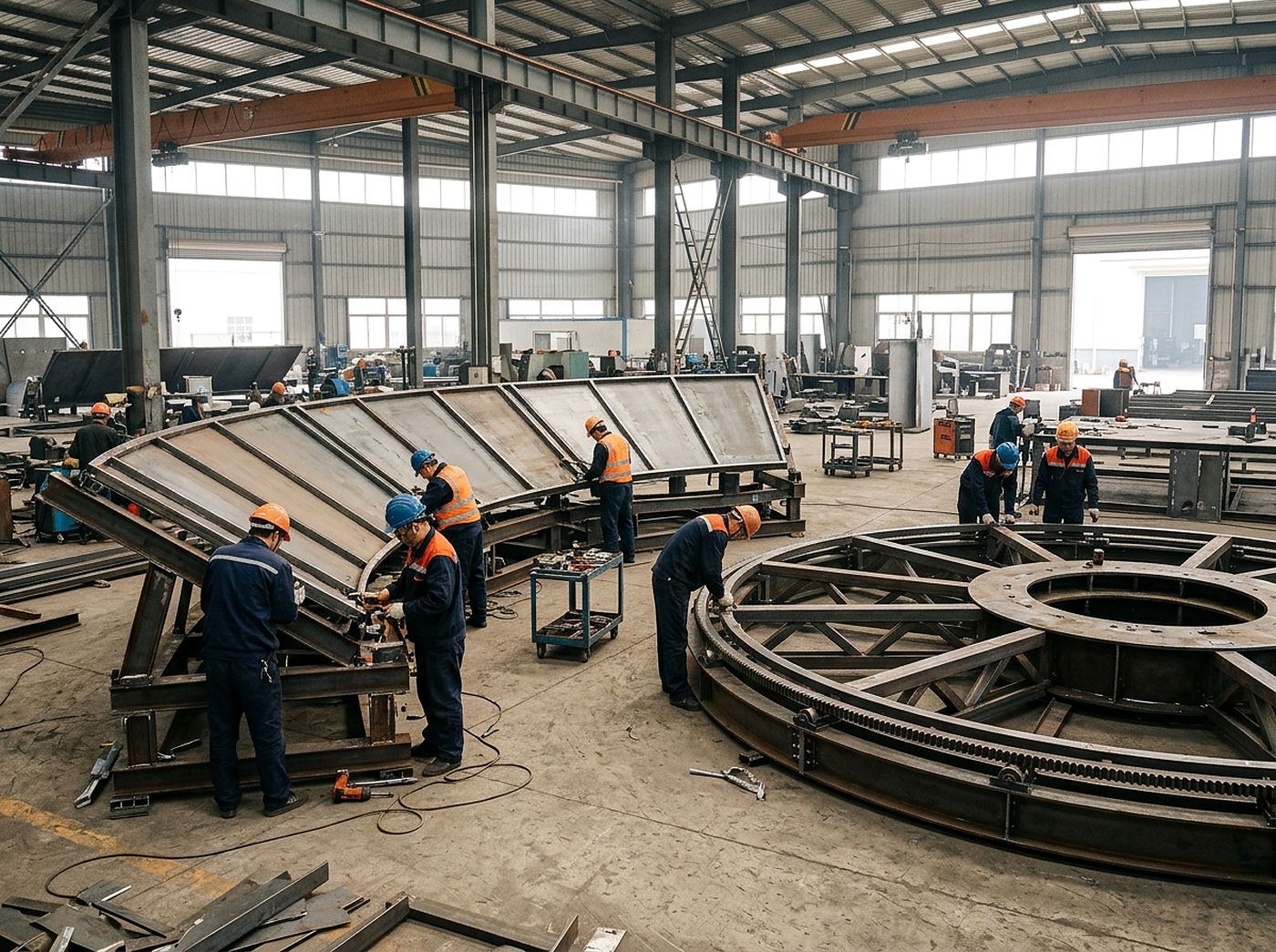
Procurement checklist
- Define the target audience capacity per hour and work backwards to seat count and show length.
- Confirm building height, footprint and floor loading with the dome supplier before civil design.
- Agree who supplies content, and in what format, before the projection system is specified.
- Ask for the maintenance access plan for projectors, drive and platform.
- Check the commissioning process: projection blending and platform sync must be tuned on site.
ZhipaoRides manufactures in Xingtai, Hebei, and exports to markets including Russia, Southeast Asia, the Middle East, South America and Africa. For park developers comparing formats, the dome theatre specification and enquiry page is the starting point.