
What is ride commissioning?
Ride commissioning is the documented test sequence a new or modified amusement ride passes through before it carries passengers. It starts with mechanical and electrical verification, moves through no-load and load testing, and ends with a written sign-off that the ride performs within its design limits. The purpose is to prove the ride works as designed, not just that it switches on.
At ZhipaoRides, commissioning is treated as a separate phase from installation. Installation fixes the ride to the ground; commissioning proves that what was installed behaves correctly under controlled conditions. The company manufactures in Xingtai, Hebei, and ships rides to parks in Russia, Southeast Asia, the Middle East, South America and Africa, so the commissioning sequence has to work with local site teams and local inspectors.
The test sequence, step by step
Commissioning follows a fixed order. Skipping a step means the next one cannot be interpreted cleanly.
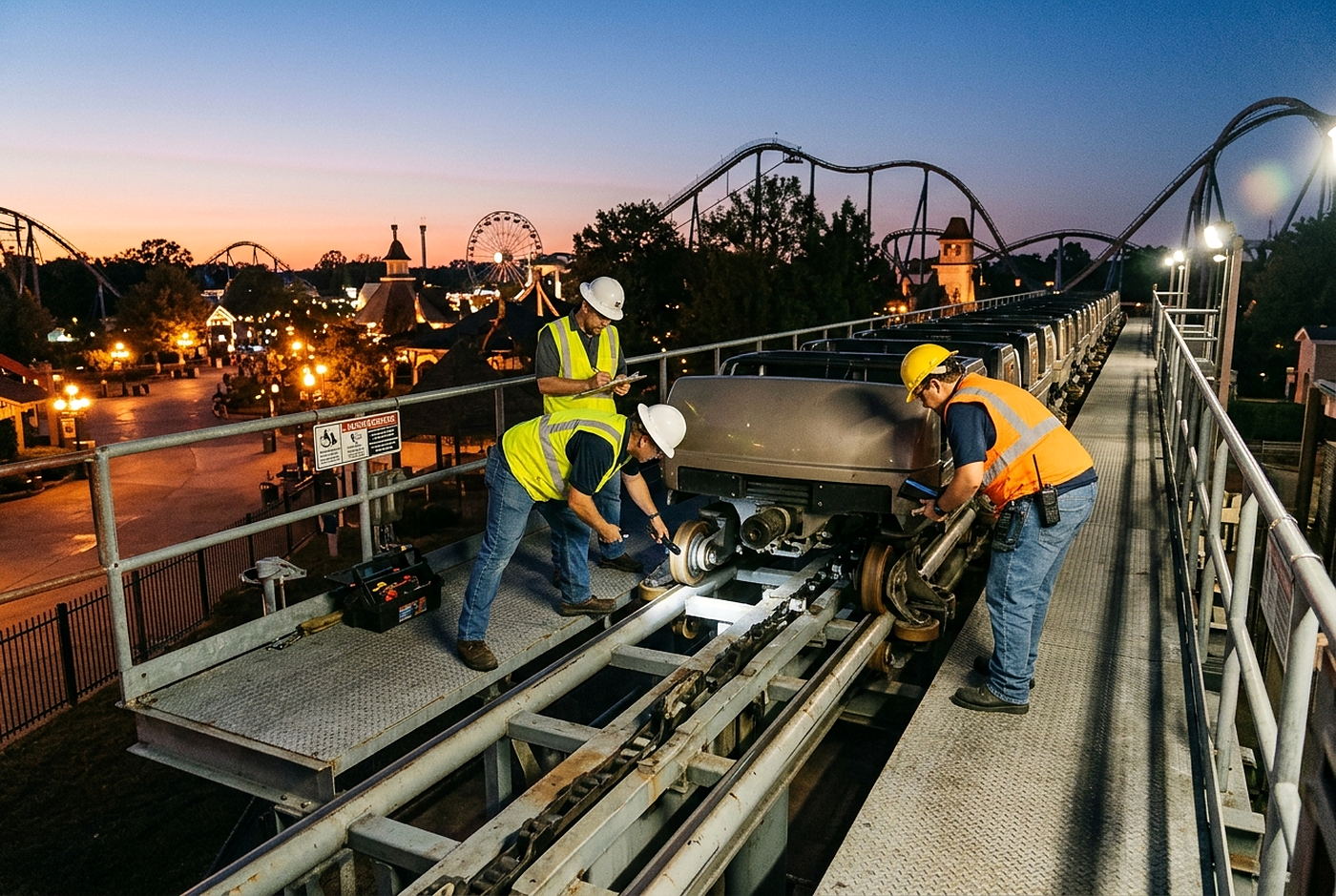
- Mechanical and electrical verification. Foundation bolts, weld visual checks, track alignment or tower plumb, brake clearances, sensor positions, wiring continuity and emergency-stop circuits are checked against the drawings. Nothing moves yet.
- Static and low-speed tests. The ride is run at the slowest speed the drive allows, often by manual jog, to confirm direction of rotation, limit switches and restraint locking. On a coaster this is a push-through; on a drop tower it is a short lift and controlled release.
- No-load cycling. The ride runs a defined number of full cycles with empty seats or gondolas. This is where brake temperature, motor current, noise and vibration are recorded. Any anomaly stops the sequence.
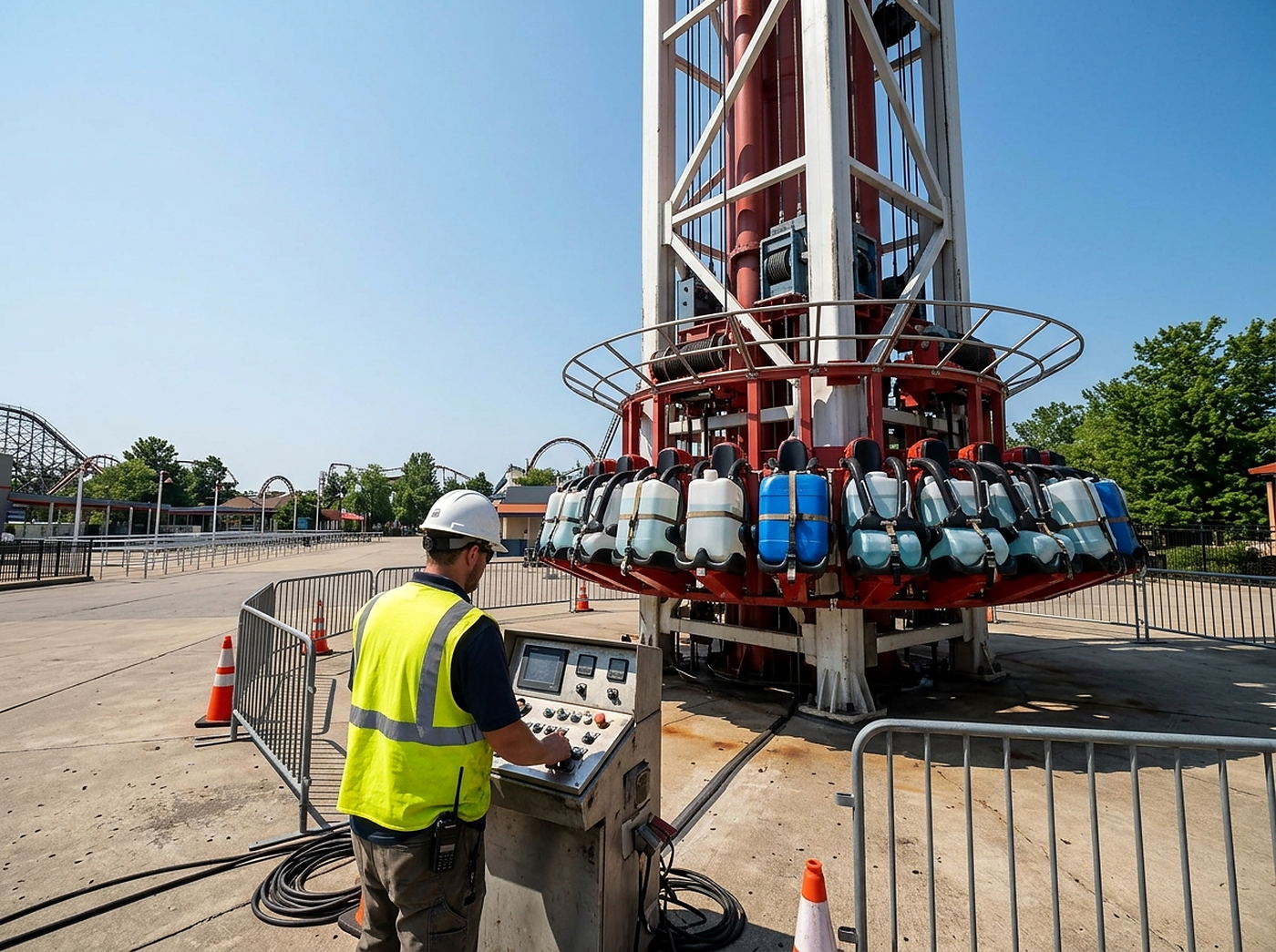
- Load testing. Water ballast or calibrated weights are used to simulate passengers at the ride's rated capacity and at the load distribution the design assumes. Structural deflection and braking distance are measured and compared with the design values.
- Restraint and evacuation checks. Each restraint type is cycled, locked and released under load. Evacuation routes and rescue procedures are walked through with the park's operations team.
- Integrated control tests. Fault injection is used to confirm that the control system responds correctly to a simulated sensor failure, power loss or overspeed condition.
- Sign-off and handover. Test records, as-built drawings, operating limits and maintenance schedules are handed to the park, and the ride is released for staff training and then public operation.
Typical commissioning parameters by ride type
The table below shows the kind of values commissioning records. Exact figures are set per model and per site; the point is that each ride type has its own set of measured limits.
| Ride type | Key commissioning checks | Typical measured values |
|---|---|---|
| Roller coaster | Track alignment, wheel clearance, brake run distance, lift chain tension | Brake stop distance, wheel gap, chain elongation |
| Ferris wheel | Cabin levelling, drive brake torque, wind-speed cut-out | Cabin tilt angle, brake holding force, anemometer trip point |
| Drop tower | Lift speed, catch system response, shock absorber travel | Deceleration profile, catch engagement time, absorber compression |
| Flying theatre | Motion platform stroke, projection alignment, restraint cycle | Platform position repeatability, restraint lock force |
| Family rides | Speed, cycle time, restraint and gate interlocks | Cycle duration, interlock response time |
Where commissioning fits, and where it does not
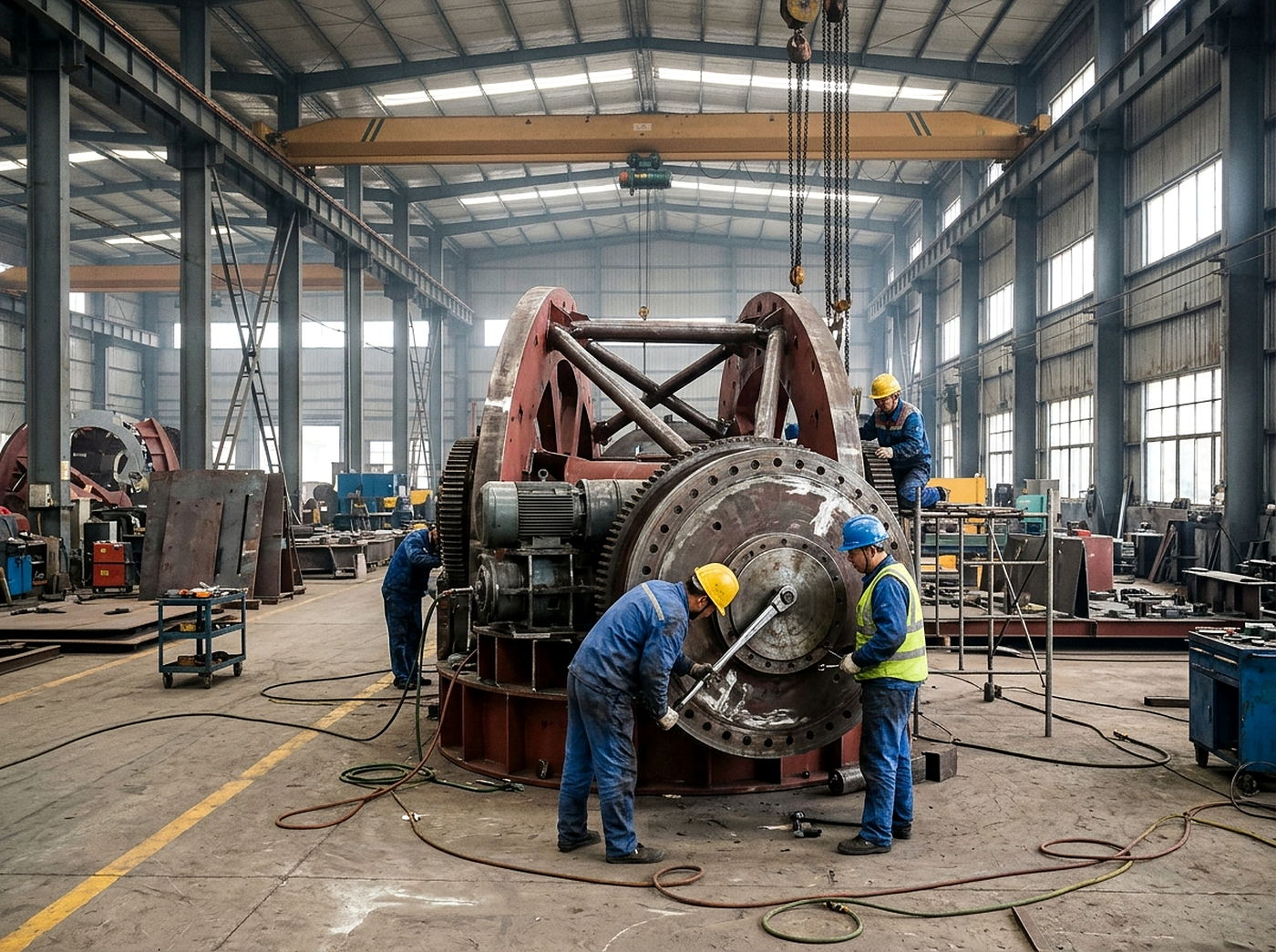
Commissioning fits any ride that will carry the public, whether it is a 54-model catalogue ride or a custom layout. It is most valuable when the ride is installed by a local team working from ZhipaoRides drawings, because the test sequence creates a shared record of what was checked and what was found.
Commissioning does not replace statutory inspection. In most markets the local authority or an independent inspection body issues the operating permit, and commissioning records feed into that process. It also does not replace daily pre-opening checks: commissioning happens once, while daily checks happen every morning. Parks that confuse the two tend to have weak operating records.
Commissioning is also not a substitute for staff training. The test sequence proves the ride; training proves the people. Both need to be finished before the first paying passenger boards.
For parks planning a new installation, the practical questions are who witnesses each test, what records are kept, and how long the sequence takes. Those answers belong in the project schedule, not in a conversation after the ride arrives. The installation and service process page sets out how ZhipaoRides handles handover, and the ride specifications page lists the design limits that commissioning tests against.
What a commissioning record should contain
A usable record is short and specific. It should name the ride model and serial number, the date and site, the test load used, the values measured, the acceptance limit for each value, and the name of the person who signed. Photographs of brake runs, restraint locks and control screens are worth more than paragraphs of description.
FAQ
How long does ride commissioning take?
It depends on ride type and site readiness. A small family ride can be commissioned in a few days once installation is complete; a coaster or drop tower takes longer because no-load cycling and load testing run over multiple sessions. The schedule should be agreed before installation starts.
Who carries out commissioning?
Usually a combination of the manufacturer's site engineer and the park's technical team, with the local inspection body witnessing the final stages. The split of responsibilities should be written into the supply contract.
Can a ride open before commissioning is signed off?
No. Passenger operation should not begin until the commissioning record is complete and any statutory permit has been issued. Staff training can run in parallel with the later commissioning stages, but not before them.
Does commissioning apply to used rides?
Yes. A relocated or modified ride should go through a commissioning sequence again, because foundation conditions, power supply and control systems change from site to site.