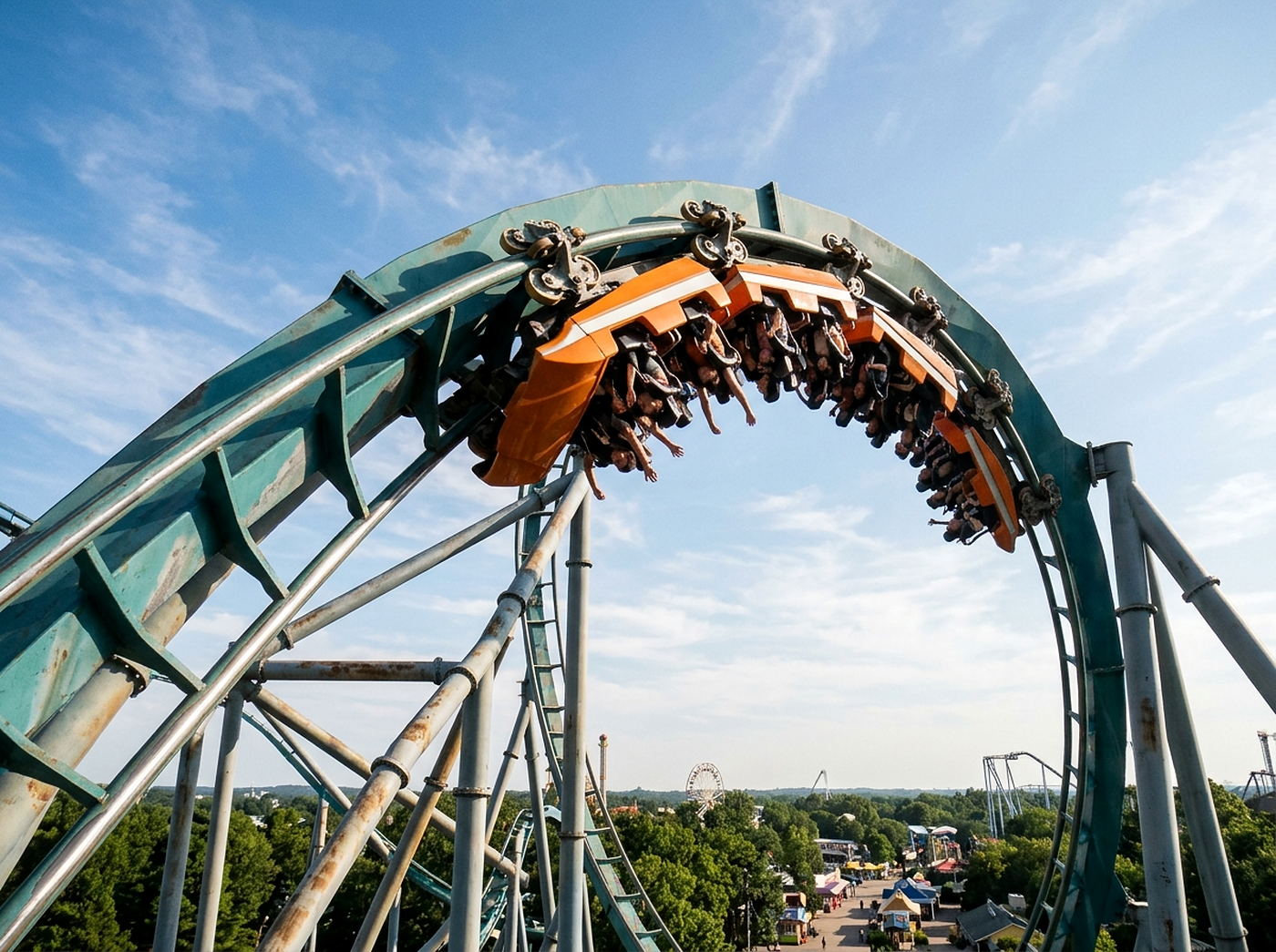
What is an inversion count?
An inversion count is the number of times a roller coaster turns its riders completely upside down during one cycle. A loop counts as one inversion, a corkscrew counts as one, and a zero-G roll counts as one. The count is a single integer printed on a ride's specification sheet. It tells you how many upside-down moments exist, not how the ride feels, how long it lasts, or how well it fits a park.
For a park developer comparing coaster models, the inversion count is a starting filter, not a decision. Two coasters with four inversions each can ride completely differently depending on the order of the elements, the height of each inversion, the speed at entry, and the spacing between them.
How an inversion is counted
Manufacturers and park engineers count inversions by tracking the rider's orientation through the track path. Any segment where the rider's head passes below the vertical axis relative to the seat counts as one inversion. Standard element types include:
- Vertical loop — one inversion. The train enters upright, goes over the top, and exits upright.
- Corkscrew — one inversion. The track rotates 360 degrees around a horizontal axis.
- Zero-G roll — one inversion. A hill with a twist that produces weightlessness at the crest.
- Dive loop — one inversion. A half-loop followed by a half-twist, common on dive coasters.
- Immelmann — one inversion. A half-loop into a half-roll, named after a World War I fighter pilot maneuver.
- Batwing or boomerang — two inversions in one element, counted as two.
A ride with a vertical loop, a corkscrew and a zero-G roll has an inversion count of three. The count does not describe how tight the loop is, how high the corkscrew sits, or whether the train is moving at 40 km/h or 90 km/h when it enters.
Why the layout matters more than the number
Inversion count is a convenience for brochures. Layout is what riders remember. Four factors in the layout change the experience more than the count itself.
1. Order of elements
A loop placed first in the circuit hits riders at low speed and feels heavy. The same loop placed after a 30 m drop hits at higher speed and feels lighter. A zero-G roll placed late in the ride, when speed has bled off, produces a different sensation than one placed directly after the first drop. The count stays the same; the ride does not.
2. Height and radius
A 12 m loop and a 20 m loop both count as one inversion. The larger loop exposes riders to higher positive g-forces at the bottom and a longer hang time at the top. Small radius inversions feel snappier. Neither is better in isolation — the choice depends on the audience the park is targeting.
3. Spacing and recovery
Back-to-back inversions with no straight track between them keep the train's energy high and produce a dense, intense sequence. Inversions separated by a short straight or a small hill give riders a moment to reset. A four-inversion coaster with tight spacing feels more aggressive than a six-inversion coaster with generous spacing.
4. Entry and exit speed
The same element entered at 60 km/h and at 85 km/h produces different forces and different rider comfort. The layout controls entry speed through the height of preceding drops and the length of straight track. The inversion count does not.
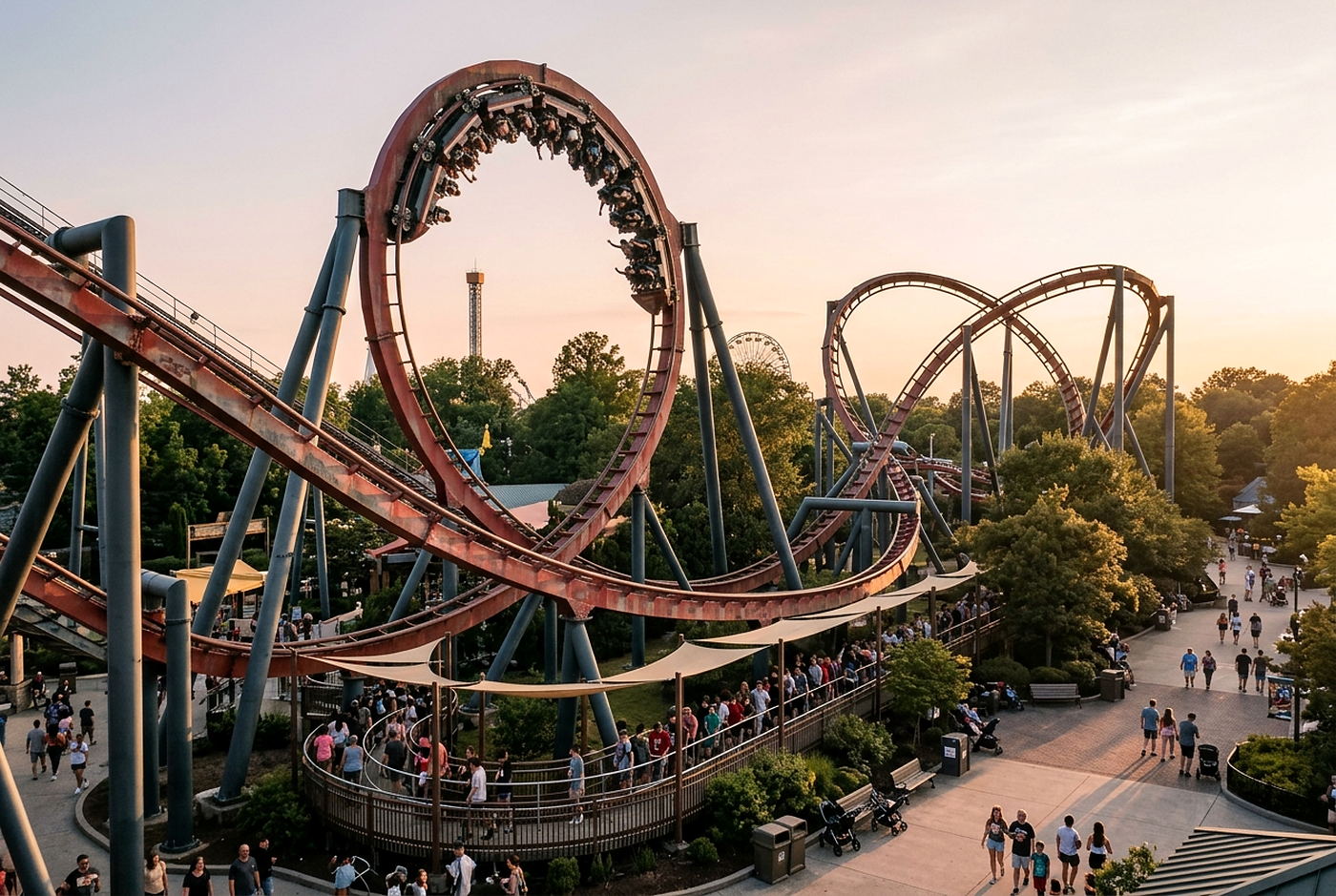
Specification table: what the count does and does not tell you
| Specification | What it describes | What it misses |
|---|---|---|
| Inversion count | Number of upside-down moments per cycle | Order, height, radius, spacing, entry speed |
| Track length | Total distance travelled | Distribution of elements along the circuit |
| Max height | Highest point of the track | Height of each inversion |
| Max speed | Peak velocity, usually after the first drop | Speed at each inversion |
| Ride duration | Cycle time from dispatch to return | Intensity curve across the ride |
| Number of trains | Throughput capacity | Dispatch interval and station layout |
Use the table as a checklist. A coaster with a high inversion count and a short track length may have inversions packed so tightly that the ride feels like one continuous element. A coaster with a lower count and a longer track may give each inversion room to register.
Where a high inversion count fits — and where it does not
High inversion counts suit parks with a thrill-seeking audience, a compact footprint, and a queue line that can absorb bursts of riders. Inversions pack more sensation into less track, which matters when land is expensive. They also create clear marketing images — riders upside down against the sky are easy to photograph.
They do not suit every site. Parks with a family audience, low minimum-height requirements, or a high proportion of first-time riders may find that a coaster with two or three well-spaced inversions serves more guests per day. Inversions also raise the minimum height requirement and the restraint complexity, which affects throughput and staffing. A park with a tight operations budget should weigh the inversion count against the dispatch interval, not in isolation.
ZhipaoRides manufactures roller coasters and other ride types at its plant in Xingtai, Hebei. The company produces roughly 54 ride models across roller coasters, Ferris wheels, drop towers, flying theatres and family rides. When specifying a coaster, the layout drawing matters more than the inversion count on the cover sheet. The roller coasters for sale page lists the models available for export to Russia, Southeast Asia, the Middle East, South America and Africa.
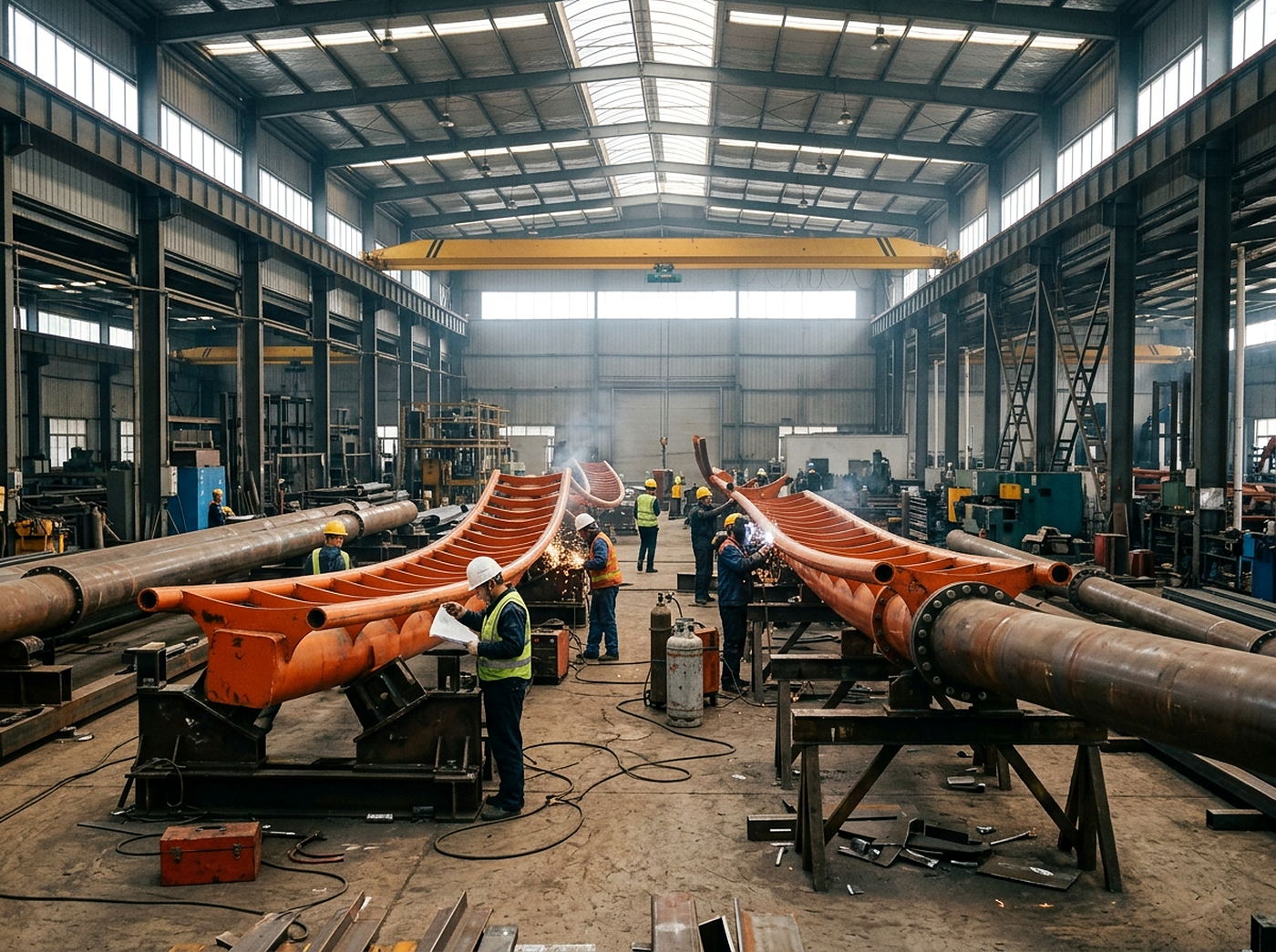
How to read an inversion count in a specification sheet
- Find the count and note it.
- Ask for the element list in order — loop, corkscrew, zero-G roll, and so on.
- Ask for the height and radius of each inversion.
- Ask for the entry speed at each inversion, not just the maximum speed.
- Ask for the spacing between inversions in metres of track.
- Compare the answers across models. The count will often be the least useful number in the set.
A park developer who asks these six questions will choose a better coaster than one who compares counts alone. The count is a label. The layout is the product.
FAQ
Does a higher inversion count mean a more intense ride?
Not necessarily. Intensity depends on the order of elements, the height and radius of each inversion, the spacing between them, and the entry speed. A coaster with four tightly spaced inversions can feel more intense than one with six inversions separated by recovery track.
How is an inversion counted on a boomerang or batwing?
Elements that contain two upside-down moments are counted as two inversions. A batwing, which is a half-loop followed by a half-loop in the opposite direction, counts as two. The same applies to a boomerang element.
Can a coaster have inversions and still be family-friendly?
Yes, if the inversions are large-radius, well-spaced, and entered at moderate speed. Family coasters with one or two gentle inversions exist, but the minimum height requirement and restraint type still need to match the park's audience.
What should a park ask for instead of just the inversion count?
Ask for the element list in order, the height and radius of each inversion, the entry speed at each inversion, and the spacing between elements. These four data points describe the ride experience more accurately than the count alone.