
Why container planning starts before you sign the contract
For a park developer, the shipping container is not just a box that arrives at port. It is the unit that determines freight cost, port handling, inland trucking, site storage and the sequence in which your coaster can be assembled. Get the container count and loading order wrong and you either pay for air in the box or pay for a crane sitting idle while you search for a missing pallet.
This article explains how ZhipaoRides estimates container quantities for roller coasters and why the loading plan is part of the installation schedule, not an afterthought. The same logic applies across the 54 ride models the company builds, from family coasters to larger custom layouts.
How many containers does a roller coaster need?
There is no single number, because a coaster is a collection of steel track, columns, foundations, electrical cabinets, control systems and vehicles. Container count scales with track length, structure height, vehicle count and the amount of site assembly the design requires. As a working rule, the count is driven by four groups of cargo:
- Track and columns: the largest volume. Long track sections are nested or split into transportable lengths, and each length has a maximum that fits a standard 40-foot container.
- Supports and foundation steel: heavy and dense. These often fill containers by weight before volume, which is why mixing heavy and light cargo in one box matters.
- Electrical and control: cabinets, drives, sensors and cable. These are high-value, sensitive to moisture and usually packed in smaller, well-sealed units or inside larger crates.
- Vehicles and station equipment: trains, restraints, station gates and lift components. These often need custom cradles and may not fill a container efficiently.
For a given layout, the engineering team produces a packing list that maps every major component to a container number. That list becomes the basis for the freight quotation. If you are comparing coaster options, the roller coasters for sale page lists the model range and typical configurations that feed into this estimate.
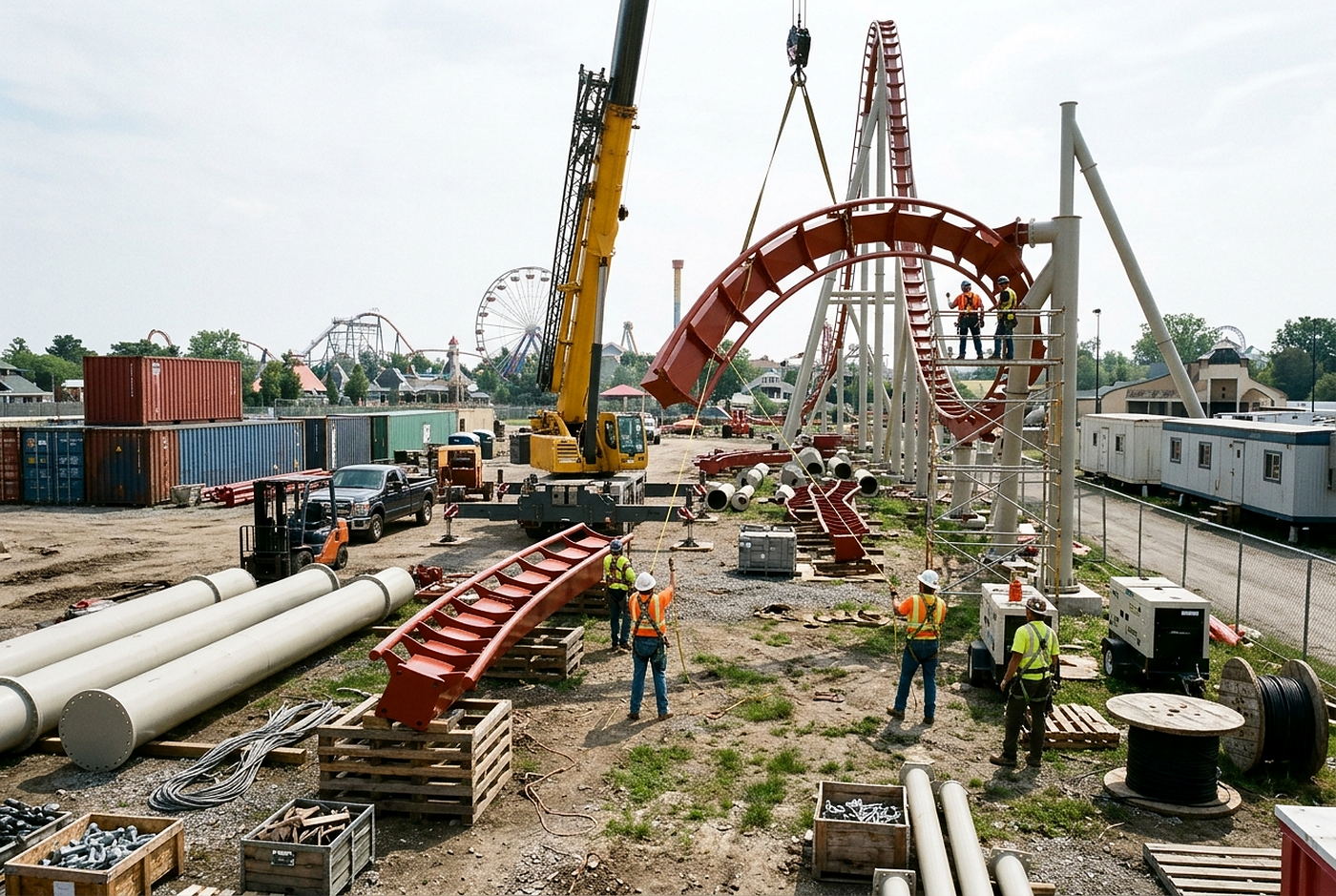
Two practical points affect the count. First, 40-foot containers are the default for track and structure because they carry more volume per box and reduce the number of lifts at destination. Second, some components may travel as break-bulk or in open-top containers if they exceed internal dimensions. The packing list should state which items are containerised and which are not, so your port and inland logistics quotes are comparable.
Why loading order matters more than the total count
A coaster arrives as a kit, and the site assembly follows a sequence: foundations, columns, track, electrical, vehicles, testing. If container 12 holds the brackets needed to bolt the first column, and container 12 is at the bottom of the stack or still on the ship, the site stops. Loading order is therefore a schedule decision.
The usual approach is to load in reverse installation order. The last items needed on site are loaded first, and the first items needed are loaded last so they are the first out. In practice this means:
- Foundation and anchor items are loaded last and shipped as the first-unloading containers.
- Columns and primary structure follow, grouped by zone or lift section so the erection crew can work sequentially.
- Track sections are loaded in the order they will be installed, with matching bolts, shims and connection hardware packed in the same container or a clearly marked companion crate.
- Electrical cabinets, drives and controls are loaded so they arrive after the structure is up but before commissioning, and are stored dry on site.
- Vehicles, restraints and station equipment are loaded for late arrival, since they are installed after track alignment and before testing.
This ordering also reduces site storage. A park with limited laydown area can call forward containers as the erection crew needs them, rather than receiving the entire coaster at once.
What the packing list should tell you
Ask for a container loading plan, not just a total count. A usable plan includes, for each container: contents by component group, weight and volume, whether it is a 20-foot or 40-foot unit, whether it is open-top or standard, and the installation zone it serves. It should also flag hazardous or sensitive items such as batteries, lubricants and electronic controls that need separate handling or documentation.
This plan is also the basis for customs and port paperwork. Mismatches between the packing list and the actual contents cause delays at destination, and delays at the port are more expensive than any saving from a tighter pack.
How ZhipaoRides handles container planning
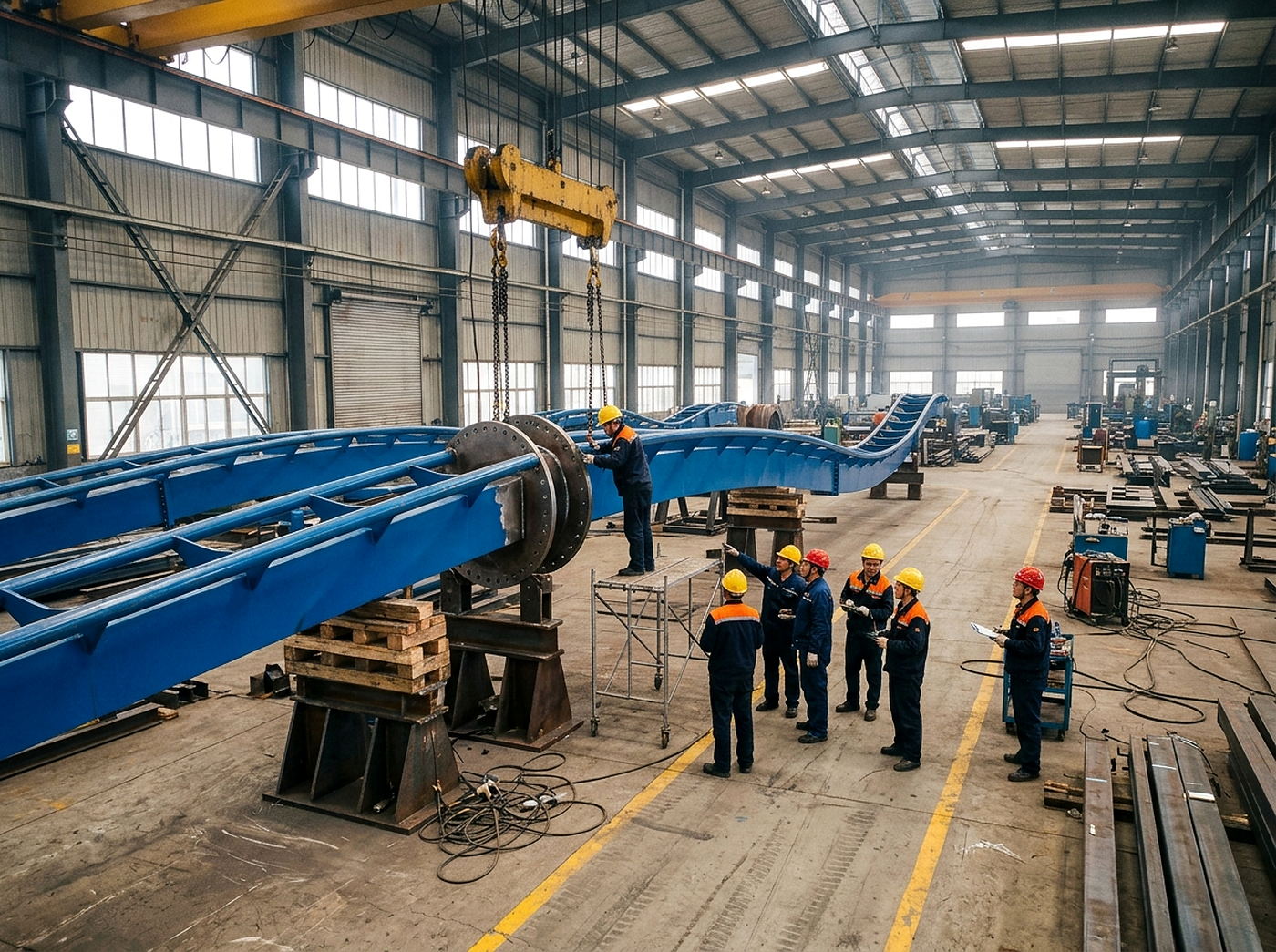
ZhipaoRides manufactures in Xingtai, Hebei, and ships coasters and other rides to Russia, Southeast Asia, the Middle East, South America and Africa. For each order, the engineering team prepares the packing list and loading sequence alongside the ride drawings, so the container plan and the installation schedule are issued together. The factory's 120,000 m2 plant includes assembly and testing space, which allows components to be trial-fitted before packing.
For buyers comparing suppliers, the questions to ask are straightforward: how many containers does the proposed layout need, what is the loading sequence, which items are not containerised, and what site storage does the plan assume? A supplier that cannot answer these in writing is asking you to absorb the risk.
Recent project and shipment updates are posted on the press page, which is useful for checking how the company documents dispatch and installation for export orders.
Budget and scheduling implications
Container count affects three budget lines: ocean freight, inland trucking and site handling. Loading order affects a fourth: crane and crew time. A coaster that arrives in a workable sequence can be erected in fewer site days, and the crane does not wait for missing hardware. When you request a quotation, ask for the container estimate and the loading plan as separate line items so you can compare offers on the same basis.
The next step is to send your site plan, target opening date and ride preference. The team can then return a scoped quotation with the container count, loading sequence and installation assumptions for your project.
Frequently asked questions
How many containers does a roller coaster typically need?
It depends on track length, structure, vehicles and site assembly. The count is set by a packing list that maps each component group to a container, and it should be issued with the quotation rather than estimated after the contract.
Can all coaster components fit in standard containers?
Most track and structure can be split into transportable lengths, but some items may need open-top containers or break-bulk shipping. The packing list should state which items are containerised and which are not.
Why does loading order affect installation?
Site assembly follows a fixed sequence. Loading in reverse installation order means the first components needed are the first out, which reduces site storage and crane idle time.
What should I provide to get an accurate container estimate?
Send the site plan, target opening date and preferred ride type or layout. The engineering team can then prepare a packing list and loading sequence for a scoped quotation.