
What Is a Flying Theatre?
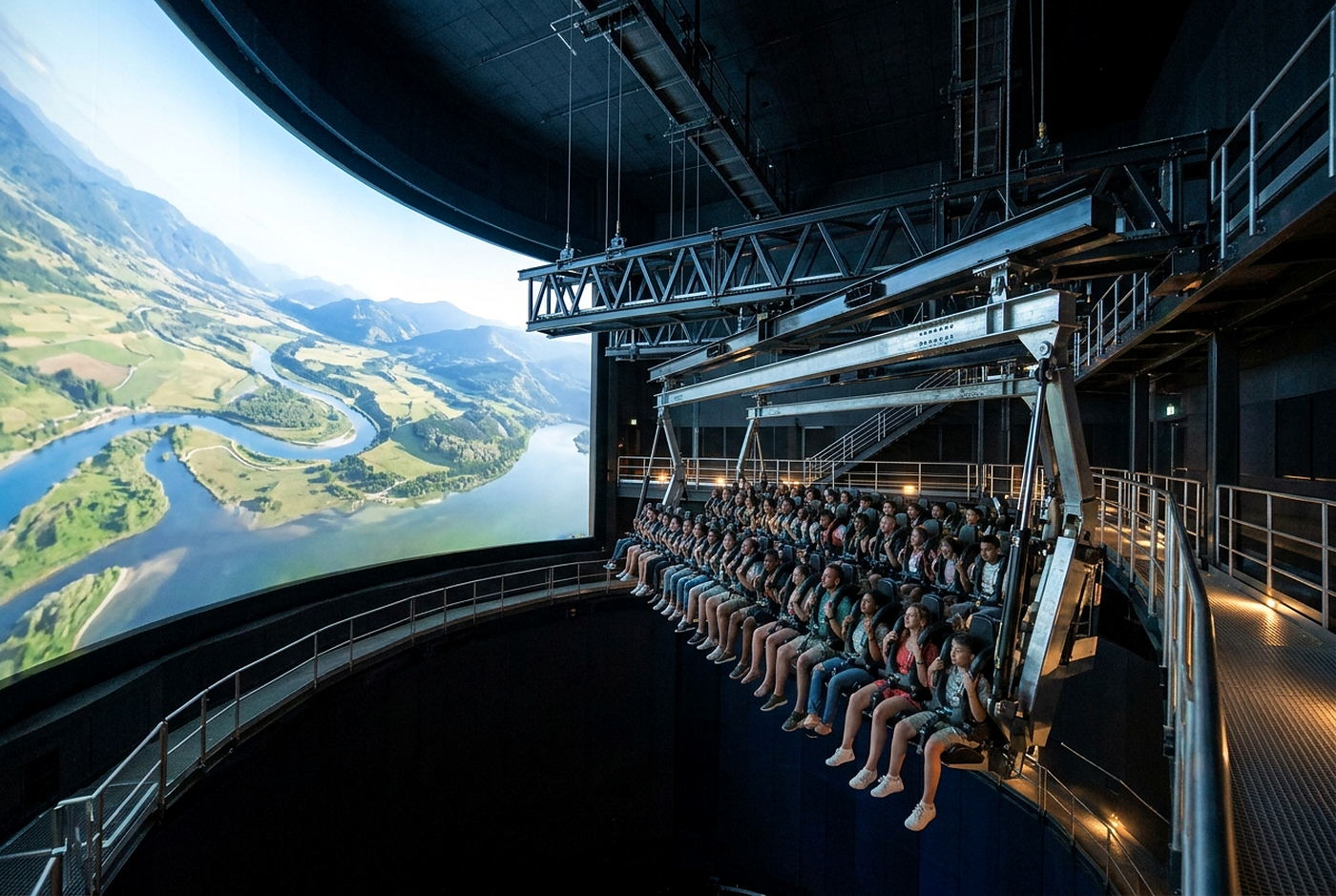
A flying theatre is a theatre ride in which rows of seats are mounted on a suspended gondola that lifts riders off the floor and moves them in front of a large curved screen. The seats hang free, so riders' feet dangle and the film is shown from a bird's-eye perspective. The motion system tilts, pitches and lifts the gondola in sync with the footage, giving the impression of flight over landscapes, cityscapes or fictional worlds.
It is a cinema format, not a roller coaster: there is no track, no high-speed acceleration and no inversion. The ride experience comes from the combination of a domed or curved screen, a suspended seating platform and a motion base that moves the whole audience together.
How the Seating and Motion Work
The core mechanical element is the gondola. Riders sit in rows on a rigid frame that is suspended from an overhead structure, usually by hydraulic or electric actuators. When the show starts, the gondola lifts and tilts forward so the audience faces the screen at an angle, with feet hanging free. This hanging posture is what separates the format from a conventional cinema seat.
Motion is programmed shot by shot. A typical sequence combines:
- Lift and pitch: the gondola rises and tilts to follow a climb or descent in the film.
- Roll and sway: small side-to-side movements that suggest banking over terrain.
- Heave and surge: vertical and forward-back motion for take-off, hover and landing scenes.
- Wind and scent effects: optional fans and scent units mounted near the seats, timed to the footage.
The screen is typically a large curved or dome surface that fills the riders' forward view. Because the whole gondola moves rather than individual seats, the motion is shared and synchronized across the audience. This makes the format easier to operate than a simulator with separate cabins, but it also means every rider experiences the same motion profile.
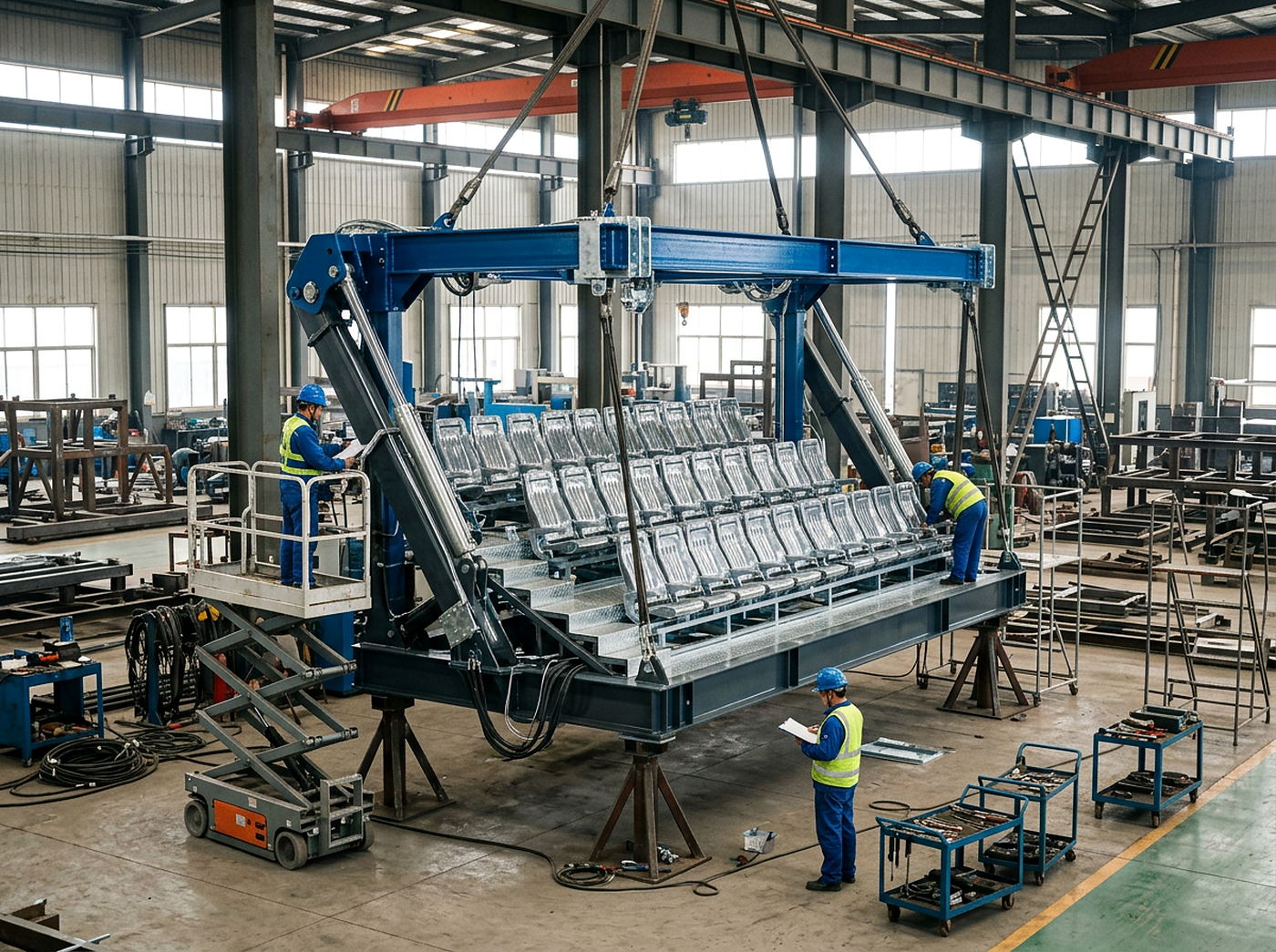
ZhipaoRides builds flying theatres at its plant in Xingtai, Hebei, alongside roller coasters, Ferris wheels, drop towers and family rides. The company was founded in 2013, operates a 120,000 m2 plant and employs about 500 staff across roughly 54 ride models.
Flying Theatre vs. 4D Cinema
The two formats are often confused because both combine film with motion. The differences are in seating, scale and motion range.
| Feature | Flying Theatre | 4D Cinema |
|---|---|---|
| Seating | Suspended gondola, feet hanging free | Fixed seats on the floor, often with seat-mounted effects |
| Motion range | Whole-platform lift, pitch and roll | Seat-level vibration, small drops and tilts |
| Screen | Large curved or dome screen | Flat or slightly curved cinema screen |
| Viewpoint | Aerial, first-person flight | Standard cinema viewpoint |
| Effects | Wind, scent, motion of the full gondola | Seat effects, water spray, leg ticklers, lighting |
| Throughput | Large audience per cycle, single gondola | Smaller theatre, multiple rows |
In short, a 4D cinema moves the seat; a flying theatre moves the audience. The flying format gives a stronger sense of height and forward travel, while a 4D cinema is easier to fit into a small building and can run shorter, more varied films.
Where a Flying Theatre Fits
The format works well in parks and attractions that want a high-capacity, sit-down experience with a strong visual signature. Typical placements include:
- Destination parks and indoor entertainment centres where a large curved screen becomes a landmark.
- Family-oriented parks that need a ride with a low height restriction and broad age appeal.
- Museums and visitor centres using flight footage over a region, coastline or heritage site.
- Resorts and mixed-use developments adding a weather-independent attraction.
It is less suitable where the building footprint is very small, where ceiling height is limited, or where the park needs a short cycle with frequent loading and unloading. The suspended gondola requires headroom and a structural frame above the audience, so early coordination with the building design matters. Parks comparing formats can review the flying theatre models available for sale to see how gondola size and screen layout affect the building envelope.
Specification Planning
Exact figures depend on the model and the show film. The table below shows the planning variables that matter most when sizing a flying theatre building.
| Variable | Why It Matters |
|---|---|
| Gondola row count and seats per row | Sets audience per cycle and the width of the suspended frame. |
| Screen type and curvature | Determines viewing distance and the shape of the auditorium. |
| Motion base stroke | Defines lift height and the clearance needed above and below the gondola. |
| Ceiling and structural load | The suspension frame carries the gondola and audience, so the building structure must be designed for it. |
| Show length and cycle time | Drives hourly throughput and queue planning. |
| Effects package | Wind, scent and lighting add to the show but also to maintenance and operating cost. |
ZhipaoRides exports to Russia, Southeast Asia, the Middle East, South America and Africa, and the flying theatre is part of a product range that also includes roller coasters and Ferris wheels. For parks planning a mixed ride lineup, the flying theatre often serves as the indoor anchor while outdoor rides carry the thrill profile.
Frequently Asked Questions
Is a flying theatre the same as a flight simulator?
No. A flight simulator usually gives each rider or small group a separate cabin and screen. A flying theatre suspends a whole seating gondola in front of one large screen, so the audience shares the same motion and view.
Do riders need to be a certain height?
Height restrictions are set by the operator and the restraint system. Because the seats hang free, the restraint and seat geometry are the main safety factors. Final limits should be confirmed with the manufacturer for the specific model.
Can a flying theatre run different films?
Yes. The motion program is synchronized to the film, so a new film requires a new motion profile. Parks often keep one main film and add seasonal or regional films to refresh repeat visits.
What building height does it need?
It depends on the gondola stroke and screen size. The suspended frame and the lift path require clear headroom above the audience, so the building height should be fixed early with the ride supplier's layout drawings.