
What is a drop tower ride?
A drop tower ride is a vertical amusement ride that lifts passengers in a gondola or seat carriage to the top of a tower, holds them briefly, then releases them into a controlled fall along the tower structure. The fall is arrested by a braking system — magnetic, pneumatic, hydraulic or mechanical — that brings the carriage to a stop before it reaches the station. Drop towers are classified by height, seating arrangement and drive type, and they are a common anchor attraction in theme parks, family entertainment centres and outdoor fairs.
ZhipaoRides manufactures drop towers among its 54 ride models at its plant in Xingtai, Hebei, and exports them to markets including Russia, Southeast Asia, the Middle East, South America and Africa.
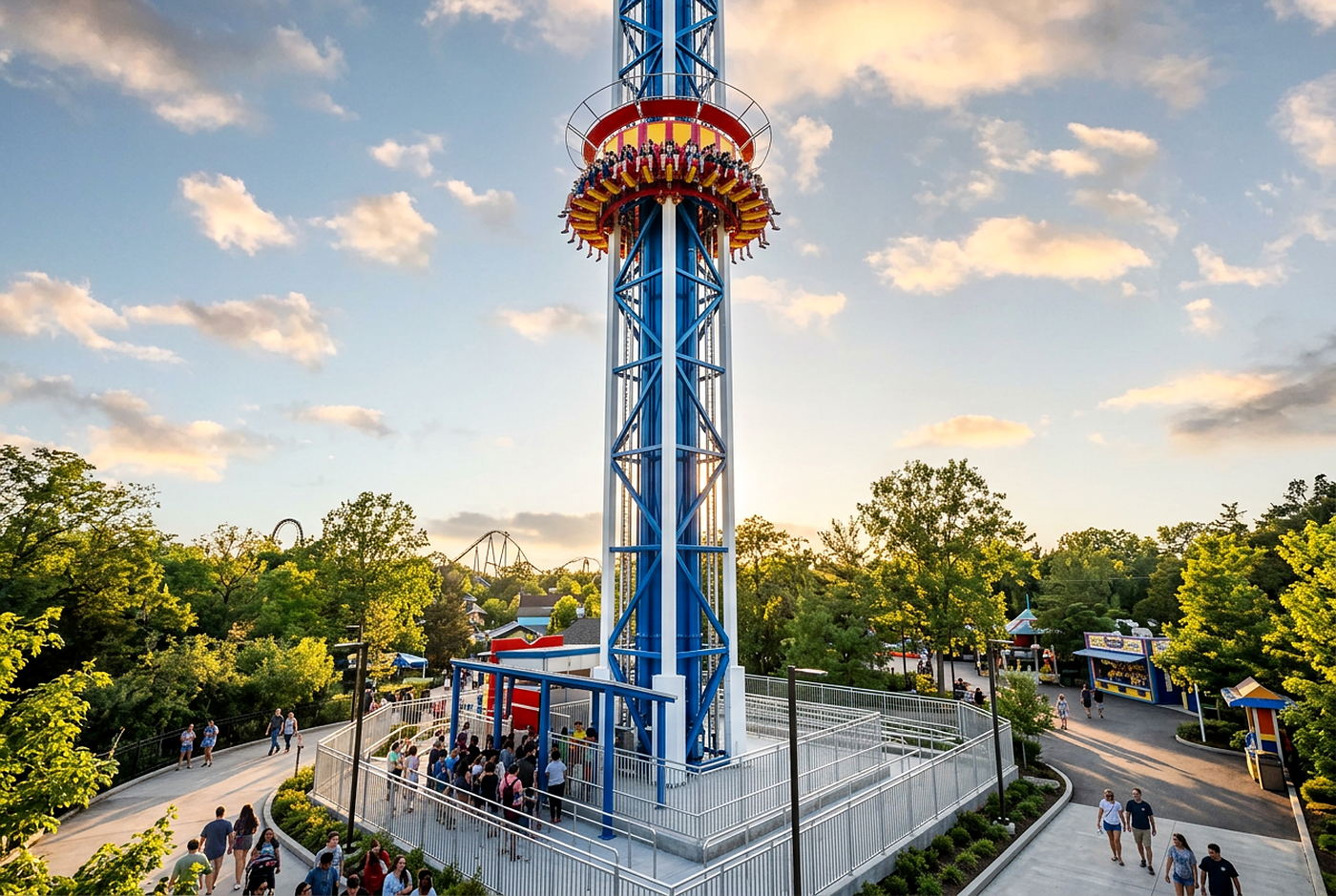
How a drop tower ride works
The ride cycle has four stages: loading, lift, hold and fall. During loading, passengers are secured by over-the-shoulder restraints or lap bars, and the carriage is locked to the tower guide rails. The lift stage raises the carriage using one of three drive types: a cable winch, a chain lift or a linear motor. At the top, the carriage is held for a few seconds — the hold time is a deliberate part of the experience, because the anticipation of the fall is as much a part of the ride as the fall itself.
The fall is gravity-driven. The carriage accelerates downward along the guide rails until the braking system engages. Braking is the most important engineering decision on a drop tower, because it determines both the safety margin and the feel of the ride. The four common systems are:
- Magnetic (eddy current) braking: permanent magnets on the carriage induce eddy currents in a conductive fin on the tower, creating a braking force that increases with speed. There is no contact wear and the stop is smooth, which is why this system is common on tall towers.
- Pneumatic braking: air cylinders or air bags absorb the carriage energy. The braking force can be tuned by adjusting air pressure, and the system is relatively simple to maintain.
- Hydraulic braking: hydraulic cylinders or shock absorbers dissipate energy through fluid flow. This system is robust and is often used on heavy multi-seat carriages.
- Mechanical braking: friction brakes or a catch car system. This is the simplest and lowest-cost option, typically found on smaller family towers.
All four systems are designed with redundancy: the primary brake is backed by a secondary catch system, and the carriage cannot be released until restraints and locks are confirmed. The exact braking distance and deceleration rate are set by the manufacturer for each tower model and are verified during commissioning.
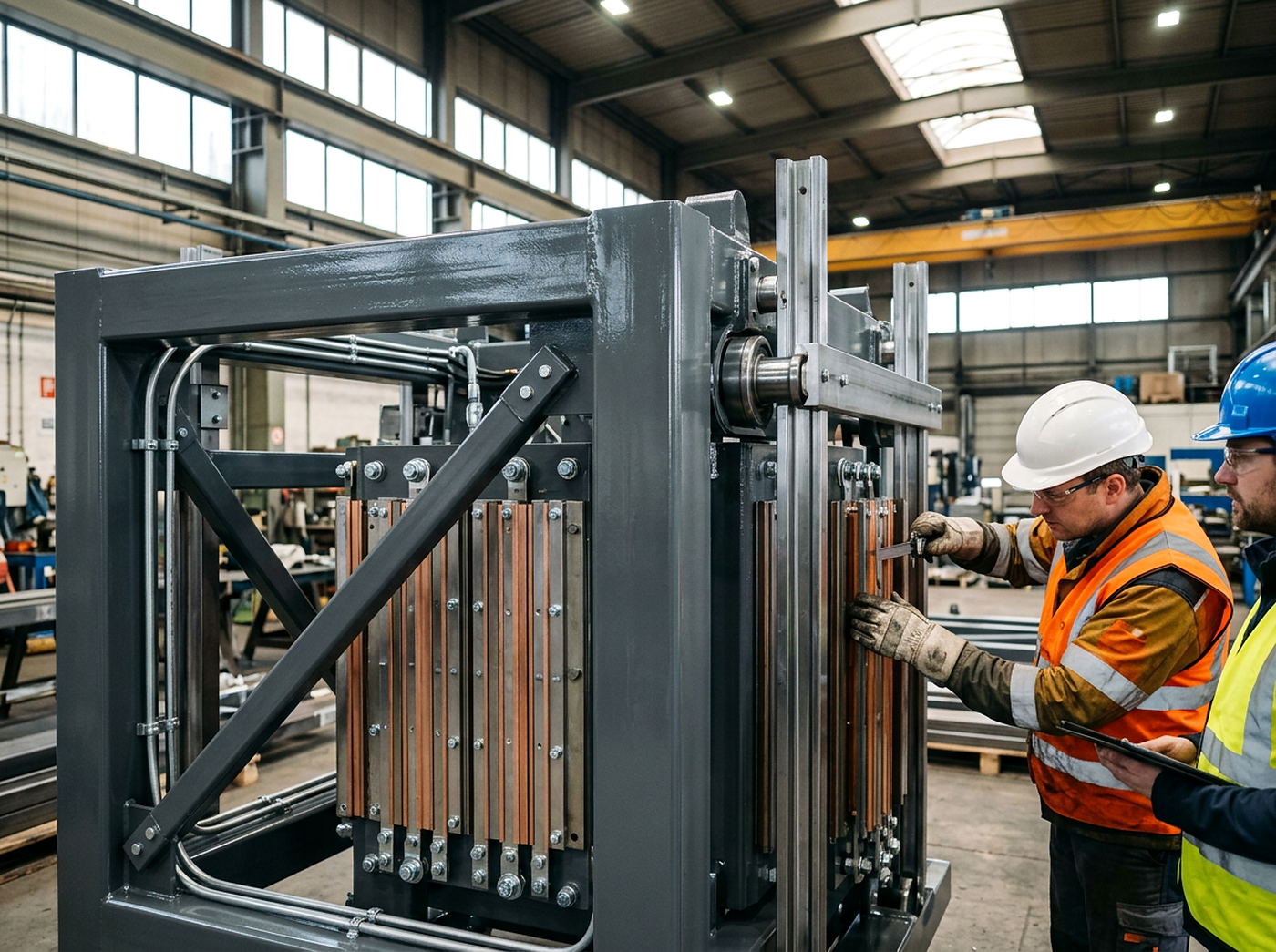
Tower classes and typical specifications
Drop towers are usually grouped into three classes by height and target audience. The table below gives typical ranges; actual figures depend on the specific model and should be confirmed on the product page.
| Class | Typical height | Typical capacity | Braking system | Target audience |
|---|---|---|---|---|
| Family tower | 10–25 m | 8–16 riders | Mechanical or pneumatic | Families, children above minimum height |
| Thrill tower | 30–60 m | 16–24 riders | Magnetic or hydraulic | Teenagers and adults |
| Extreme tower | 60 m and above | 20–40 riders | Magnetic | Thrill-seekers, destination parks |
Seating arrangements also vary: sit-down carriages with legs hanging free, stand-up carriages, and rotating carriages that turn during the lift. The choice affects restraint design and the loading cycle time. A tower with a rotating carriage takes longer to load and unload, which lowers hourly throughput compared with a fixed carriage of the same capacity.
Guest experience: what riders actually feel
The guest experience on a drop tower is built on three sensations: the slow lift, the hold at the top, and the fall. The lift is deliberately slow — often 0.5 to 1 m/s — so that riders have time to see the park from height and to register how far up they are. The hold at the top is the psychological peak: riders are suspended, often with a view straight down, and the release is unpredictable on some models because the operator or the control system chooses the moment.
The fall itself is a short free-fall followed by a controlled deceleration. On a magnetic-braked tower the deceleration is progressive, so riders feel a firm push into the restraints rather than a hard jolt. On smaller mechanical-braked towers the stop is sharper. The difference is noticeable and is one reason parks position family towers and thrill towers in different zones.
From an operations standpoint, the guest experience also depends on queue design. Because the ride cycle is short — typically 60 to 90 seconds including loading — a drop tower can serve a high hourly throughput if the station is laid out with separate load and unload sides. Parks that mix height categories in one area should check sightlines: a 60 m tower is visible from most of the park and becomes a landmark whether or not that was intended.
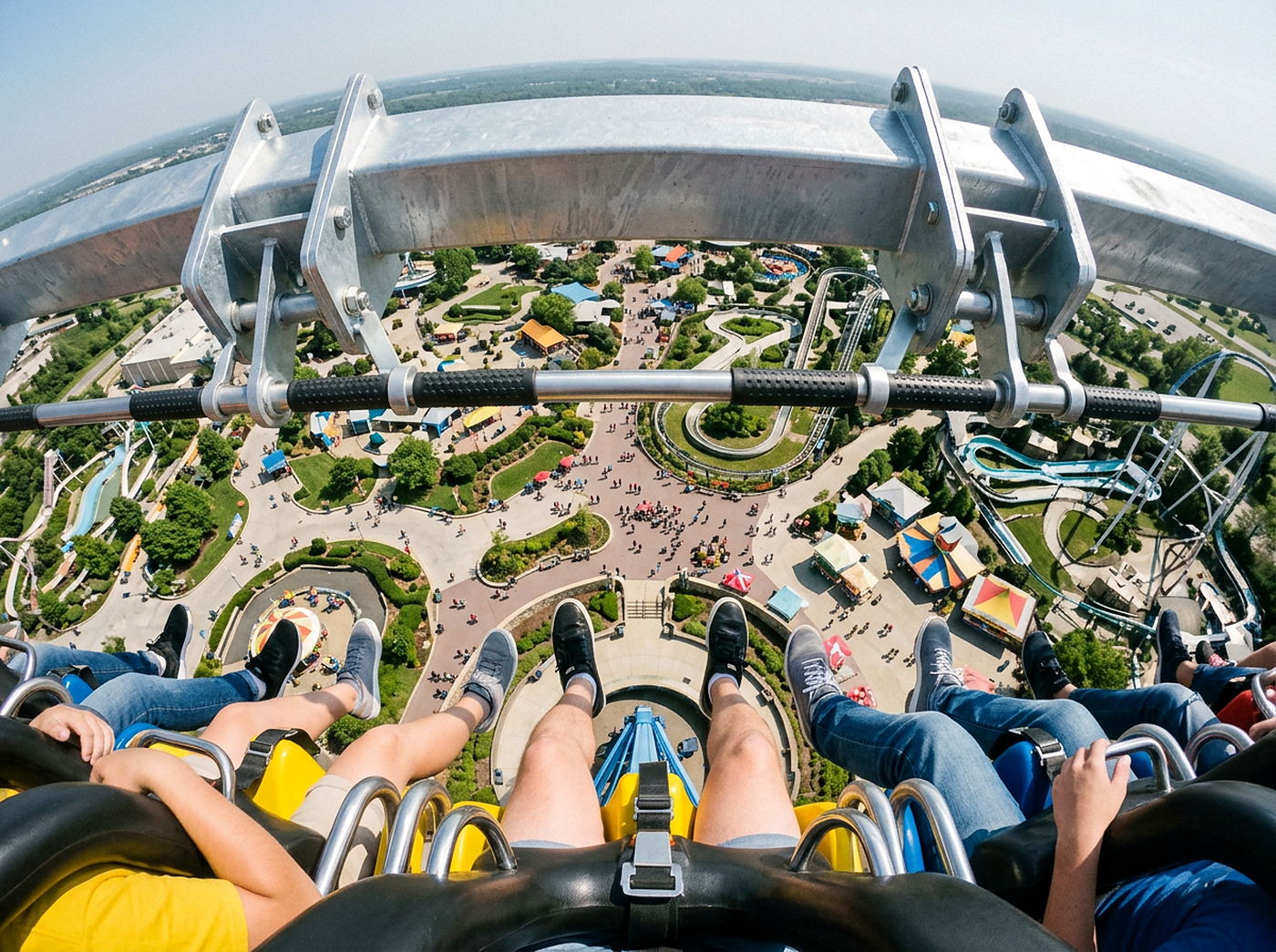
Where a drop tower fits, and where it does not
A drop tower fits well in parks that already have a flat, open area and a power supply at the tower base. It has a small footprint relative to its height, which makes it useful where land is limited. It also works as a anchor attraction in a family entertainment centre when the family class is chosen, and as a skyline landmark in a destination park when a thrill or extreme class is chosen.
It does not fit everywhere. A drop tower is not a good choice for a site with high wind exposure unless the tower is specified for it, because the carriage and tower structure must be designed for the local wind load. It is also a poor fit for parks with strict noise limits near residential areas, since the lift and brake systems produce mechanical noise. And it is not a substitute for a coaster: the ride duration is short, and guests who want a long experience will ride once and move on. Parks should plan the surrounding area with secondary attractions rather than relying on the tower alone to hold visitors.
For park developers comparing models, the drop tower ride models available for sale page lists the tower classes, heights and seating options that ZhipaoRides manufactures in Xingtai, Hebei. Buyers should confirm braking system, wind rating and foundation requirements against their site survey before ordering.
FAQ
What is a drop tower ride?
A drop tower ride is a vertical amusement ride that lifts passengers up a tower and releases them into a controlled fall, with braking systems such as magnetic, pneumatic, hydraulic or mechanical bringing the carriage to a safe stop.
How tall are drop tower rides?
Drop towers range from about 10 m for family models to 60 m and above for extreme models. The height class determines the braking system, capacity and target audience.
What braking system is used on drop towers?
Tall towers typically use magnetic (eddy current) braking for a smooth, wear-free stop. Smaller towers often use pneumatic, hydraulic or mechanical braking. All systems include a secondary catch system.
Is a drop tower suitable for small parks?
Yes, if the family class is chosen. A family tower of 10–25 m with 8–16 riders has a small footprint and can fit into a family entertainment centre or a small outdoor park.