
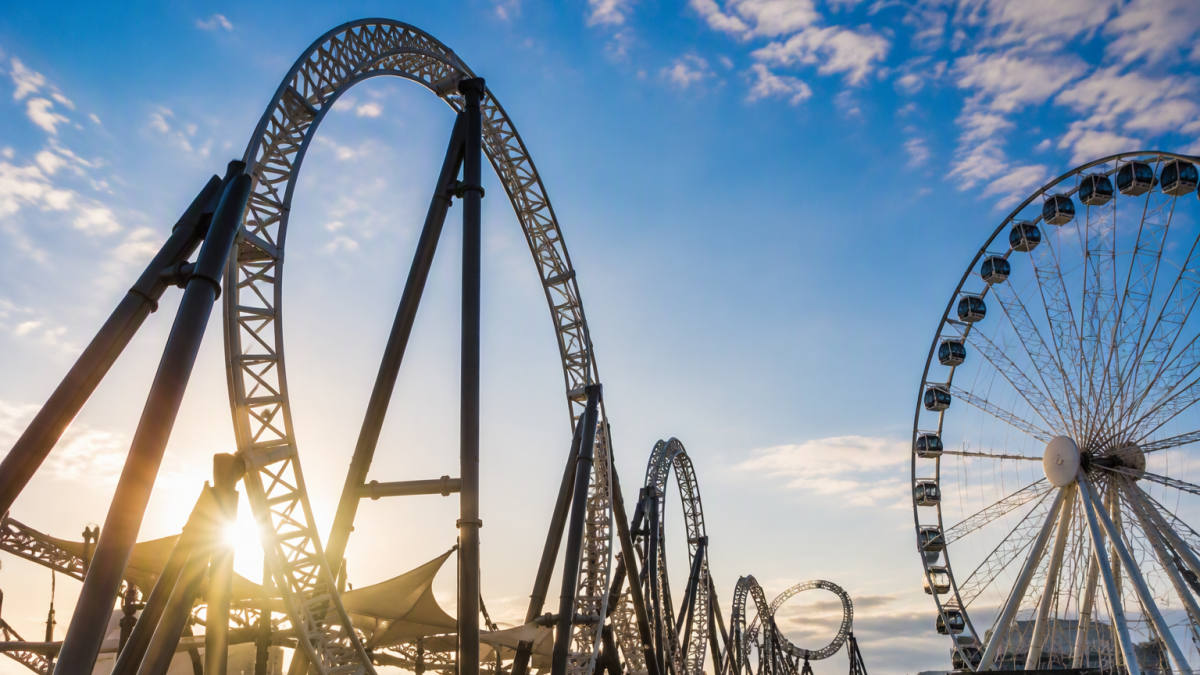
Buying a roller coaster for sale in 2026 requires a disciplined procurement process, not a brochure collection. Start by defining your operating case—ridership, park size, and ROI logic—before you request a single quotation. Then use a fixed set of specification questions and a line-item quotation template to compare suppliers on equal terms. This checklist walks you through each step so you can shortlist credible manufacturers and avoid costly surprises.
Start with the operating case
Before you contact any supplier, decide what the coaster must achieve commercially. The answers shape every technical choice and prevent you from buying a ride that is over- or under-specified for your site.
- Ridership: Estimate peak daily and annual attendance, then set a realistic throughput target (riders per hour) that matches your queue tolerance and operating hours.
- Park size and layout: Map available land, soil conditions, access roads, and nearby structures. A compact family coaster and a large launch coaster have very different footprints and support requirements.
- ROI logic: Define how the ride pays back—incremental admission, season pass value, dwell time, or sponsorship. This determines the acceptable capital band and the ride’s target demographic.
- Target audience: Height restrictions, thrill level, and theming ambition must align with your existing ride mix and guest profile.
Write these decisions into a one-page brief. Suppliers will ask for them, and a clear brief shortens the quotation cycle.
The eight specification questions every supplier will ask
Expect every credible manufacturer to request the same core inputs. Having them ready signals that you are a serious buyer and reduces back-and-forth.
- Site size and topography: Provide a site plan with dimensions, elevations, and any easements or height restrictions.
- Capacity target: State riders per hour and the assumed dispatch interval; this drives train count and block design.
- Ride envelope: Define maximum height, speed, and inversion count you will accept, plus any no-build zones.
- Power availability: Confirm voltage, frequency, and available capacity at the point of connection; launch coasters have different demand profiles.
- Climate and environment: Temperature range, humidity, wind, seismic zone, and corrosion exposure affect materials and enclosure.
- Standards and local compliance: State the applicable local code and ask the supplier to confirm per project which standards they will design to; do not accept blanket certification claims.
- Opening date: A fixed date sets the design freeze and fabrication slot; be realistic about permitting and civil works.
- Budget band: Give a range, not a target price. It helps suppliers propose a suitable ride type without wasting time on incompatible concepts.
Reading a quotation: what should be a separate line item
A lump-sum price hides scope gaps. Require an itemized quotation so you can compare suppliers and identify what is excluded. The table below lists the line items that should appear separately.
| Quotation line item | Why it matters | What to verify |
|---|---|---|
| Design and engineering | Defines ride dynamics, structural loads, and compliance basis | Deliverables list, design standards referenced, review milestones |
| Support structure | Often the largest steel cost; affects foundation loads | Steel grade, coating system, tonnage estimate, connection details |
| Track and components | Ride quality and maintenance access depend on track fabrication | Track length, weld quality, tolerances, supplier of rails and ties |
| Trains and restraints | Capacity and guest safety are set here | Number of cars, restraint type, redundancy, ADA provisions if required |
| Control system | Governs dispatch, safety interlocks, and diagnostics | PLC platform, redundancy, remote support, spare parts availability |
| Foundation design | Civil works are a major hidden cost if not scoped | Whether design is included, load assumptions, local code compliance |
| Shipping and logistics | International freight and customs can swing the budget | Incoterms, packing, insurance, port of departure, duties responsibility |
| Installation supervision | Quality of assembly affects safety and warranty | Number of supervisor days, qualifications, language support, travel costs |
| Testing and commissioning | Proves the ride meets design and safety criteria | Test plan, acceptance criteria, witness points, documentation package |
| Spare parts | Downtime cost is higher than parts cost | Recommended first-year spares list, lead times, local availability |
| Training | Operators and maintenance staff need certified instruction | Training days, materials, competency assessment, refresher options |
Ask each supplier to state explicitly what is excluded. For a broader view of available models, see our roller coasters for sale page.
Cost drivers ranked by impact on price
Not all specifications move the price equally. Use this ranking to focus negotiation and value engineering where it matters.
- Track length and geometry: Longer track and complex elements increase steel, fabrication, and foundation costs.
- Support steel tonnage: Taller and more dynamic layouts require heavier supports; soil conditions can increase foundation size.
- Train count and restraints: More trains raise capacity but add cost; advanced restraints add per-seat cost.
- Launch type: Launch systems (e.g., LSM, hydraulic) add capital and power infrastructure cost compared with a lift hill.
- Theming: Scenic work, enclosures, and finishes are highly variable and often underestimated.
- Civil works: Earthworks, drainage, and foundations depend on your site and are frequently excluded from ride quotations.
Address these drivers in your brief so suppliers propose comparable solutions. For a full product overview, visit our roller coaster category.
Five questions that expose an inexperienced supplier
Use these questions in early discussions to separate manufacturers with real project experience from brokers or assemblers.
- “Can you share a sample design calculation package for a similar ride?” Inexperienced suppliers cannot produce structural and dynamic calculations to recognized standards.
- “Who performs the final inspection and commissioning, and to what criteria?” Look for a documented test plan and named responsible engineers.
- “What is your process for design changes after freeze?” A clear change-control procedure indicates maturity.
- “How do you handle spare parts and technical support after warranty?” Vague answers signal a short-term approach.
- “Which standards will you confirm per project, and can you provide the compliance matrix?” Suppliers who claim blanket certifications without project-specific confirmation are a red flag.
Delivery schedule reality: design freeze, fabrication slot, shipping, install, commissioning
A realistic schedule has five gates. Treat each as a milestone with defined deliverables.
- Design freeze: After site survey and specification sign-off, the design is locked. Changes after this point are costly.
- Fabrication slot: Manufacturers book production capacity; confirm your slot in writing with the purchase order.
- Shipping: International freight and customs clearance add variability; agree Incoterms and documentation responsibilities.
- Installation: Site readiness (foundations, power, access) must precede crew arrival; supervision days should be specified.
- Commissioning: Testing, adjustments, and training follow installation; acceptance criteria should be agreed upfront.
Build contingency into your opening date. For a detailed list of available models, see our roller coaster for sale page.
Next step
Ready to move from checklist to quotation? Send your operating case and the eight specification answers to ZhipaoRides and request an itemized proposal. Visit our roller coasters for sale page to start the conversation.