
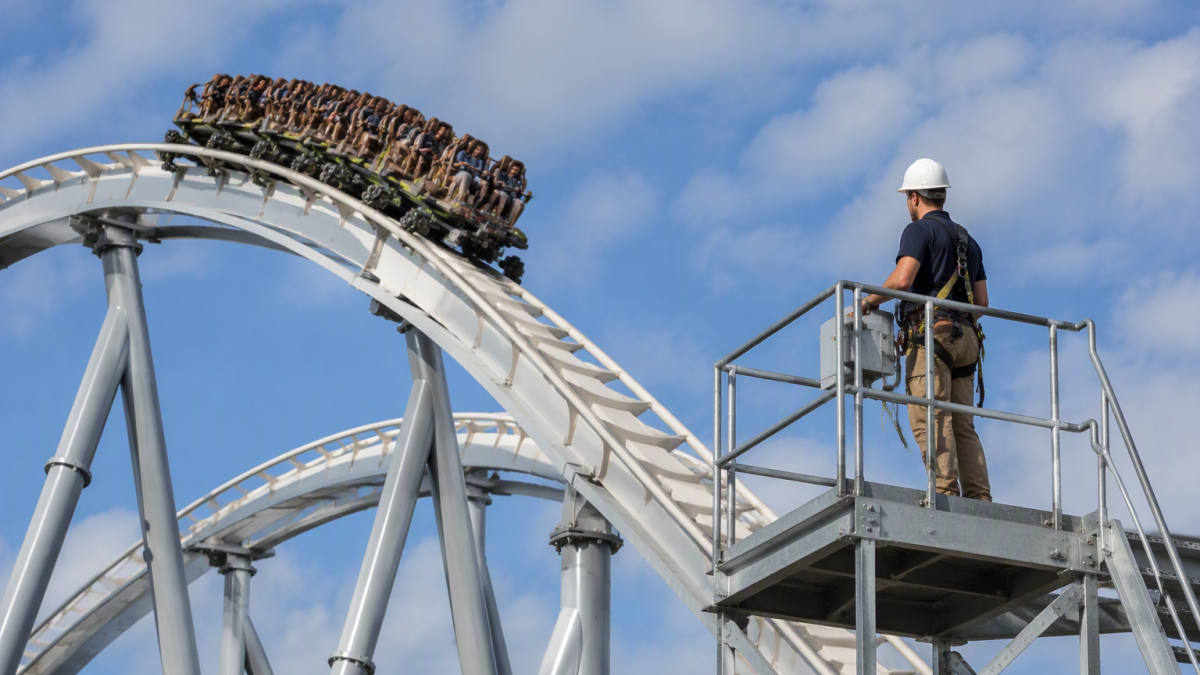
Effective roller coaster evacuation and rescue planning requires a site-specific, risk-based approach that integrates engineering design, operational procedures, and regular training. Operators must develop written plans covering all foreseeable scenarios, from routine lift-hill stops to complex mid-course evacuations, and validate them through drills. Key elements include clear roles and responsibilities, reliable communication systems, appropriate rescue equipment, and coordination with local emergency services. Plans should be reviewed annually and after any incident, with documentation kept for regulatory inspection.
Risk Assessment and Scenario Identification
Begin by conducting a formal risk assessment for each coaster in your portfolio. This should identify all locations where a train can stop unexpectedly, including lift hills, block brakes, mid-course brake runs, and final brake runs. Consider factors such as track height, proximity to structures, and access routes. For each location, document the evacuation method: self-evacuation with operator assistance, assisted evacuation using ladders or platforms, or technical rescue requiring specialized equipment. The assessment should also account for environmental conditions (e.g., high winds, lightning) and passenger demographics (e.g., individuals with disabilities). ZhipaoRides provides as-built drawings and evacuation route documentation for each coaster model, which operators should incorporate into their site-specific plans. Confirm per project that these documents reflect the final installed configuration.
Roles, Responsibilities, and Communication
Define clear roles for all staff involved in an evacuation. A typical structure includes an incident commander (usually the duty manager), a lead operator at the control panel, platform attendants, and a rescue team. Each role should have a written checklist of actions. Communication is critical: ensure redundant systems (e.g., two-way radios, PA system, backup power) are available and tested regularly. Establish a clear chain of command and a method for accounting for all passengers and staff. Pre-plan messages for public address announcements to manage guest anxiety. Coordinate with local fire and rescue services in advance; provide them with site tours and access to technical rescue points. Document mutual-aid agreements if applicable.
Evacuation Methods and Equipment
Evacuation methods vary by coaster design and stop location. Common approaches include:
- Self-evacuation with assistance: Passengers unbuckle and walk down stairs or ramps alongside the track, guided by staff. Suitable for low-height sections with walkways.
- Assisted evacuation using ladders: Staff place ladders against the train and help passengers descend. Requires trained staff and secure ladder placement.
- Technical rescue: For high or inaccessible areas, use harnesses, ropes, and aerial platforms. This should be performed by trained rescue personnel, often in coordination with local emergency services.
Maintain a rescue equipment inventory for each coaster, including ladders, harnesses, ropes, stretchers, and lighting. Inspect equipment monthly and after each use. Store equipment in designated locations near evacuation points. For coasters with inversions, ensure procedures address passenger orientation and safe extrication; ZhipaoRides coasters with up to 11 inversions may require specialized evacuation techniques, so confirm per project that your equipment and training match the ride's design.
Training and Drills
Training should be both initial and recurrent. All operators must complete evacuation training before being certified to work the ride. Recurrent training should occur at least annually, with drills conducted at varying times (including during operating hours) to test realism. Drills should involve all shifts and include scenarios such as a power failure on the lift hill, a stopped train in an inversion, and a medical emergency on board. After each drill, conduct a debrief and update the plan as needed. Keep records of training and drills for at least the period required by your local regulator. Cross-train staff from other rides to serve as backup rescue team members.
Documentation, Review, and Continuous Improvement
Maintain a comprehensive evacuation plan for each coaster, including site-specific drawings, roles, procedures, equipment lists, and contact information. Review the plan annually and after any incident or modification to the ride. Use a checklist to verify readiness (see table below). Investigate all evacuations, even successful ones, to identify near-misses and improvement opportunities. Share lessons learned across your park. Ensure that the plan is accessible to all relevant staff, including during power outages (e.g., keep a printed copy in the control booth). Confirm per project that your documentation meets the requirements of your local authority and any referenced standards.
Evacuation Readiness Checklist
| Item | Frequency | Responsible |
|---|---|---|
| Review and update evacuation plan | Annually and after changes | Safety Manager |
| Inspect rescue equipment | Monthly | Maintenance |
| Test communication systems | Weekly | Operations |
| Conduct evacuation drill | At least annually | Operations Manager |
| Train new operators | Before certification | Training Coordinator |
| Coordinate with local emergency services | Annually | Safety Manager |
Coordination with Emergency Services and Post-Incident Actions
Establish a relationship with local fire and rescue services before an incident occurs. Invite them to visit the site, review access routes, and practice technical rescue scenarios. Provide them with contact information for key personnel and copies of evacuation plans. During an evacuation, designate a liaison to communicate with emergency responders. After the evacuation, conduct a thorough debrief with all involved parties, document the timeline, and implement corrective actions. Report the incident to the manufacturer if any design or equipment issue is suspected; ZhipaoRides can provide technical support and, if needed, on-site assistance. For more information on our coasters and safety features, visit our products page.
By following a structured approach to evacuation planning, operators can enhance safety, reduce response times, and ensure compliance with regulatory requirements. Regular review and practice are essential to maintaining readiness.