
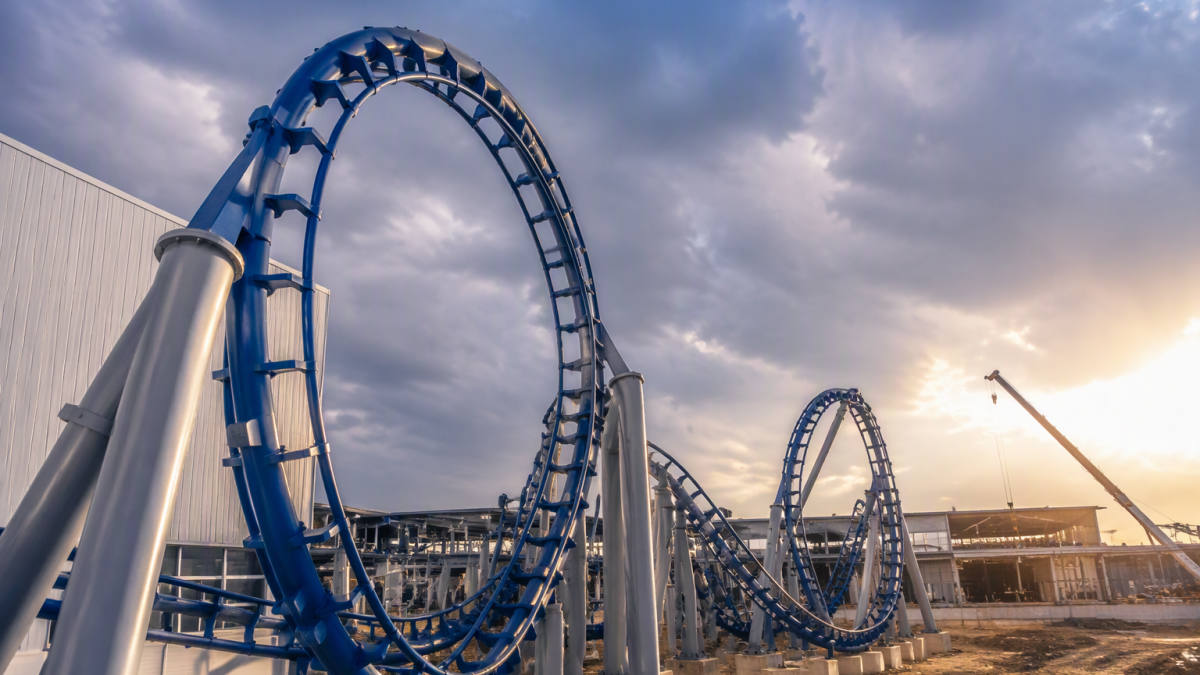
A ride supplier factory audit should verify structural fabrication quality, in-house testing protocols, quality management systems, and the supplier's ability to provide project-specific compliance documentation. Focus on observable evidence: material traceability, weld quality, dimensional accuracy, load testing, and documentation packages. The audit should confirm that the factory's processes align with the ride's engineering requirements and that the supplier can deliver consistent quality at scale. Always validate standards compliance on a per-project basis, as requirements vary by jurisdiction and ride type.
1. Structural Fabrication and Material Traceability
Begin with the raw materials and fabrication areas. For steel structures, request material certificates (mill test reports) for each heat number and verify that the steel grade matches the design specifications. Check that the supplier has a system for traceability—from incoming material to finished components. Look for organized storage with clear identification and segregation of different steel grades.
Inspect the cutting, forming, and welding processes. For welded structures, verify that welders are qualified to recognized standards (e.g., ISO 9606 or AWS D1.1) and that welding procedures are qualified per project requirements. Examine weld quality visually: uniform beads, no undercuts, no porosity. Ask about non-destructive testing (NDT) methods used (e.g., visual, magnetic particle, ultrasonic) and their frequency. Confirm that critical welds receive appropriate NDT according to the design.
Check dimensional accuracy using templates or measurement reports. For large structures like roller coaster track or Ferris wheel segments, verify that the factory uses jigs and fixtures to maintain geometry. Ask about pre-assembly: are large components trial-fitted before shipment? This is especially important for modular designs.
2. Corrosion Protection and Surface Treatment
Corrosion protection is critical for ride longevity and safety. For hot-dip galvanized structures, inspect the galvanizing facility or verify the subcontractor's process. Check for proper surface preparation (degreasing, pickling), zinc bath temperature and chemistry, and coating thickness measurement. Look for a smooth, uniform zinc coating with no bare spots or excessive dross. Verify that venting and draining are adequate to avoid trapped air or ash.
For painted surfaces, review the coating system specification (e.g., primer, intermediate, topcoat) and verify that the supplier follows it. Check surface preparation (e.g., abrasive blasting to Sa 2.5) and environmental conditions during painting (temperature, humidity). Ask about adhesion testing and dry film thickness measurements. Ensure that the supplier has a documented procedure for handling and shipping to prevent damage to the coating.
3. Mechanical and Electrical Assembly
For rides with mechanical systems (e.g., chain lifts, brakes, drive systems), inspect the assembly area. Verify that components are assembled according to drawings and that torque values are applied and recorded. Check for proper alignment of shafts, couplings, and gearboxes. Look for cleanliness and organization—foreign objects left in assemblies can cause failures.
For electrical and control systems, verify that panels are assembled according to schematics and that wiring is neatly routed and labeled. Check that components are rated for the environment (e.g., IP ratings) and that safety circuits are redundant where required. Ask about functional testing of control systems: are PLC programs tested with simulated inputs? Is there a documented test protocol?
4. Quality Management System and Documentation
A robust quality management system (QMS) is the backbone of consistent quality. Ask to see the QMS documentation—whether certified to ISO 9001 or not, the factory should have documented procedures for design control, purchasing, production, inspection, and testing. Look for evidence of internal audits, management reviews, and corrective action processes.
Review the inspection and test plan (ITP) for the project. The ITP should list all inspections and tests, with acceptance criteria and records. Check that inspection records are completed and signed off. For critical characteristics (e.g., weld quality, coating thickness, dimensional accuracy), verify that records show actual measured values, not just checkmarks.
Documentation is often a weak point. Ensure the supplier can provide a complete documentation package: material certificates, weld records, NDT reports, coating reports, dimensional reports, test certificates, operation and maintenance manuals, and spare parts lists. Confirm that documents are in a language the buyer can understand and that they are organized and legible.
5. Testing and Validation
Testing should be proportional to risk. For structural components, static load tests may be required to verify strength. For mechanical systems, functional tests should simulate operating conditions. For control systems, factory acceptance testing (FAT) should be performed with the buyer's witness.
Check the factory's test equipment: are load cells, pressure gauges, and other instruments calibrated? Are calibration records available? For dynamic rides, ask about fatigue testing of critical components. If the factory does not have in-house testing capability, verify that they use accredited third-party laboratories.
Review the factory acceptance test (FAT) procedure. It should cover all major functions and safety features. Ensure that the FAT is conducted before shipment and that any issues are resolved and retested.
6. Factory Audit Checklist
Use the following checklist to structure your audit. Adapt it to the specific ride type and project requirements.
| Area | Checkpoints | Evidence to Request |
|---|---|---|
| Material traceability | Mill certificates, heat numbers, storage segregation | Material certs, traceability log |
| Welding | Welder qualifications, WPS, NDT reports | Welder certs, WPS/PQR, NDT reports |
| Dimensional accuracy | Jigs/fixtures, pre-assembly, measurement reports | Dimensional inspection reports |
| Corrosion protection | Galvanizing process, coating thickness, adhesion | Coating thickness reports, adhesion test results |
| Mechanical assembly | Torque records, alignment, cleanliness | Assembly records, torque logs |
| Electrical assembly | Panel assembly, wiring, functional tests | Electrical schematics, test reports |
| Quality management | QMS documentation, internal audits, corrective actions | QMS manual, audit reports |
| Inspection and test plan | ITP coverage, records completeness | ITP, completed inspection records |
| Testing | Calibration, load tests, FAT | Calibration certs, test reports, FAT procedure |
| Documentation | Completeness, organization, language | Sample documentation package |
7. Supplier Capability and Project Management
Beyond the physical audit, assess the supplier's capability to manage your project. Check their engineering resources: do they have in-house design and analysis capabilities? Can they produce detailed drawings and calculations? Ask about their experience with similar rides—not just the number of projects, but the complexity and standards involved.
Review their project management approach. Do they use a scheduling system? How do they handle changes and delays? Ask for references from previous projects (without naming clients) and follow up if possible. Confirm that they have a clear communication plan and that language barriers will not impede progress.
For buyers considering a range of ride types, it's worth noting that some manufacturers, such as ZhipaoRides, offer a broad portfolio including roller coasters, Ferris wheels, and water rides. Their factory in Xingtai, Hebei, spans 120,000 m² and includes hot-dip galvanizing lines, which can be inspected during an audit. However, always verify that the specific ride type you're purchasing is within their proven expertise and that their processes meet your project's standards—confirm per project.
8. Conclusion
A factory audit is your opportunity to verify that the supplier can deliver a safe, reliable ride that meets your expectations. Focus on evidence, not promises. Check the physical work, the documentation, and the systems behind them. Use the checklist above as a starting point, but tailor it to the specific risks of your ride type. Remember that standards and certifications must be confirmed per project, as requirements vary. A thorough audit now can prevent costly issues later.