
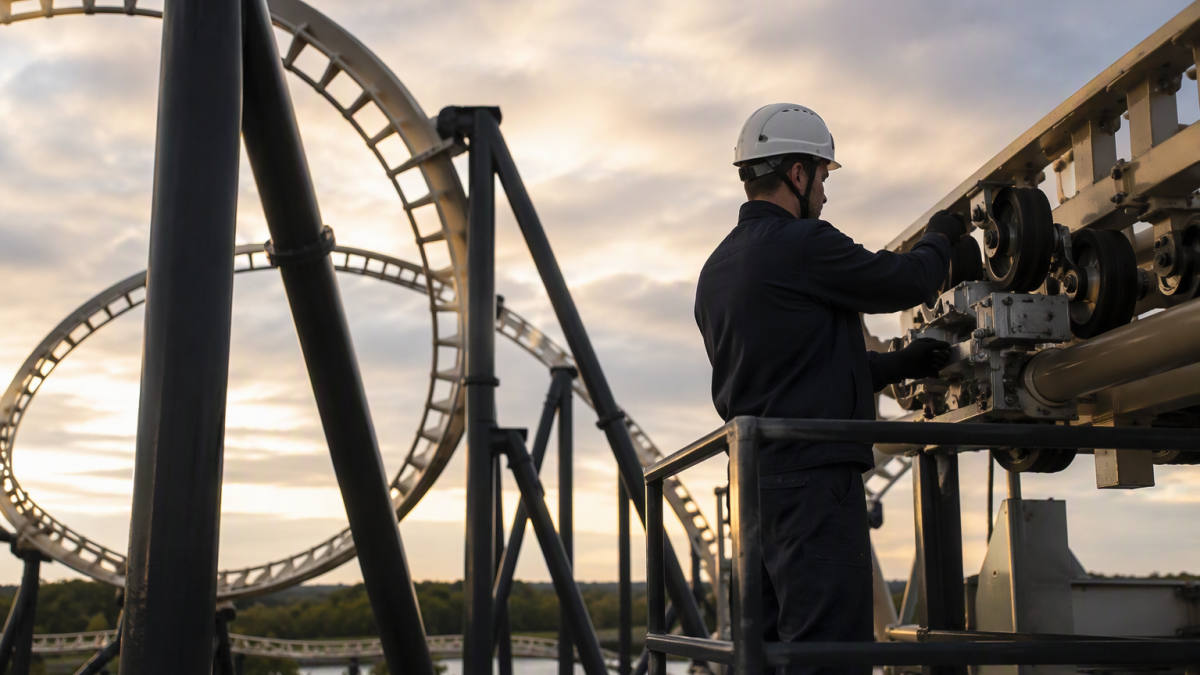
Ride downtime directly reduces park revenue by cutting per-capita spending, displacing guests to lower-yield activities, and eroding repeat visitation. The financial impact extends beyond lost ticket sales to include food, merchandise, and upcharge attractions that depend on ride flow. Planned maintenance windows—scheduled during low-demand periods and executed with precision—can minimize revenue loss while preserving safety and asset reliability. This article outlines the revenue mechanics of downtime and provides a practical framework for planning maintenance windows.
1. The revenue mechanics of ride downtime
When a major ride is down, the effect cascades through the park’s revenue streams. Guests who planned to experience that attraction may shorten their stay, spend less on food and retail, or leave early. The loss is not limited to the ride’s own ticket allocation; it affects the entire ecosystem of spending that occurs around it.
Consider the following revenue channels affected by downtime:
- Admissions: Guests may demand refunds or avoid future visits if a headline attraction is unavailable.
- In-park spending: Food, beverage, and merchandise sales drop when ride queues are disrupted or guests leave early.
- Upcharge attractions: Paid experiences like premium seating or skip-the-line passes lose value when the anchor ride is closed.
- Group and event bookings: Schools, corporations, and tour operators may cancel or negotiate discounts if key rides are down.
- Reputation and repeat visitation: Persistent downtime can damage guest trust and reduce future attendance.
While exact financial impact varies by park size, ride popularity, and season, the principle is universal: downtime is costly, and unplanned downtime is the most expensive.
2. Quantifying the cost of downtime
To plan effective maintenance windows, parks must first understand the cost of downtime. This requires estimating lost revenue per operating hour for each major ride. Factors include:
- Ride capacity and throughput: Higher-capacity rides generate more revenue per hour.
- Guest spending patterns: The average spend per guest in the vicinity of the ride.
- Seasonality: Peak days have higher opportunity cost than off-peak days.
- Substitute attractions: Availability of similar rides that can absorb displaced guests.
A simple model multiplies the ride’s hourly ridership by the average revenue per rider (including ancillary spending) to estimate hourly revenue. Multiplying by the number of downtime hours gives a baseline loss. This baseline helps prioritize maintenance investments and schedule windows when the cost is lowest.
3. Types of downtime and their causes
Downtime can be categorized as planned or unplanned. Planned downtime includes scheduled maintenance, inspections, and refurbishments. Unplanned downtime results from mechanical failures, safety incidents, or external factors like weather.
Common causes of unplanned downtime include:
- Mechanical wear: Components like wheels, bearings, and brakes degrade over time.
- Electrical and control issues: Sensor faults, PLC errors, and power disruptions.
- Structural fatigue: Cracks or corrosion in supports and tracks.
- Human error: Improper operation or maintenance procedures.
- Environmental factors: High winds, lightning, or extreme temperatures.
Understanding these causes allows parks to design preventive maintenance programs that reduce unplanned downtime and shift work into planned windows.
4. Planning maintenance windows: a step-by-step framework
Effective maintenance planning balances safety, asset longevity, and revenue. The following framework can be adapted to any park:
Step 1: Assess ride criticality
Rank rides by revenue contribution and guest impact. Headline attractions warrant more frequent and flexible maintenance windows, while secondary rides can be scheduled during off-peak periods.
Step 2: Analyze attendance patterns
Use historical attendance data to identify low-demand periods. In many parks, these occur on weekdays outside school holidays, or during shoulder seasons. Schedule major maintenance during these windows.
Step 3: Develop a preventive maintenance schedule
Follow manufacturer recommendations and industry best practices. For structural and mechanical systems, establish inspection intervals based on usage and environmental conditions. Always confirm per project the specific requirements from the ride manufacturer and local authorities.
Step 4: Coordinate with operations and marketing
Communicate planned downtime to guests in advance through the park website, app, and signage. Offer alternative experiences or incentives to mitigate dissatisfaction. Marketing can also promote the maintenance as part of a refresh, generating anticipation for the ride’s return.
Step 5: Execute and document
Use checklists and digital maintenance management systems to ensure all tasks are completed and recorded. Post-maintenance inspections should be conducted before reopening. Documentation supports warranty claims and regulatory compliance.
Step 6: Review and improve
After each maintenance window, review actual downtime versus planned, costs incurred, and guest feedback. Adjust future schedules accordingly.
5. Checklist for maintenance window planning
Use this checklist to ensure comprehensive planning:
| Area | Checklist Item |
|---|---|
| Ride criticality | Rank rides by revenue impact and guest popularity. |
| Attendance data | Identify low-demand periods using historical data. |
| Manufacturer guidelines | Obtain and review maintenance manuals and schedules. |
| Regulatory requirements | Confirm inspection and certification needs per project. |
| Spare parts | Ensure critical spares are in stock before window. |
| Staffing | Schedule trained maintenance personnel and contractors. |
| Guest communication | Announce downtime via website, app, and on-site signage. |
| Alternative offerings | Plan promotions or alternative attractions to retain guests. |
| Documentation | Prepare checklists and record-keeping tools. |
| Post-maintenance testing | Schedule inspection and test runs before reopening. |
6. Reducing unplanned downtime through design and partnerships
While maintenance windows address planned downtime, reducing unplanned downtime requires robust ride design and reliable support. Parks should prioritize equipment with proven reliability and ease of maintenance. For example, ZhipaoRides designs roller coasters and Ferris wheels with hot-dip galvanized structures and modular components that facilitate inspection and part replacement. Their engineering team can provide maintenance guidelines and spare parts planning support. When selecting new rides, consider the total cost of ownership, including downtime risk. Explore ZhipaoRides’ product range for options that balance thrill and reliability.
Additionally, establishing a partnership with the manufacturer for technical support and training can significantly reduce mean time to repair. Regular training for in-house maintenance staff ensures they can handle common issues swiftly.
7. Conclusion
Ride downtime is an inevitable part of park operations, but its impact on revenue can be managed through strategic planning. By quantifying the cost of downtime, understanding its causes, and implementing a structured maintenance window framework, parks can protect their bottom line while ensuring safety and guest satisfaction. Remember to confirm per project all maintenance and safety requirements with manufacturers and local authorities. With careful planning and the right equipment partners, downtime becomes a controllable variable rather than a financial threat.