
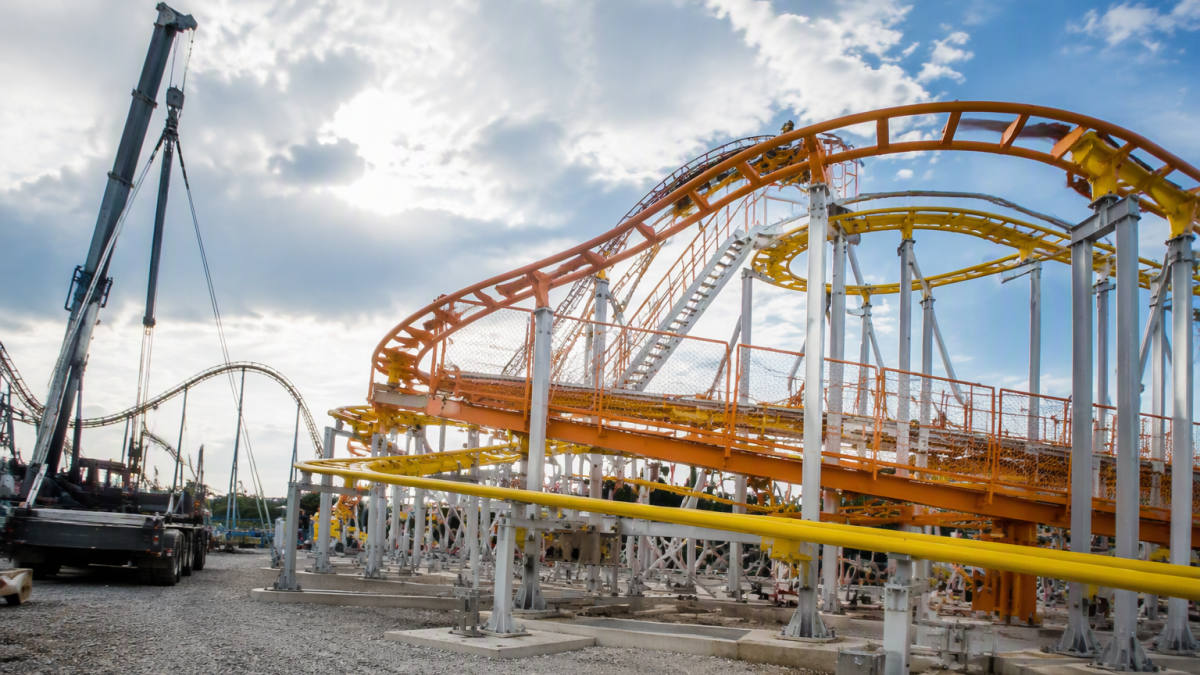
The choice between a portable and a permanent amusement ride installation hinges on your business model, site constraints, and long-term goals. Portable rides offer mobility and lower upfront site costs, making them ideal for traveling fairs and seasonal events. Permanent installations provide higher throughput, greater theming potential, and stronger guest loyalty, but require significant capital and site commitment. Assess your audience, land tenure, and operational capabilities to determine which path aligns with your objectives.
Key Differences in Mobility and Setup
Portable rides are designed for repeated assembly and disassembly, often using modular components, lightweight structures, and quick-connect systems. They typically fit on trailers or in standard shipping containers, enabling rapid relocation. Setup times vary by ride type but generally range from a few hours to a couple of days with a trained crew. Permanent rides, in contrast, are engineered for fixed installation with deep foundations, embedded anchors, and often custom-built structures. They are not intended for relocation; dismantling would be costly and may compromise structural integrity.
When specifying a portable ride, consider the number of transport units, the need for cranes or heavy lifting equipment at each site, and the availability of local power. Permanent installations require early geotechnical surveys and coordination with civil engineers to design foundations that meet the ride's load requirements. For both types, confirm per project the local building codes and inspection protocols.
Site Requirements and Infrastructure
Portable rides demand flat, stable ground with adequate drainage and compaction. Many models use spread-foot foundations or ballast to distribute loads without permanent concrete. However, soil conditions must still be evaluated; soft or sloping ground may require temporary matting or grading. Power supply is often via generators or temporary hookups, and water and wastewater needs are minimal unless the ride includes water elements.
Permanent installations allow for optimized site design: dedicated utility trenches, reinforced concrete pads, and permanent queue lines and landscaping. They can integrate with existing park infrastructure, such as electrical grids and wastewater systems. ZhipaoRides’ hot-dip galvanized structures are suitable for both portable and permanent applications, offering corrosion resistance for outdoor environments. For permanent sites, early involvement of the ride manufacturer ensures that foundation designs and utility interfaces are correctly specified.
Cost Considerations: Upfront vs. Lifetime
While upfront costs for portable rides are generally lower due to simplified foundations and no land acquisition, lifetime costs include frequent transportation, setup labor, and wear from repeated assembly. Permanent rides have higher initial costs—land, foundations, utilities, and theming—but benefit from lower per-cycle operating costs and reduced wear. A comparison table helps illustrate the trade-offs:
| Aspect | Portable Ride | Permanent Ride |
|---|---|---|
| Upfront cost | Lower (no land, minimal foundations) | Higher (land, foundations, infrastructure) |
| Transport & setup | Frequent, labor-intensive | One-time installation |
| Foundations | Temporary or ballast | Reinforced concrete, deep anchors |
| Throughput potential | Limited by footprint and setup | Higher, with custom stations |
| Wear & tear | Higher due to repeated assembly | Lower, stable installation |
| Regulatory approvals | Per location, often temporary permits | Permanent permits, zoning |
Note that prices are project-specific and depend on ride type, site conditions, and local regulations. Always request a detailed quote.
Operational and Maintenance Implications
Portable rides require a robust maintenance regimen focused on connection points, fasteners, and structural integrity after each setup. Inspections before and after every move are critical. The crew must be trained in assembly procedures and torque specifications. Permanent rides, while spared the stresses of relocation, still need regular inspections, but the intervals may be longer and the scope more predictable. Both types benefit from preventive maintenance schedules and spare parts availability.
Staffing differs: portable operations need a versatile team capable of setup and teardown, while permanent installations can specialize roles (e.g., ride operators, maintenance technicians). Training programs should cover emergency procedures and daily checks. For either option, confirm per project the manufacturer’s recommended maintenance schedule and local inspection requirements.
Regulatory and Safety Compliance
Portable rides often fall under temporary amusement device regulations, which may involve permits for each location and inspections by local authorities. Permanent rides are subject to building codes, zoning laws, and possibly higher-level safety audits. In both cases, compliance with standards such as ASTM F2291 or EN 13814 should be confirmed per project, as applicability varies by jurisdiction. Documentation—including design calculations, load tests, and operation manuals—must be readily available.
Safety systems, such as restraint devices and emergency stops, must meet the same performance criteria regardless of installation type. However, portable rides may have additional requirements for transport securing and reassembly verification. Engage with local authorities early to understand the approval process.
Decision Checklist
Use this checklist to evaluate which installation type suits your situation:
- Land tenure: Do you own the site or have a long-term lease? If not, portable may be preferable.
- Audience base: Is there a steady local audience, or do you rely on traveling crowds?
- Capital budget: Can you afford the higher upfront cost of a permanent installation?
- Operational expertise: Do you have a crew skilled in rapid setup and teardown, or a team for fixed operations?
- Regulatory environment: Are temporary permits readily available, or is permanent zoning feasible?
- Ride type: Some rides, like large roller coasters or Ferris wheels, are typically permanent due to structural complexity. ZhipaoRides offers both portable and permanent configurations for many ride types; consult their product range for options.
- Maintenance resources: Can you handle frequent inspections and part replacements, or do you prefer a stable installation?
For further technical details on specific rides, refer to the Ferris wheel product page as an example of modular design that can be adapted for permanent or portable use.