
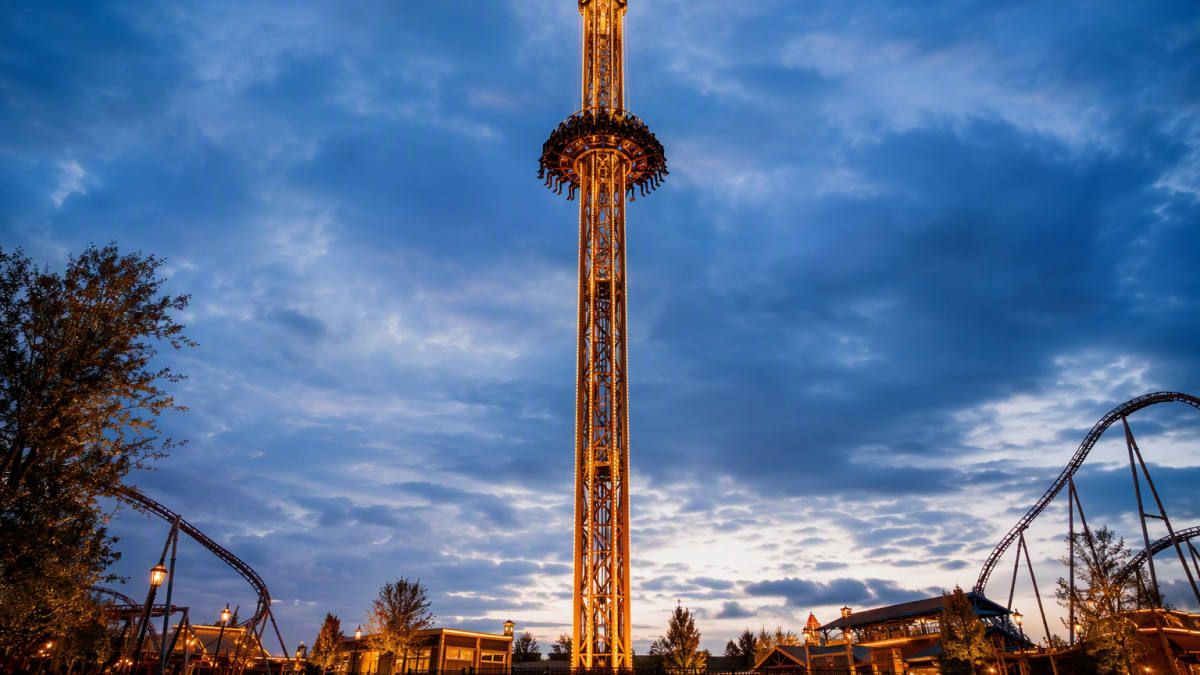
A drop tower procurement decision should be made on documents, not brochures. Before comparing prices, require each supplier to submit the braking calculation, the redundancy and failure-mode description, the remote diagnostics scope and a written certification position for your project. Use a benchmark specification — for example a 60 m, 24-seat free-fall tower with magnetic braking — to keep quotes comparable.
Start With the Ride Specification Before Comparing Suppliers
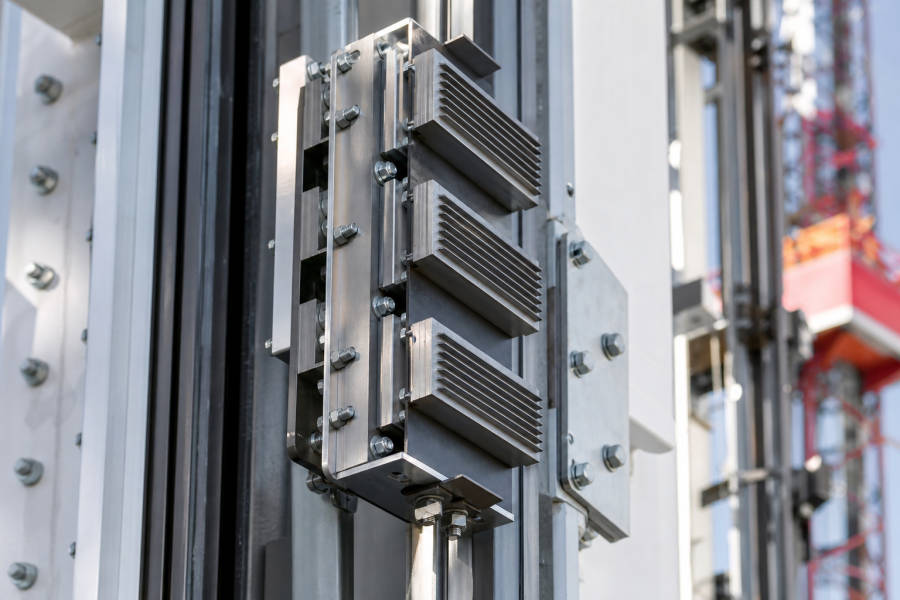
Most procurement problems on drop towers begin with quotes that describe different rides. Two suppliers can both say "60 m drop tower" and still be offering different seat counts, different braking principles and different duty cycles. Fix the core parameters first, then ask every supplier to respond to the same specification.
A practical benchmark is a 60 m free-fall drop tower with 24 seats and magnetic braking. If a supplier proposes something different, that is fine — but the deviation should be stated explicitly, with the reason, so you can compare like with like.
- Site constraints: confirm foundation loads and soil assumptions, wind exposure at the tower height, passenger throughput per hour, and maintenance access for the carriage and brake assemblies. These factors change the structural design, not just the price.
- Design standard: ask each supplier to state the design standard in writing. We design and manufacture with reference to ASTM F2291 and EN 13814. Treat any claim of "ASTM certification" as a red flag — ASTM is a standards body, not a certifying organisation.
- Third-party certification: clarify which certifications (CE, TÜV or local equivalents) apply to your specific project. These are confirmed per contract and project file, not assumed for an entire product line.
- Throughput and operations: state your expected cycles per hour and daily operating hours. Brake thermal behaviour and maintenance intervals depend on duty cycle, so an underspecified ride day leads to optimistic proposals.
Rule of thumb for the tender: if a parameter is not written in the technical offer, assume it is not included.
Braking System: What to Verify in the Technical Offer
The braking system is the single most important technical section of a drop tower offer, and it is also the section most often reduced to a single sentence. Require a calculation, not an adjective.
Calculations and load cases
- Request the braking principle and the braking distance calculation for the full load case, including the maximum passenger weight scenario and the empty-carriage case.
- For magnetic braking, ask for the magnet arrangement, the eddy-current brake design basis, and how braking force is validated during factory testing. Eddy-current braking is speed-dependent, so the calculation should show the force curve across the relevant speed range.
- Ask how the design accounts for temperature, humidity and repeated cycles during a busy operating day.
Anti-rebound, parking and wear
- Confirm the anti-rebound and final park-position mechanism, and how the catch car or carriage is held at the station during boarding.
- Ask for the braking system's maintenance interval, the wear-part list, and the expected service life of magnets and friction components.
- Request the factory test record format so you know what evidence you will receive before shipment, not after installation.
Compare these documents across suppliers side by side. A supplier that cannot produce a braking calculation for the full load case has not yet demonstrated that the ride will stop as intended.
Redundancy Design: Questions That Separate Serious Suppliers
Redundancy is easy to claim and harder to evidence. The objective is not to collect the word "redundant" in a proposal, but to understand what happens when a single component fails.
- Failure-mode summary: ask which sensors, controllers and power paths are duplicated, and what happens on loss of main power or a single sensor fault. The answer should describe ride behaviour, not just hardware count.
- Safety control architecture: our safety control system uses a redundant design. Request the logic description for overspeed, zone-overrun and restraint-status interlocks so your engineers can review the sequence.
- Independent testability: verify that the redundant path can be tested independently during commissioning, and ask for the acceptance test procedure you will witness at the factory.
- Evacuation: check the emergency lowering or evacuation procedure and its stated time, plus the backup power capacity that supports it. Ask how the procedure is rehearsed with operators after handover.
A useful test of a supplier's seriousness is to ask what happens during a sensor fault at the top of the tower with passengers on board. A precise, procedural answer is a good sign; a general assurance is not.
Remote Diagnostics: Data, Access and Support Scope
Remote diagnostics is increasingly offered on new rides, but its commercial value depends entirely on how the scope is written. Define it before signing, not after the first fault.
- What is transmitted: clarify which data the link carries — fault codes, sensor states, cycle counts — and what it deliberately does not transmit. Passenger images and personal data should be explicitly out of scope.
- Connectivity: agree on network availability at your site, firewall rules, and who owns the data. These are site IT decisions as much as ride decisions, so involve your IT team early.
- Support workflow: define response time windows, the escalation path, and whether remote diagnosis can authorise a restart or only advise local staff. The second option is more common and should be stated plainly.
- Training: your maintenance team should be able to read fault logs and perform first-line troubleshooting without waiting for remote support. Remote diagnostics supports on-site capability; it does not replace it.
Ask for a sample diagnostic report. It shows what your team will actually receive and how actionable the output is.
Installation, Training and Commercial Terms
Technical quality is wasted if the commercial and installation scope is vague. Require a schedule and a responsibility matrix with the offer.
- Project schedule: request milestones covering design, manufacturing, shipping, installation, commissioning and handover, with responsible parties named for each stage.
- Supervision and training: confirm the scope of installation supervision and operator/maintenance training included in the offer, and whether it is on-site or remote.
- Spare parts: ask for the recommended spare parts list for the first two years of operation, with lead times for critical components such as brake components and sensors.
- Pricing: treat pricing as a reference range only. A drop tower quote must be built per project based on height, capacity, braking type, site conditions and certification requirements.
For context on how modular design affects site work, a 32 m modular observation wheel ships in six containers and installs in roughly 12 days — a reminder that transport and installation planning belong in the same conversation as the ride specification.
Supplier Due Diligence for Overseas Buyers
For international purchases, verify the manufacturer as well as the product. Factory visits or video audits, reference projects and documentation quality all matter.
- Capacity: verify manufacturing capacity and facility size. ZhipaoRides operates a factory of about 120,000 m² in Xingtai, Hebei, with roughly 500 employees, and has exported to 40+ countries.
- References: ask for references relevant to your region and ride type. A Southeast Asian client project can be discussed in general terms, with specifics subject to the client's permission.
- Structural treatment: check that structural steel is hot-dip galvanised and that the corrosion class specified matches your climate, particularly for coastal or high-humidity sites.
- Documentation and warranty: review the warranty terms, response commitments and the documentation package — drawings, O&M manuals and test records — you will receive at handover.
None of these checks replaces a site-specific engineering review, but together they separate suppliers who can document their claims from those who cannot. Build the tender around documents, keep the specification fixed across bidders, and price the project on confirmed inputs.